When patients ask about the cost of porcelain veneers, cosmetic dentists advise that thinking about it on a "per tooth" basis is the wrong way to approach it. While other websites provide a national average, that number is misleading because it removes the most important part of the equation: the individual patient. The real investment is not in a piece of porcelain, but in a comprehensive, face-focused smile design that is built to last. In a quality cosmetic practice, the cost is determined by the clinical needs of the patient, which typically falls into one of three categories, ranging from approximately $16,000 to $65,000 or more for complex cases.
See what a porcelain veneer investment looks like in practice — Tricia's full smile makeover with E.max porcelain, including an implant, veneers, and crowns coordinated in a single treatment plan:
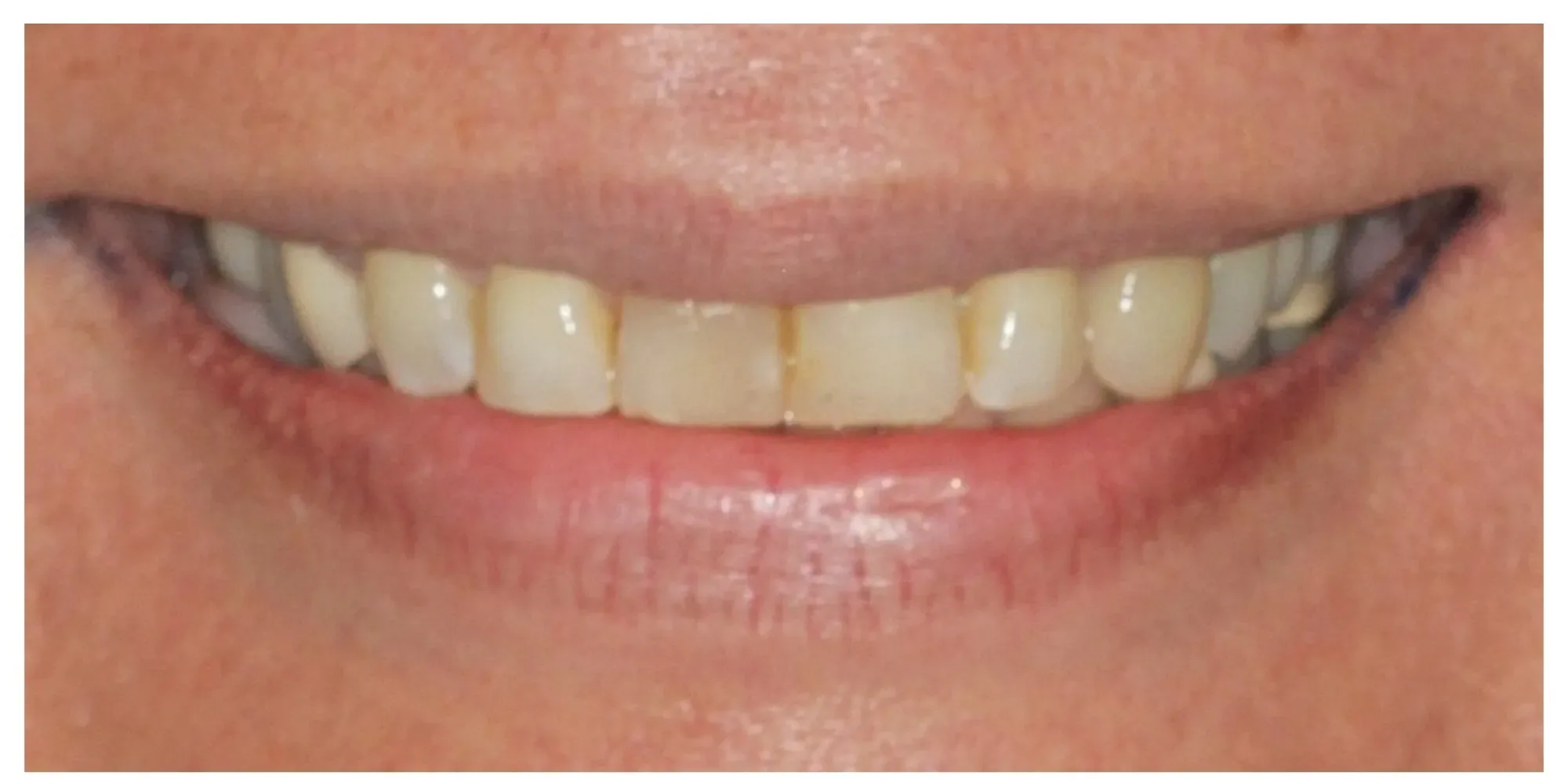 Before
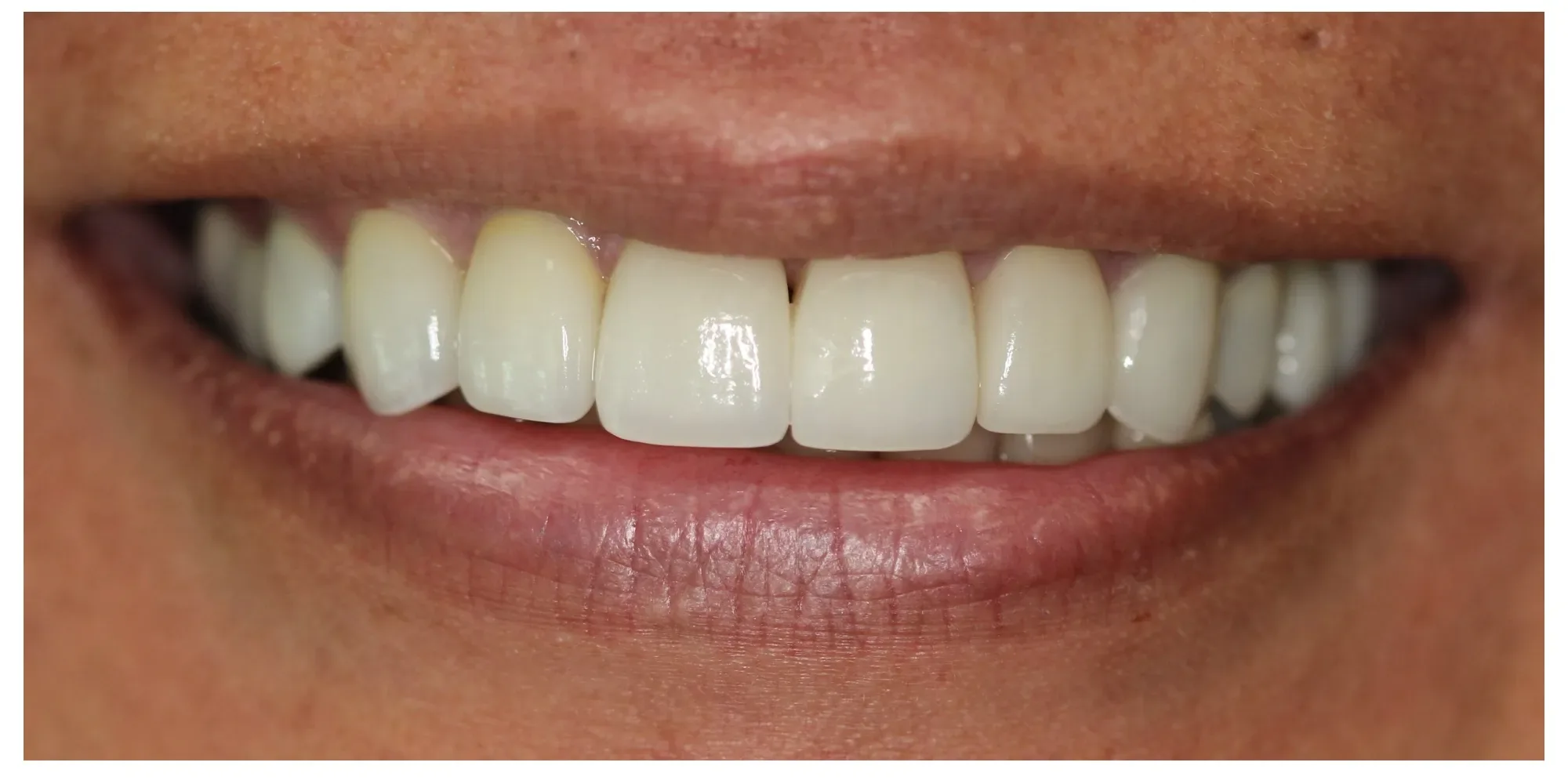 After
After
What Factors Truly Influence the Cost of Porcelain Veneers?
The final cost of your porcelain veneers is a reflection of the complexity of your case and the quality of the materials and craftsmanship involved. It's not just about the teeth; it's about creating a smile that fits your face and is built on a healthy, stable foundation. Here are the factors that experts consider to be non-negotiable for a successful, long-lasting result:
In clinical practice, the difference between a $150 and a $450 lab fee per veneer often reflects variations in ceramic quality, technician skill, and customization time. Higher-cost labs typically use advanced materials like lithium disilicate or layered porcelains, resulting in greater translucency and lifelike depth. They also allocate more hours for hand-layering and characterization, which enhances the natural appearance and long-term color stability. For patients, understanding this distinction helps set realistic expectations and supports informed decisions beyond mere price comparison.
1. The Smile Design: From 10 Veneers to a Full Reconstruction
In clinical experience, veneer cases generally fall into three categories. The cost depends on which category is right for you:
- 10 Upper Veneers: This is a great option for patients who are happy with their bite and lower teeth, but want to enhance the aesthetics of their upper smile. This is the typical starting point, usually around $16,000.
- 10-over-10 (20 Veneers): For patients who need or want to address both upper and lower arches to create a completely harmonious smile.
- Full Reconstruction (24-28 units): This is for patients who have significant bite issues, wear, or other complex clinical needs that require a comprehensive solution. This can involve opening the bite and restoring every tooth, like in Joanne's full-mouth rehabilitation. These cases can range from $45,000 to $65,000 or more.
2. The Foundation: Your Bite (Occlusion)
This is the single most important factor that most dentists and websites fail to address. The bite is the foundation of everything. If the bite is not stable, veneers will fail, no matter how beautiful they are. In a quality cosmetic practice, a thorough analysis of the bite is conducted. Some patients may even need orthodontics like braces or clear aligners before the veneer process begins to ensure the longest possible lifespan for the new smile. A dentist who does not have a serious discussion about the bite is a major red flag.
3. The Dentist's Experience and Lab Partner
A beautiful, natural-looking veneer is a work of art, and that requires a skilled artist. An experienced cosmetic dentist who has completed extensive post-graduate training and works with a master ceramist will have higher fees. This is because they are not just bonding porcelain to teeth; they are meticulously designing a smile. When searching for veneers near you, it's important to find a dental lab that requires extensive records — photos, X-rays, and detailed impressions — because they are true partners in the process. A dentist who doesn't take thorough records is likely not working with a high-quality lab, and the results will reflect that.
Questions Patients Ask Every Day
Porcelain vs. Composite Veneers: A Clinical Decision, Not a Budget One
Patients often ask why porcelain veneers cost more than composite. While there is a price difference, the choice between them should always be a clinical one, not a budget one. Here's how cosmetic dentists guide patients:
- Durability & Scope: Porcelain is incredibly strong and is the preferred material for complex cases, 10-over-10 smiles, and full reconstructions. Composite is a fantastic material, but it is best suited for smaller cases, typically 10 veneers or fewer, or for younger patients. It cannot withstand the same forces as porcelain in a full-mouth case.
- Longevity & Maintenance: With proper care, including wearing a night guard to protect against grinding, porcelain veneers can last for decades. Research has shown studies on the same E.max material used for crowns showing a 50-year lifespan. Composite veneers have a shorter lifespan and will need more frequent repairs and polishing to maintain their appearance.
- Aesthetics: High-quality porcelain has a translucency and vitality that is virtually identical to natural tooth enamel. While modern composites are beautiful, porcelain is still the gold standard for the most lifelike and vibrant results.
- The "Composite-First" Strategy: For younger patients, experienced practitioners often recommend starting with composite veneers. This is a more conservative approach that allows them to enjoy a beautiful smile. Then, later in life, they can transition to porcelain. This phased approach often reduces the likelihood of needing to replace the porcelain veneers.
Ultimately, the higher initial investment in porcelain is often more cost-effective in the long run due to its superior strength and longevity. For a full comparison, see the composite veneer cost guide.