Veneer Types Compared

Clinically Reviewed by Brennan Bonati, DDS

Compare Veneer Costs → Get My Free Estimate

The type of veneer your dentist recommends depends on your clinical situation, not your preference. Porcelain, composite, no-prep, Lumineers, and snap-on veneers each serve different purposes, and choosing the wrong material for your case can mean compromised aesthetics, shorter lifespan, or unnecessary cost. This guide breaks down every major veneer type with honest comparisons so you can have an informed conversation with your dentist.

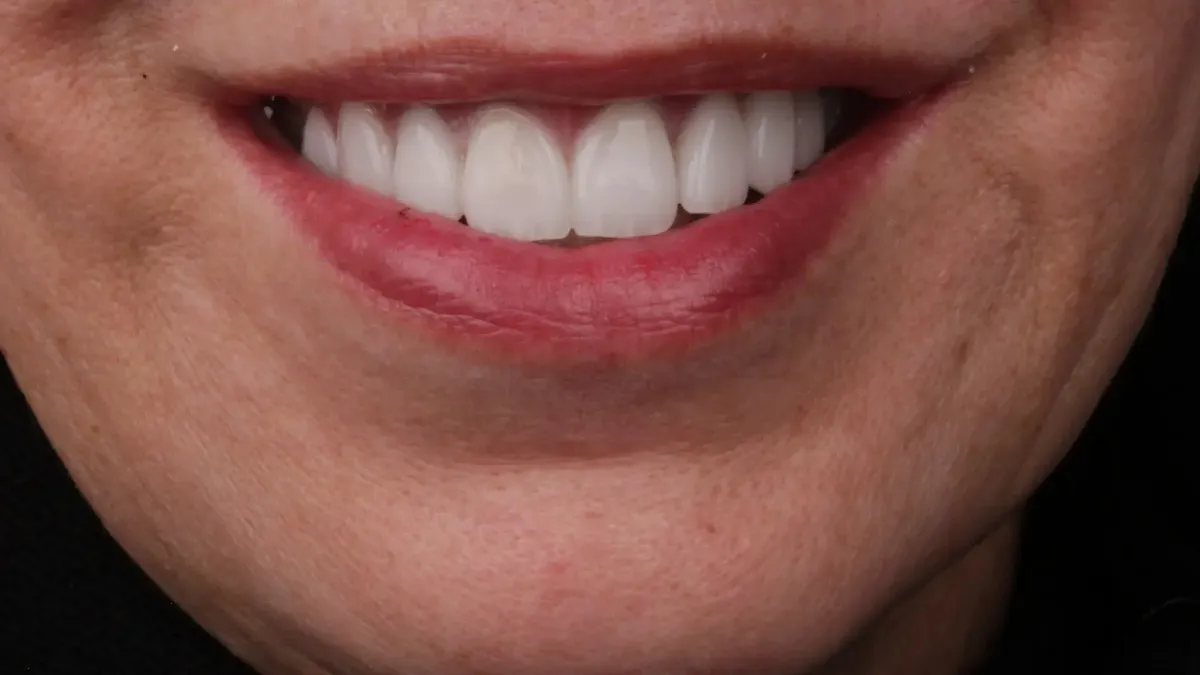
Porcelain in Practice: Replacing Old Composites with E.max

Real Case — Porcelain Veneers

Danielle's old composite veneers had absorbed years of staining and two mismatched crowns left her smile looking inconsistent. Six E.max porcelain veneers replaced the failing composites and delivered uniform color and natural translucency.
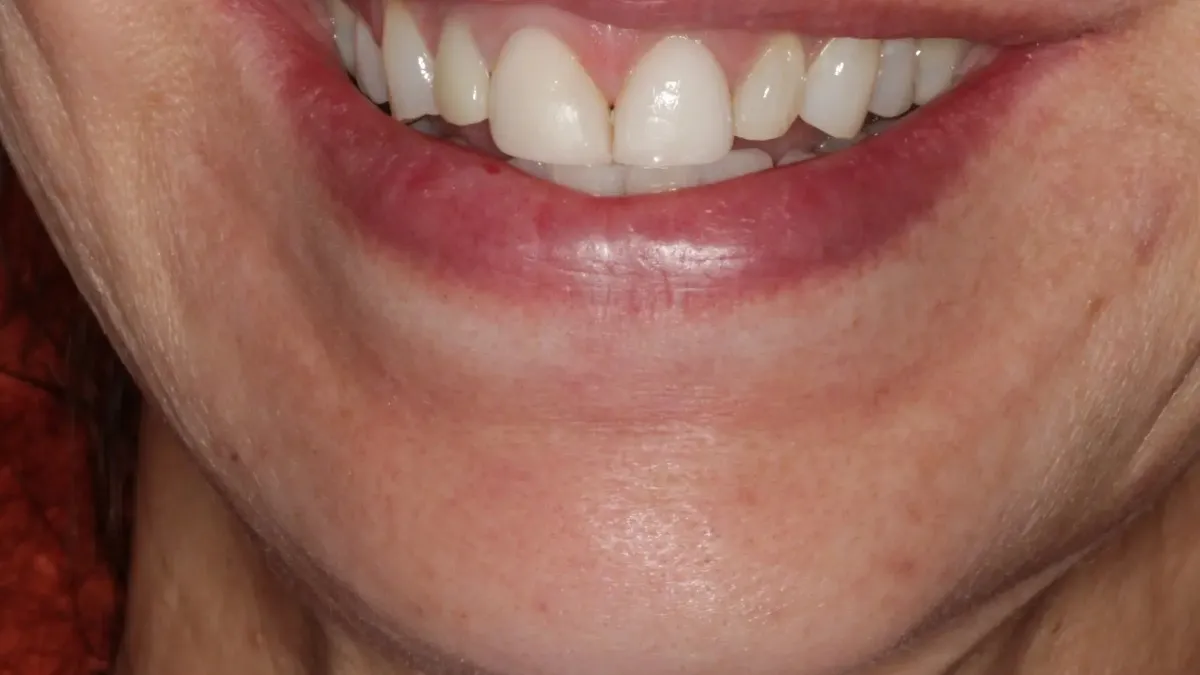
Danielle before — discolored composite veneers and mismatched crowns Before
Danielle after — uniform E.max porcelain veneers After
Porcelain · E.max · 6 Veneers
Danielle — Old Composites Replaced with E.max Porcelain
$9,000 – $15,000
View Full Case Study →

Composite in Practice: A No-Prep Smile for Television

Real Case — Composite Veneers

Apollonia worked in television and needed a fuller, whiter smile for the camera. Ten no-prep composite veneers in BL shade were delivered across three appointments — no tooth structure was removed, and the result was immediately camera-ready.

Apollonia before — natural teeth before composite veneers Before
Apollonia after — 10 no-prep composite veneers in BL shade After
Composite · No-Prep · 10 Veneers
Apollonia — Camera-Ready No-Prep Composite Smile
$10,000
View Full Case Study →
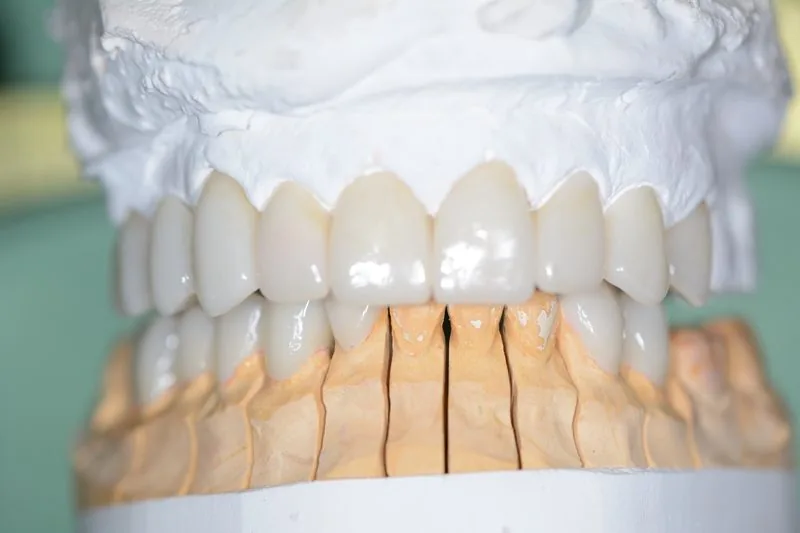
In a 2023 study published in the Journal of Prosthetic Dentistry, lithium disilicate (E.max) veneers demonstrated a 95.6% survival rate at 10 years, compared to approximately 80% for direct composite veneers over the same period. The choice between porcelain and composite is primarily a clinical decision, not a patient preference. IPS E.max is the most widely used material for anterior veneers because it combines excellent translucency with sufficient strength. Feldspathic porcelain offers the highest aesthetic potential but is more fragile and technique-sensitive. Composite veneers are appropriate for interim restorations, younger patients, and cases where cost is a primary constraint — they can serve as an effective trial before committing to permanent porcelain.

E.max porcelain veneers mounted on die model before cementation
E.max lithium disilicate veneers on a die model before cementation — each restoration is custom-fabricated to match the patient's natural tooth color and translucency.
Clinically reviewed by Brennan Bonati, DDS — Cosmetic & Restorative Dentistry

Side-by-Side Comparison

Feature Porcelain (E.max) Composite No-Prep Lumineers Snap-On
Cost per tooth $1,800 – $3,500 $800 – $1,500 $1,500 – $3,000 $1,000 – $2,000 $300 – $600
Longevity 15 – 25+ years 5 – 10 years 10 – 20 years 10 – 20 years 1 – 3 years
Tooth prep required Minimal (0.3–0.7 mm) Minimal to none None None to minimal None
Stain resistance Excellent Poor to moderate Excellent Good Poor
Aesthetics Best Good Good to very good Moderate Artificial
Reversible No Yes (chairside) Yes Yes Yes
Best for Long-term smile makeovers Budget-conscious or young patients Additive cases (gaps, length) Specific thin-veneer cases Temporary cosmetic cover

Free Download: Which Veneer Type Is Right for You?

Get the porcelain vs. composite vs. no-prep comparison guide as a printable PDF — includes the side-by-side table, cost ranges by material, and the 5 questions to ask your dentist.

Explore All Veneer Types

Frequently Asked Questions About Veneer Types

There is no single "best" type. Porcelain veneers (specifically E.max lithium disilicate) are the gold standard for durability, stain resistance, and aesthetics. But composite veneers are the better choice when cost is a primary constraint, when the patient is young and teeth are still developing, or when a reversible option is preferred. The best veneer is the one that matches your clinical situation and goals.

Porcelain veneers typically last 15 to 25 years or longer with proper care and a night guard. Composite veneers last 5 to 10 years before needing significant repair or replacement. Porcelain is also far more stain-resistant — composite absorbs staining from coffee, tea, and wine over time.

No-prep veneers work well for a narrow range of cases — typically patients who need additive changes like closing small gaps or adding length. But they are thinner and more limited in what they can achieve. Traditional porcelain veneers allow the dentist to control shape, color, and alignment more precisely because a small amount of enamel is removed to create space for the restoration.

Lumineers are a brand of ultra-thin porcelain veneers made by DenMat. They are marketed as no-prep, meaning little to no enamel removal. In practice, they work for very specific cases but can look bulky or opaque when placed on teeth that already have adequate thickness. They are not a universal substitute for traditional porcelain veneers.

Yes. This is actually a common and recommended pathway. Composite veneers can serve as an excellent interim solution — especially for younger patients — that can later be upgraded to porcelain when the patient is ready for a longer-term investment. The transition requires removing the composite and preparing the teeth for porcelain, but it is a straightforward process.

Snap-on veneers (removable clip-on covers) are not a clinical dental restoration. They are a cosmetic accessory that sits over your existing teeth. They can be useful for photos or special events, but they do not address underlying dental issues, can trap bacteria against teeth, and are not recommended as a long-term solution by any reputable cosmetic dentist.