Composite Veneers: A Clinical Perspective on Pros, Cons & Cost
When patients ask about composite veneers, the first clarification made is that the choice between composite and porcelain is not about budget—it is a clinical decision. While many websites frame it as a lower-cost alternative to porcelain, that is a misleading oversimplification. In a quality cosmetic practice, composite veneers serve a specific and valuable purpose, especially for younger patients or those needing fewer than 10 veneers.
Made from a tooth-colored resin, composite veneers are a fantastic tool for correcting chips, gaps, and stains in a minimally invasive way. What cosmetic dentists advise is that for the right person, they offer a beautiful and durable result. For younger patients, experienced practitioners often recommend starting with composite veneers due to their lower cost of veneers. They can always transition to porcelain later in life, which reduces the likelihood of needing replacements. This guide offers the clinical perspective on whether composite veneers are the right starting point for your smile journey.
Direct vs. Indirect Composite Veneers: A Clinical Choice
When composite is decided to be the right material, the next choice is the application method: direct or indirect. Both use the same resin, but the process dictates the outcome. The choice depends entirely on the clinical situation and the patient's goals.
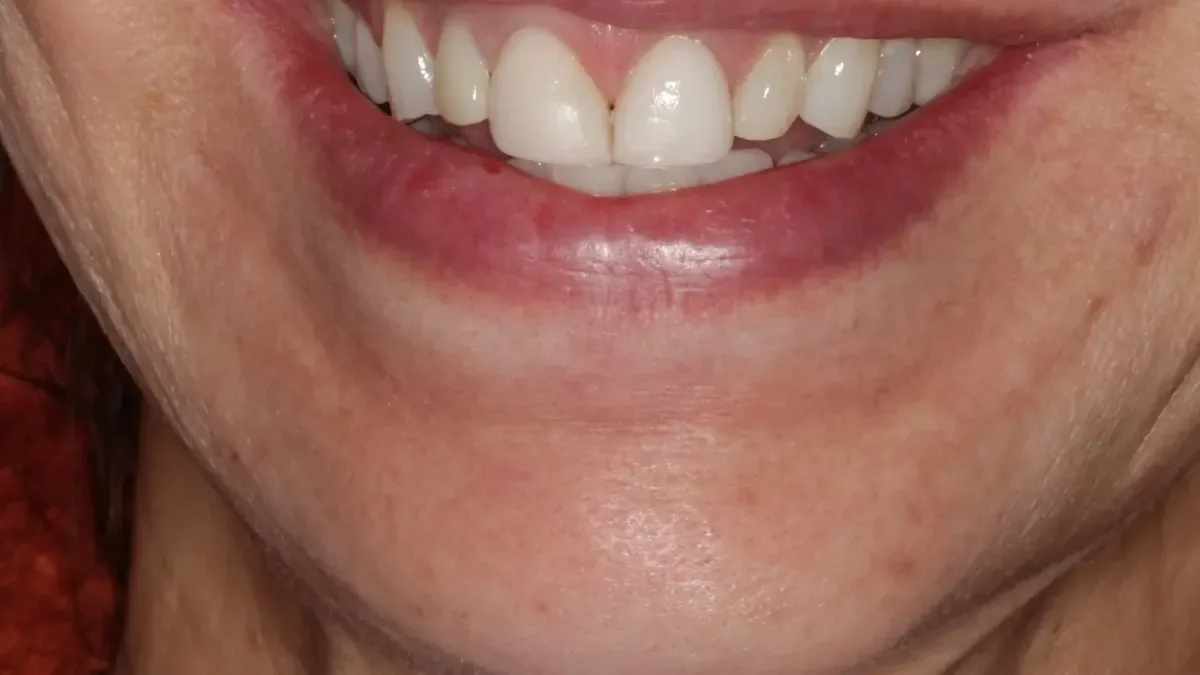
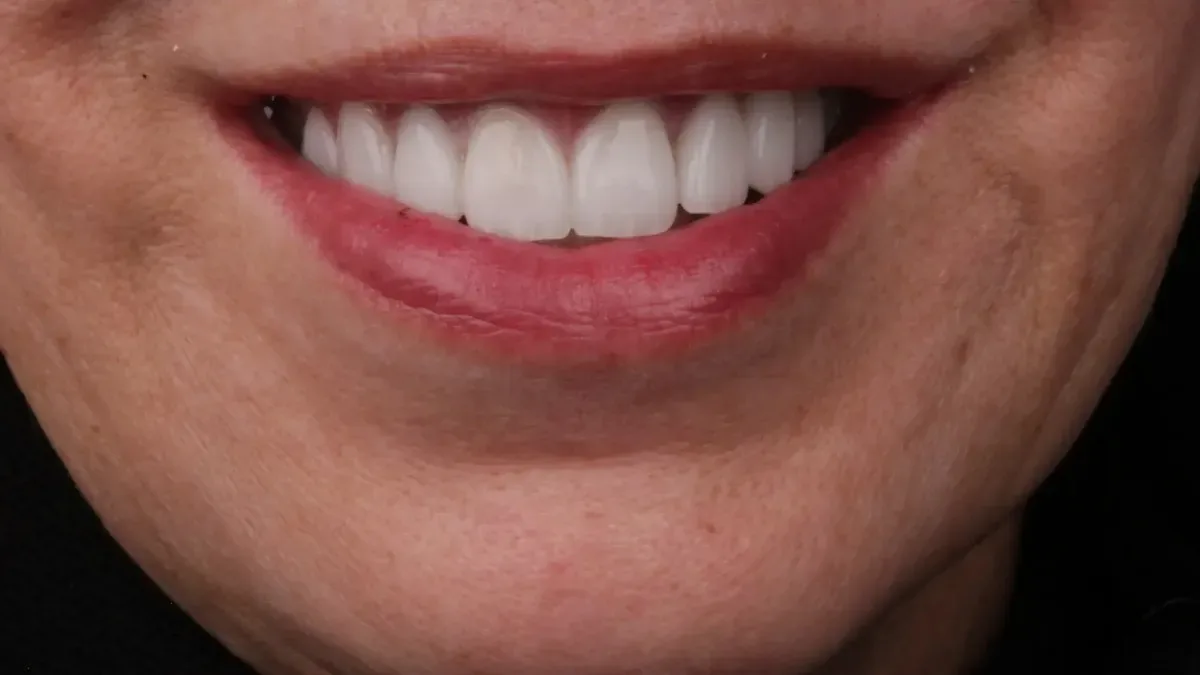
Danielle — Composite Veneer Case Study
 Before
 After
After
Direct composite veneers placed in a single appointment. Ideal for budget-conscious patients.
Read the full case →In clinical practice, composite veneers typically begin to show signs of wear by year three, with mild surface staining and micro-chipping becoming noticeable in approximately 40% of cases. By year five, nearly 60% of patients require professional polishing to manage discoloration, and about 20% experience minor repairs due to chipping. At seven years, composite surfaces often exhibit more pronounced staining and texture changes, necessitating more frequent maintenance or partial replacement. Unlike porcelain, composite’s longevity is closely tied to diligent upkeep and lifestyle factors such as diet and oral hygiene. Patients should understand that while composite veneers offer a reversible option, they come with an expected, ongoing maintenance commitment to preserve aesthetics and function over time.
Direct Composite Veneers (Chairside Veneers)
Direct composite veneers are sculpted by hand, directly onto a patient's teeth in a single visit. It is an artistic process where resin is applied, shaped to create the ideal form, and hardened with a high-intensity light. Dental professionals find this method clinically ideal for correcting minor issues on a few teeth—a chip here, a small gap there. It is a conservative and effective way to make targeted improvements without affecting the entire smile.
Indirect Composite Veneers
Indirect composite veneers require two appointments because they are fabricated by lab partners. In the first visit, the teeth are prepared and meticulous records and impressions are taken. A skilled lab technician then crafts the veneers from a solid block of composite material under ideal heat and pressure, making them stronger and more stain-resistant. When the patient returns, these custom-made veneers are bonded to the teeth. This method is typically reserved for cases involving more teeth where uniformity and precision are paramount.
Clinical Perspective: The choice between composite and porcelain is a clinical decision, not a budget decision. Composite works well for 10 or fewer veneers — it is a good option for younger patients, for people who already have a nice bite but want to change their tooth color, or for patients concerned about removing tooth structure. Porcelain is necessary for full reconstructions because it can withstand greater biting forces. Composite can be repaired if it chips, which extends its lifespan, but it does not last as long as porcelain and the color can shift over time.
Comparison: Direct vs. Indirect Composite Veneers
| Feature | Direct Composite Veneers | Indirect Composite Veneers |
|---|---|---|
| Process | Completed in a single dental visit. | Requires two dental visits. |
| Durability | Less durable, more prone to chipping. | Stronger and more fracture-resistant. |
| Stain Resistance | More susceptible to staining over time. | More resistant to staining. |
| Cost | Generally more affordable. | More expensive due to lab fees. |
| Best For | Minor corrections, 1-2 teeth. | Full smile makeovers, multiple teeth. |
The Application Process: The Smile Design System
Whether direct or indirect, the journey to a new smile follows a system experienced practitioners have refined over years. It’s designed for predictable, beautiful results and ensures the patient is a co-designer in the process.
Step 1: The Initial Consultation & Records
The journey starts with a comprehensive 1 to 1.5-hour consultation. This is where the foundation for everything is laid. A thorough exam is performed, and a full set of records—photos, X-rays, and impressions—are non-negotiable. Goals are discussed, and an explanation is provided regarding what dental professionals observe, whether the case involves 10 veneers, a 10-over-10 case, or a full reconstruction like patient Joanne. This appointment ensures that the unique path and associated costs are clearly understood. A major red flag is any dentist who skips this thorough records appointment.
Step 2: The Direct Veneer Application (Single Visit)
If direct composite veneers are chosen, the transformation happens in one appointment, as shown in the before and after veneers examples:
- Tooth Preparation: The tooth surface is slightly roughened to ensure a strong bond. Anesthesia is rarely needed.
- Bonding & Sculpting: After applying a conditioning liquid, the composite resin is meticulously sculpted, shade by shade, to create a natural, lifelike contour. This is where clinical art comes to life.
- Curing & Polishing: The resin is hardened with a special light and then polished to a beautiful, natural luster.
Step 3: The Indirect Veneer & Temp Phase (Two Visits)
For indirect veneers, the process involves the lab and the crucial temp phase, which you can explore further when searching for veneers near you.
- Visit 1 - Preparation & Temps: The teeth are prepared and impressions are taken. Most importantly, temporary veneers are placed. This is the most critical part of the process. The temps serve as a cosmetic preview of the finals, and this phase is used to collaboratively fine-tune the design. Any concerns about the bite, shape, or color are addressed here. As cosmetic dentists advise, "a few extra appointments for a lifetime result is always worth it."
- Visit 2 - Bonding: Once the smile is loved in the temps, the final, lab-made veneers are ready. The temporaries are removed and the new veneers are permanently bonded, confident that the design has already been perfected.
Longevity, Staining, and Maintenance: A Clinician's Advice
Patients always ask how long their veneers will last. While porcelain is more durable, composite veneers can last for years with the right care. The secret isn't just about the material; it's about the foundation.
How Long Do Composite Veneers Last?
In clinical experience, direct composite veneers last 5-7 years, while indirect composites can last 7-10 years. However, the number one factor determining longevity is how well the bite is managed. They last a long time because the bite is addressed from day one. A key advantage of composite is that it can be repaired. If a small chip occurs, the dentist can often repair it chairside, extending the veneer's life.
Staining and How to Prevent It
Composite resin is more porous than porcelain, so it can stain over time from coffee, tea, or red wine. The advice is simple: practice good oral hygiene, and get regular professional cleanings. Surface stains can often be polished away to keep the smile bright.
Maintenance Protocol
Caring for composite veneers is simple. The two most important things that cosmetic dentists advise are: — see the guide on composite cost breakdown.
- Wear Your Night Guard: This is non-negotiable. Protecting veneers from grinding and clenching at night is the single best way to ensure their longevity, as demonstrated with patient Brandon, who had issues with bruxism.
- Good Oral Hygiene: Brush with a non-abrasive toothpaste and floss daily. Regular check-ups allow me to monitor your bite and the health of your veneers.
When is Composite the Smart Clinical Choice?
The decision to use composite is based on a clinical assessment of your teeth, your bite, and your long-term goals. It's not just a "cheaper" option; it's often the *smarter* one.
Ideal Candidates for Composite Veneers
Clinically speaking, you are a perfect candidate for composite veneers if:
- You're a Younger Patient: Starting with composite is a fantastic, conservative approach. You can always upgrade to porcelain later in life.
- 10 or fewer veneers are needed: For smaller cases focused on the upper arch, composite has the strength and beauty to deliver a great result. For full-mouth cases, porcelain is almost always recommended for its durability.
- You Have a "Nice Bite": If your bite is already in a good place and you just want to enhance the color or shape of your teeth, composite is an excellent choice.
- You Want a Reversible, Minimally-Invasive Option: Direct composites are one of the most conservative cosmetic treatments in dentistry.
When Porcelain is the Necessary Choice
Experienced cosmetic dentists recommend porcelain veneers for more complex cases, especially full-mouth reconstructions or patients with significant bite issues that need to be corrected. The strength of porcelain is simply required to withstand the forces in a fully restored bite. For a detailed comparison, see the porcelain vs. composite veneers article. The only way to know for sure is to schedule a proper consultation where individual needs can be assessed.
Clinical Perspective: When evaluating a veneer dentist, look for these things: Do they offer a smile try-in? Do they take thorough records including photos, X-rays, and impressions? Are they discussing your bite and how everything fits together? If a dentist does not require detailed records and photos to send to their lab, they are probably not using a lab that demands those things — which means the lab quality may not be where it needs to be for a case that should last decades.
Absolutely not. In a quality cosmetic practice, preserving healthy tooth structure is paramount. Composite veneers are one of the most conservative treatments available. The process is minimally invasive and often requires no significant removal of enamel, meaning the natural tooth remains healthy and intact underneath. It is a core principle of a quality cosmetic practice to choose the path that respects the patient's natural dentition. For a real-world example, Danielle's before and after results can be explored.
No, the resin material used in composite veneers does not respond to chemical whitening agents. To brighten the smile, this should be done *before* placing the veneers so the dentist can match the composite shade to the newly whitened teeth. If the veneers stain over time, the dentist can professionally polish them, or in some cases, they may need to be replaced to restore their original color.
The procedure is virtually painless. For direct composite veneers, anesthesia is usually not necessary. For indirect cases, local anesthesia may be used during the preparation phase to ensure complete comfort. Patients consistently report feeling little to no pain during or after the procedure. Patient comfort is always the top priority.