Tricia's Mixed Treatment: Implant Plus Veneers for a Complete Smile
Clinically Reviewed by Brennan Bonati, DDS — Cosmetic & Restorative Dentistry
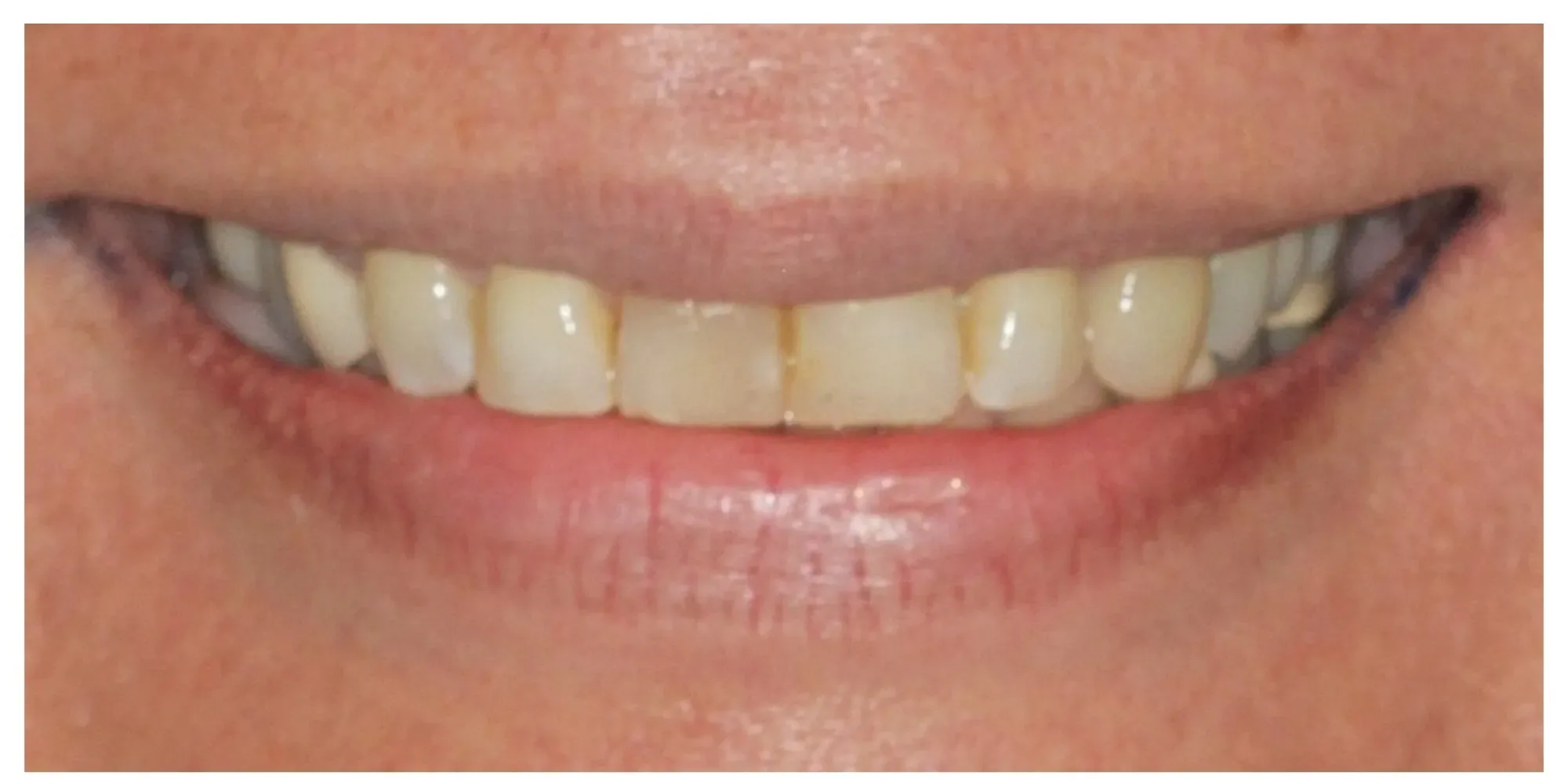 Before
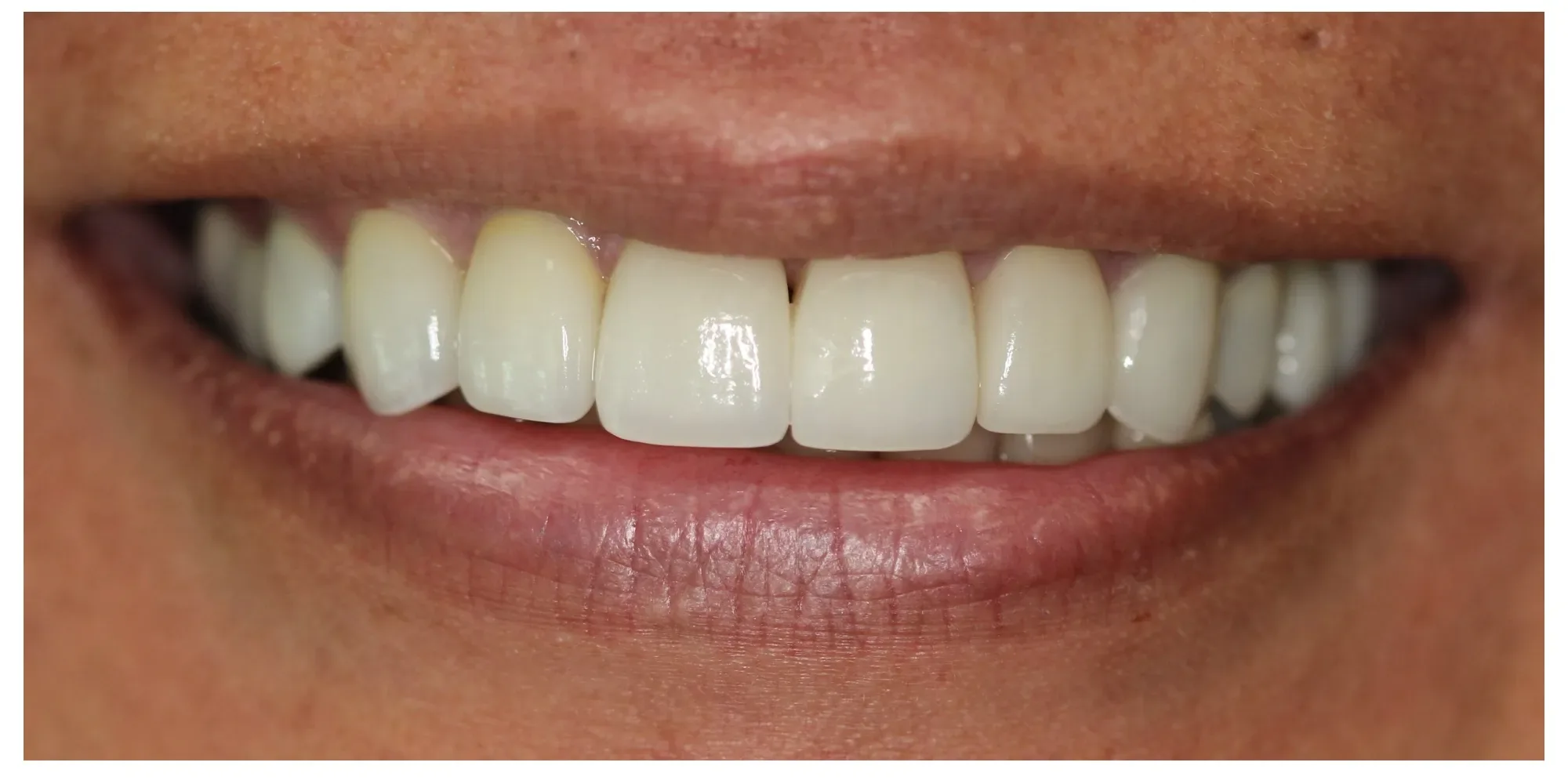 After
After
| Patient | Tricia, mid 40s |
| Chief Complaint | Missing tooth; discoloration; old crowns not matching; wants complete smile renovation |
| Treatment | 1 implant crown + 6 porcelain veneers + 4 crowns (11 total restorations) |
| Material | E.max (lithium disilicate) |
| Teeth Treated | 11 restorations — 1 implant crown, 6 veneers, 4 crowns |
| Investment Range | $20,000 – $32,000 |
| Appointments | 7 visits over approximately 5 months (including implant healing) |
| Location | Lakewood, Colorado |
| Clinical Reviewer | Dr. Brennan Bonati, DDS |
Tricia's Story
Tricia's dental history was complicated. She had lost a tooth years earlier and had been wearing a removable partial denture — something she found uncomfortable and embarrassing. Several of her remaining teeth had old crowns that no longer matched each other or her natural teeth. And the teeth that were still natural had discolored over the years to a shade she was unhappy with.
She came in wanting a complete smile renovation. She knew it would involve multiple types of treatment — she had done her research — but she wanted a single, coordinated plan that addressed everything at once rather than piecemeal work over many years.
The clinical picture required careful sequencing: the implant needed to be placed and allowed to integrate before the final crown could be made, and the veneers and crowns needed to be designed to work with the implant crown as a single aesthetic unit.
The Treatment Plan
The treatment was sequenced in two phases:
Phase 1 — Implant Placement (3–4 months):
- Implant placement surgery
- Healing period (3–4 months for osseointegration)
- Implant uncovering and abutment placement
Phase 2 — Restorative Phase (approximately 5 weeks):
- Consultation and smile design — coordinating all 11 restorations
- Preparation of natural teeth; temporaries placed; implant crown impression taken
- Temporary wear period (3 weeks)
- Delivery of all 11 restorations in a single appointment
- Post-delivery verification
Clinical Insight
Mixed treatment cases — those involving implants, veneers, and crowns in the same patient — require careful coordination between the surgical and restorative phases. The implant must be placed in the correct position not just for function, but for aesthetics: the crown that will eventually sit on the implant needs to match the surrounding veneers and crowns in contour and emergence profile.
In Tricia's case, the implant position was planned with the final restoration in mind — a process called restorative-driven implant placement. The surgical guide was fabricated based on the planned final crown position, ensuring that the implant would emerge in exactly the right location for the aesthetic result.
The Result
The final result was a complete smile renovation — uniform color, consistent contour, and no visible gap where the missing tooth had been. The implant crown, veneers, and crowns were all fabricated to the same shade specification and were indistinguishable from each other in the final result.
Tricia described the experience of no longer having a removable partial denture as life-changing. The implant crown felt and functioned like a natural tooth, and the overall smile transformation exceeded what she had imagined was possible.
Free Resource
Am I a Candidate? Download Your Free Guide to Find Out
The complete self-assessment checklist — good candidate indicators, pre-treatment conditions to resolve, and what to expect at your first consultation. Clinically reviewed by Brennan Bonati, DDS.
No spam. No sales call. One email with your download link.
At a Glance
Missing tooth (wearing a partial denture), discolored natural teeth, and old mismatched crowns — all requiring different treatment types in a single coordinated plan.
Restorative-driven implant placement ensured the implant crown would match the veneers and crowns. All 11 restorations were fabricated together to the same shade specification.
1 implant crown + 6 porcelain veneers + 4 crowns — all E.max, all delivered in a single appointment after the implant healed.
Complete smile renovation. No more partial denture. Implant crown indistinguishable from natural teeth. Tricia described it as life-changing.
Related Reading
- How Much Do Veneers Cost? The Complete Guide — understand all the factors that affect pricing
- Types of Veneers: Porcelain, Composite, and E.max Compared — learn which material is right for your case
- What to Expect During the Veneer Procedure — a step-by-step guide to the process
- Am I a Candidate for Veneers? — find out if veneers are right for your situation
- Veneer Results and Long-Term Care — what to expect after your restorations are placed
- Financing Options for Veneers — payment plans and ways to make treatment more affordable
What This Case Helps Explain
Tricia's smile makeover illustrates how combining implants with porcelain veneers and crowns can address multiple concerns like missing teeth and discoloration simultaneously. This mixed treatment approach is ideal for patients who need both structural replacement and cosmetic enhancement, as explained in our veneer candidacy guidelines. The choice of porcelain veneers in her case highlights their durability and aesthetic benefits. Understanding the financial aspects is important, and our porcelain veneers cost breakdown provides clarity on investment. To see similar comprehensive transformations, visit the full smile makeover case category and review the expected longevity of porcelain veneers.
Inspired by Tricia's Story?
I Want to Smile Like Tricia — Book My Free Consultation
Schedule a no-obligation consultation with a trusted Colorado cosmetic dentist. Most patients are seen within 1–2 weeks.
Frequently Asked Questions
How long does an implant take before the crown can be placed?
Most implants require 3 to 6 months of healing (osseointegration) before the final crown can be placed. During this period, a temporary crown or partial denture is typically worn. In Tricia's case, the implant healed over 4 months before the restorative phase began.
Can veneers and implant crowns be made to match?
Yes — when all restorations are fabricated by the same laboratory from the same shade prescription, veneers and implant crowns can be made to match very closely. The key is coordinating the fabrication so all restorations are made at the same time with the same shade reference.
Is it better to get an implant or a bridge for a missing tooth?
Both are viable options. Implants are generally considered the gold standard because they replace the root of the tooth, preserve bone, and do not involve the adjacent teeth. Bridges are faster and less expensive but require preparing the adjacent teeth. In Tricia's case, an implant was the right choice because the adjacent teeth were already being treated with veneers and crowns — but the implant was still preferable because it preserves bone in the area of the missing tooth.
Find Veneers Near You
All documented cases were treated in the Denver metro area. If veneers are being considered, explore cost and provider information for your city:
Not in Colorado? Browse all locations →
Explore More Cases
Each case below includes a full clinical breakdown with before-and-after documentation.