Brandon's Full-Arch Reconstruction: Rebuilding a Bite Destroyed by...
Clinically Reviewed by Brennan Bonati, DDS — Cosmetic & Restorative Dentistry
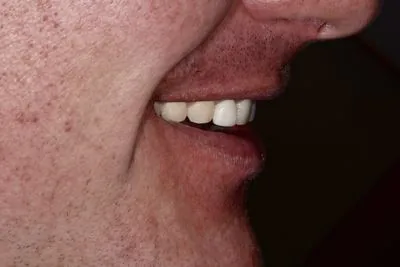
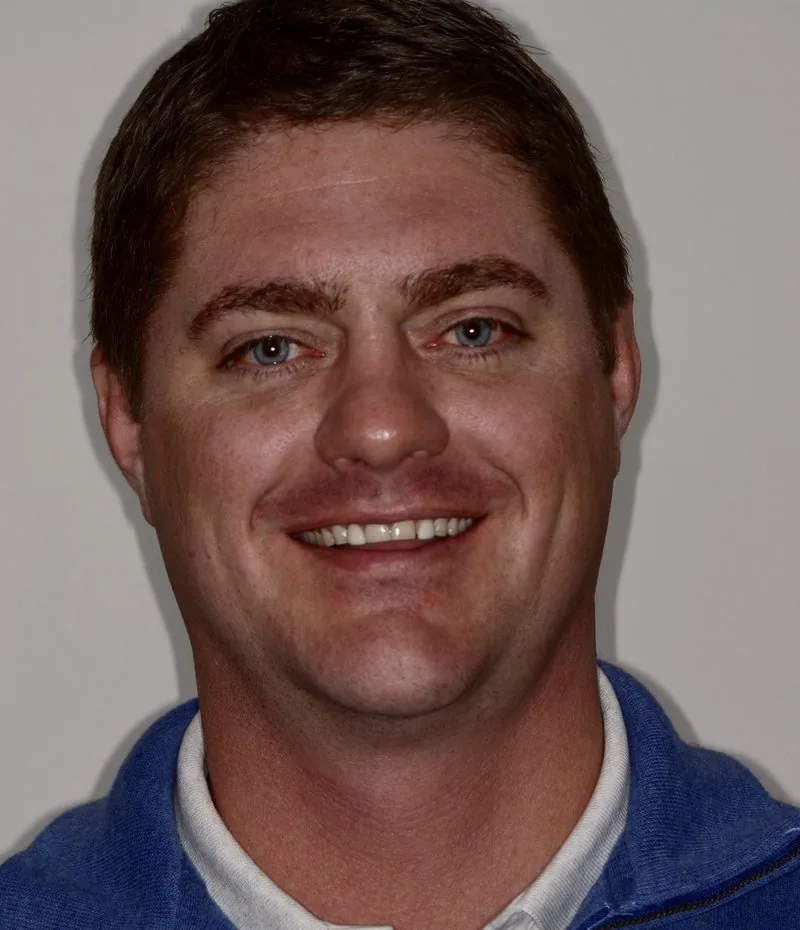 Before
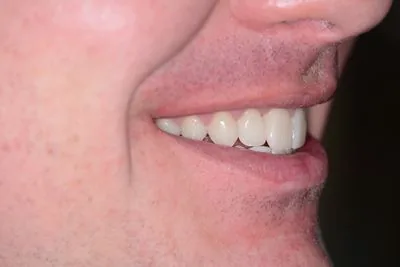
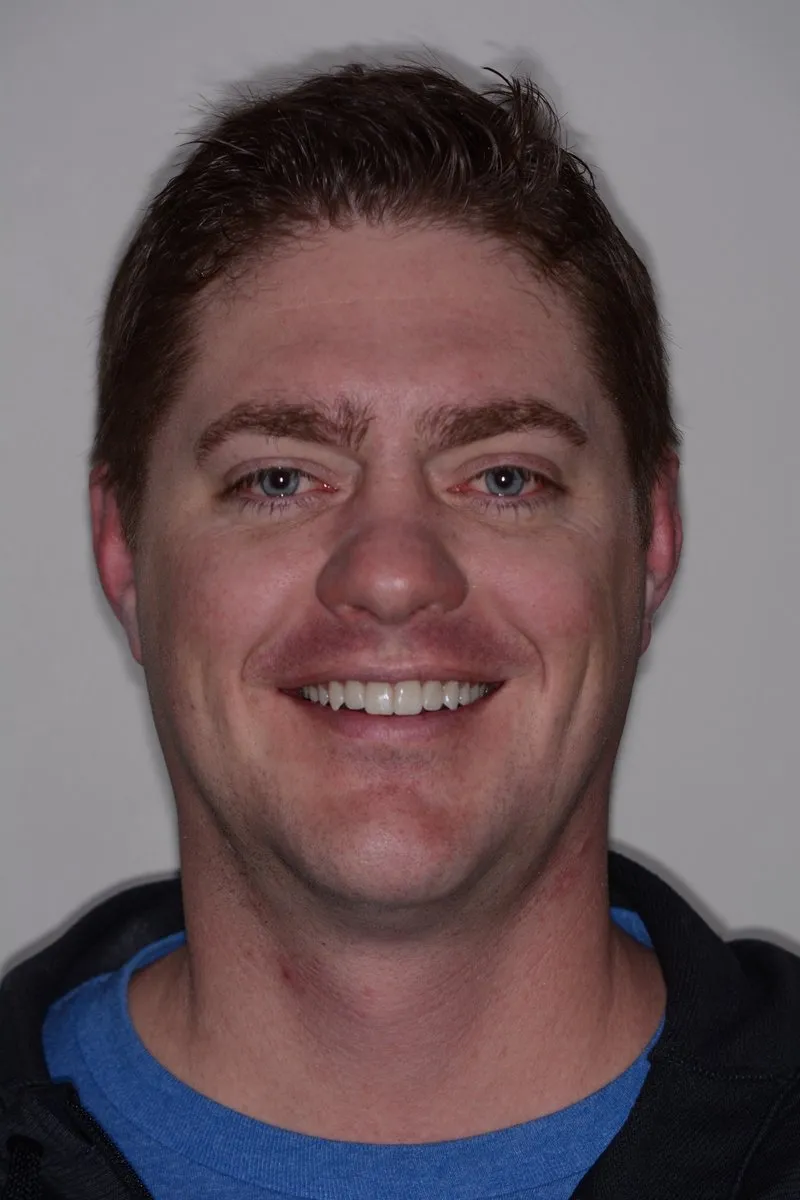 After
After
| Patient | Brandon, late 30s |
| Chief Complaint | Genetically small lateral incisors; severe wear from stress-related grinding |
| Treatment | 20 veneers, 4 crowns (24 total restorations) |
| Material | E.max (lithium disilicate) |
| Bite Correction | ~5mm anterior opening, 2–3mm posterior opening |
| Investment Range | $45,000 – $65,000 |
| Location | Lakewood, Colorado |
| Clinical Reviewer | Dr. Brennan Bonati, DDS |
Brandon's Story
Brandon was in his late 30s when he decided it was time to address two problems that had been affecting his confidence and his dental health for years. The first was genetic: his lateral incisors — the teeth immediately next to the front two — were naturally smaller than normal, creating visible size discrepancies in his smile that had always bothered him. The second was behavioral: years of stress-related grinding had worn down his teeth significantly, compounding the aesthetic issues and creating real functional problems.
The combination of small laterals and bruxism-related wear meant that Brandon's smile looked uneven, his teeth were shorter than they should have been, and his bite had collapsed from the grinding. He was not just looking for a cosmetic improvement — he needed a solution that would restore proper tooth proportions, rebuild the vertical dimension he had lost to grinding, and create a stable bite that could withstand the forces his jaw was generating.
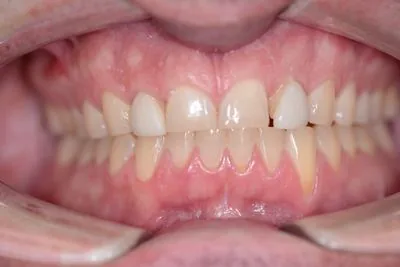 Click to enlarge
Like Most patients in these documented cases, Brandon wanted a natural, beautiful smile that he helped design. He was actively involved in the smile try-in process, approving the shape, size, and proportions of his new teeth before any preparation began.
The Treatment Plan
Brandon's case required 24 total restorations — 20 veneers and 4 crowns — all fabricated in E.max lithium disilicate. The 20 veneers covered the teeth with enough remaining structure to support a conservative preparation, while the 4 crowns were placed on teeth that had lost too much structure from grinding to safely receive veneers.
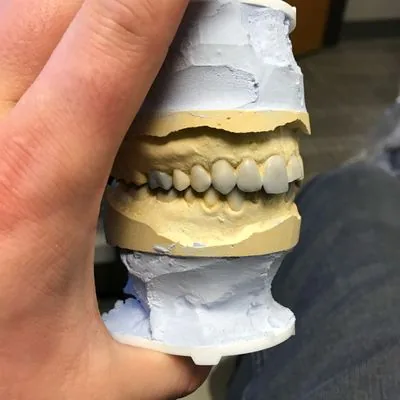
The bite opening was significant: approximately 5 millimeters in the anterior region and 2 to 3 millimeters in the posterior. This degree of change required careful management of the vertical dimension through every phase of treatment. Rather than using a separate deprogramming appliance, the bite repositioning was managed through the restorations themselves — the temporaries served as the deprogramming device, allowing Brandon's muscles and jaw joints to adapt to the new position gradually.
The treatment followed the same multi-appointment process used in all complex cases documented on this site: consultation and records, smile try-in for patient approval, a full prep day, a post-prep bite and cosmetic check when the patient was not numb, a period in temporaries while the lab fabricated the finals, delivery, post-delivery bite verification, and night guard fabrication and delivery.
Equilibration was performed throughout the process to ensure balanced contacts across all teeth and protect the restorations from excessive force in any single area.
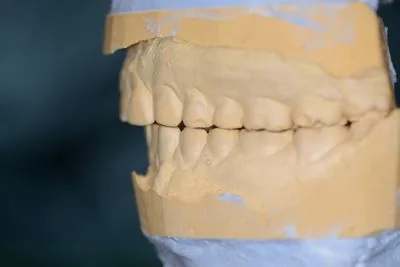 Click to enlarge
 Click to enlarge
Clinical Insight
Brandon's case is notable because it was an first full-arch case of this complexity — and it did not go perfectly. Being transparent about that is important, because it illustrates a critical lesson that every dentist performing complex restorative work needs to understand.
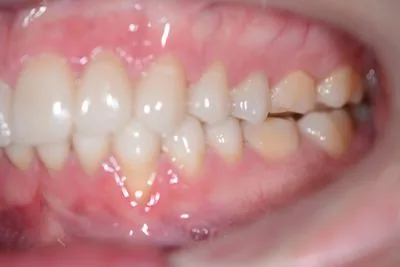
The initial bite records were not registered correctly. In a case with 24 restorations and a 5-millimeter bite opening, even a small error in the centric relation record has cascading consequences. Brandon kept breaking his temporaries because the bite was not stable — the teeth were contacting in the wrong places, concentrating forces on individual restorations instead of distributing them evenly.
 Click to enlarge
Because the final restorations are fabricated based on the temporaries the patient has been wearing, the incorrect bite carried through to the final E.max porcelain. When the finals were delivered, Brandon was still grinding hard because the occlusion was off. The treating dentist had to make the decision to replace all of the lower porcelain after taking new, accurate bite records.
The case ultimately achieved an excellent outcome — Brandon was very happy with the final result — but it took extra time and required the treating dentist to recognize the problem, take responsibility, and redo the work until it was right. The experience reinforced a principle that now guides every complex case: precise bite registration at the records stage is non-negotiable, especially in bruxism patients with significant vertical dimension changes. The temporary phase exists to catch and correct problems before they become permanent — but the records have to be accurate enough to give the temporaries a fighting chance.
The Result
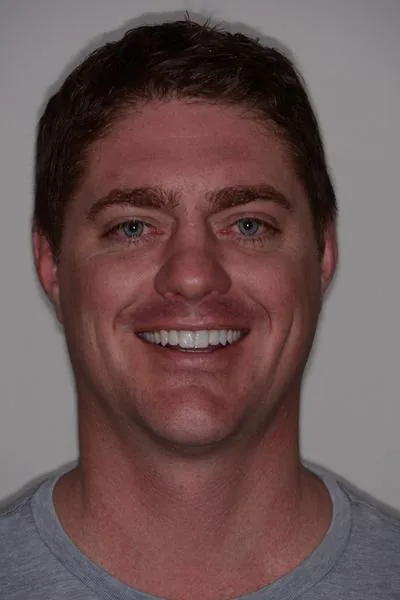
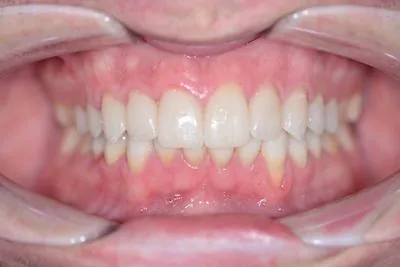
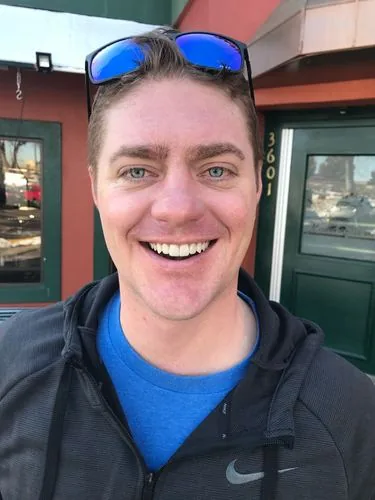
The final result was a complete smile transformation. Brandon's lateral incisors were now properly proportioned relative to his central incisors and canines, creating the balanced, symmetrical smile he had always wanted. The worn, shortened teeth were restored to their proper length and contour, and the bite was stable and comfortable.
 Click to enlarge
More importantly, the functional problems were resolved. With the correct vertical dimension restored and a properly equilibrated bite, the forces were distributed evenly across all 24 restorations. A custom night guard was fabricated to protect the investment during sleep, when bruxism forces are typically strongest.
 Click to enlarge
 Click to enlarge
 Click to enlarge
 Click to enlarge
Hear From Brandon
Brandon's full-arch reconstruction addresses the dual challenges of genetically small lateral incisors and severe wear caused by bruxism, showcasing how veneers and crowns can rebuild both function and confidence. This case underscores the importance of evaluating veneer candidacy in complex full mouth cases where bite correction is needed. The extensive use of porcelain E.max veneers and crowns demonstrates their role in durable bite reconstruction. Patients often inquire about the cost of full mouth veneer and crown treatments when considering similar cases. Additionally, this case helps explain what veneers are and how they restore worn teeth affected by grinding.
Free Resource
Am I a Candidate? Download Your Free Guide to Find Out
The complete self-assessment checklist — good candidate indicators, pre-treatment conditions to resolve, and what to expect at your first consultation. Clinically reviewed by Brennan Bonati, DDS.
No spam. No sales call. One email with your download link.
At a Glance
Brandon had genetically small lateral incisors and severe wear from stress-related grinding, compromising both aesthetics and function.
For Brandon's genetically small lateral incisors and moderately worn anterior teeth, veneers provided the most conservative path to a proportional, natural-looking smile. Rather than grinding down healthy tooth structure for full crowns, veneers allowed the treating dentist to add material to the front surface — building out the width and length of undersized teeth while protecting what remained. The porcelain material also offered superior stain resistance and light-reflecting properties compared to composite bonding, which was critical given Brandon's history of bruxism-related wear.
24 total restorations (20 veneers, 4 crowns) in E.max with ~5mm anterior bite opening.
Fully restored smile with proper proportions, corrected bite, and a custom night guard to protect the investment long-term.
Related Reading
- How Much Do Veneers Cost? The Complete Guide — understand pricing for multi-unit veneer cases
- Is a Candidate for Veneers?— Learn how bruxism affects candidacy and what options exist
- Types of Veneers: Porcelain, Composite, and E.max — why E.max is often the material of choice for bruxism patients
- What to Expect During the Veneer Procedure — the step-by-step process Brandon went through
- Veneer Results and Long-Term Care — how to protect your investment with proper maintenance
- Veneers for Crooked or Uneven Teeth — how veneers can correct size and alignment issues
Inspired by Brandon's Story?
I Want Results Like Brandon — Book My Free Consultation
Schedule a no-obligation consultation with a trusted Colorado cosmetic dentist. Most patients are seen within 1–2 weeks.
Not Every Patient Is a Candidate
The outcome shown in this case reflects a specific clinical situation. Results vary based on the patient's existing tooth structure, gum health, bite, and compliance with post-treatment care. Patients with active gum disease, insufficient enamel, or severe bruxism may not be candidates for veneers without first addressing those conditions. A thorough clinical evaluation — including X-rays, bite analysis, and periodontal assessment — is required before any treatment plan is finalized.
Frequently Asked Questions About Veneers and Bruxism
Can you get veneers if you grind your teeth?
Yes, but the case requires careful planning. Bruxism generates forces that can damage porcelain restorations, so the treatment plan must account for proper bite distribution, adequate material thickness, and a protective night guard after treatment. E.max lithium disilicate is often preferred for bruxism patients because of its superior strength compared to traditional feldspathic porcelain. The key is working with a dentist experienced in managing occlusion in complex cases.
What are genetically small lateral incisors?
Some people are born with lateral incisors — the teeth immediately next to the two front teeth — that are naturally smaller than average. This condition, sometimes called peg laterals or microdontia, creates visible gaps or size discrepancies in the smile. Veneers are one of the most effective treatments because they can build the teeth out to proper proportions without removing healthy tooth structure from adjacent teeth.
Why were some teeth crowned instead of veneered in this case?
Veneers cover only the front surface of a tooth and require a certain amount of healthy enamel to bond to. When a tooth has lost too much structure — from grinding, decay, or previous dental work — a full-coverage crown provides 360-degree protection and a stronger bond. In Brandon's case, 20 teeth had enough remaining structure for veneers, while 4 teeth required the additional coverage and strength of a full crown.
How long do E.max veneers last on a bruxism patient?
With proper bite management, regular dental visits, and consistent night guard use, E.max veneers can last 15 to 20 years or longer — even in bruxism patients. The critical factors are a correctly equilibrated bite that distributes forces evenly, a well-fitted night guard worn every night, and regular check-ups to catch any issues early. Without a night guard, the lifespan of any porcelain restoration in a bruxism patient is significantly reduced.
What happens if the bite is not registered correctly?
An inaccurate bite registration can lead to restorations that do not fit together properly, causing uneven forces, discomfort, broken restorations, and potential jaw pain. In Brandon's case, the initial bite records were not accurate, which led to broken temporaries and finals that needed to be remade. This is why experienced cosmetic dentists emphasize precise records and use the temporary phase to verify the bite before committing to final porcelain. If the temporaries are not comfortable and stable, the finals will not be either.
Find Veneers Near You
All three documented cases were treated in the Denver metro area. If veneers are being considered, cost and provider information for the relevant city should be explored:
Not in Colorado? Browse all locations →
Explore More Cases
Each case below includes a full clinical breakdown with before-and-after documentation.