How Long Do Veneers Last? A Clinical Perspective on Lifespan
When patients ask how long their veneers will last, the answer often surprises patients. They expect to hear a simple number, but the truth is, the lifespan of a veneer isn't just about the material. In clinical experience, the real key to longevity is the bite. The bite is the foundation for everything done in cosmetic dentistry. When the bite is right, and the patient is committed to protecting it, veneers can last for decades.
This guide is based on the clinical philosophy of bite-focused, comprehensive care. The longevity of different veneers, their cost, and, more importantly, the reasons behind their durability will be explored. It comes down to three things: a dentist who addresses the bite, the right material for the patient's specific needs, and a patient who wears their night guard. When these three factors are properly managed, a beautiful, functional smile can be expected for a very long time.
Veneer Lifespan: A Clinical Comparison
The choice between porcelain and composite is a clinical decision made with patients, not a budget one. The material must match the patient's bite, their goals, and their age. While websites often give simple year ranges, the clinical reality is more nuanced. Here’s what cosmetic dentists advise about what to expect.
Joanne — Built to Last
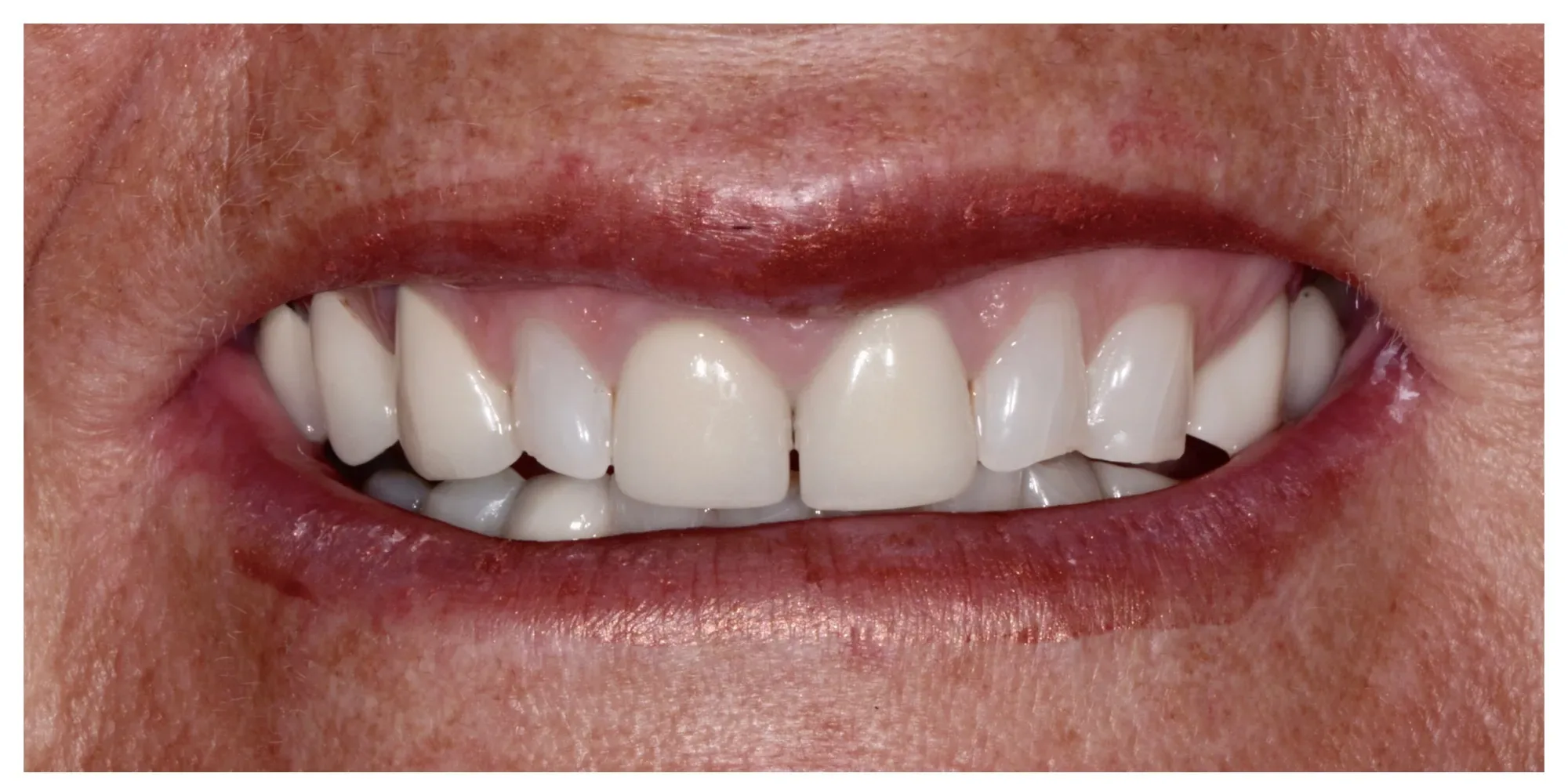 Before
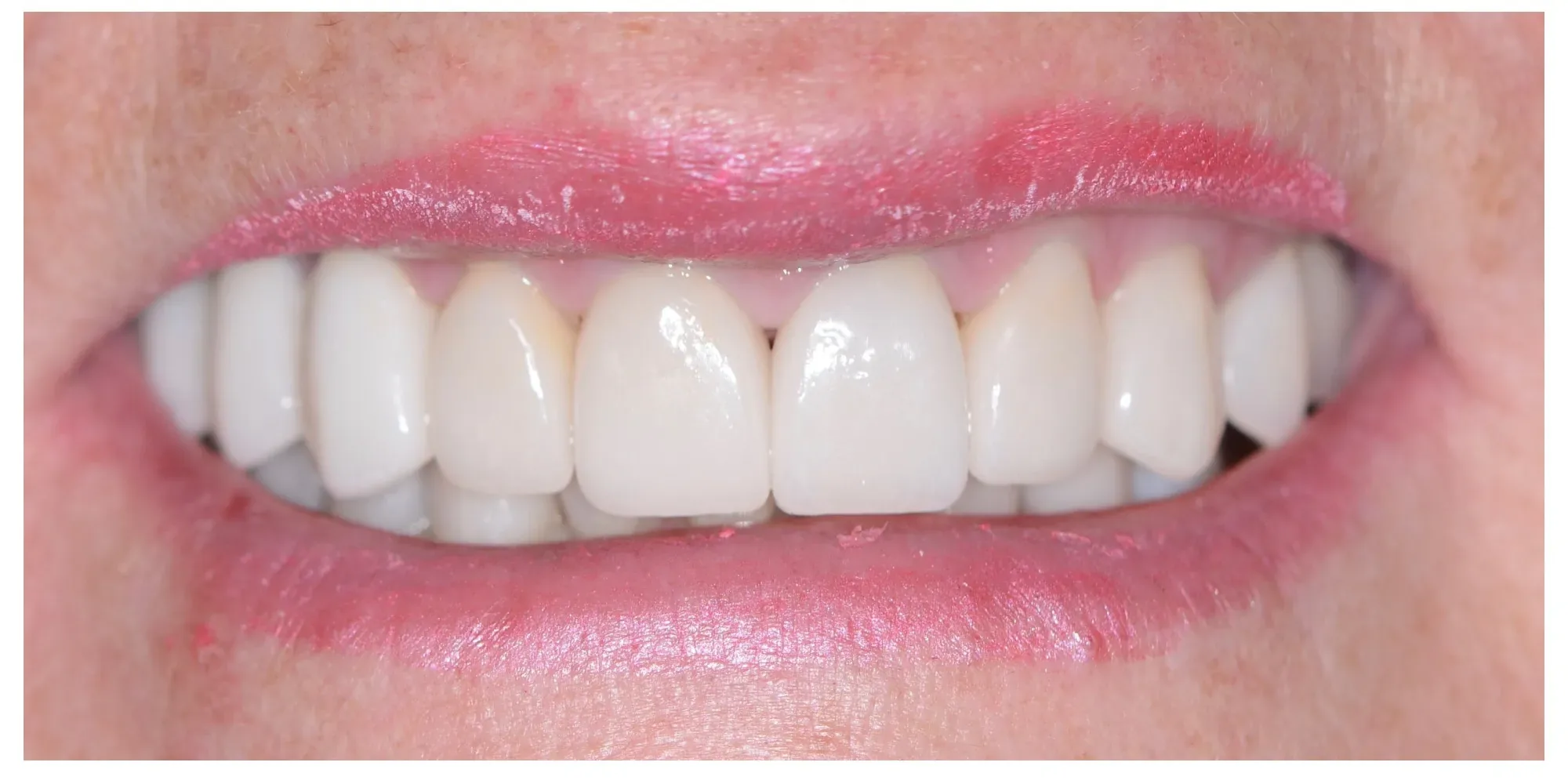 After
After
E.max restorations with proper bite correction. Expected lifespan: 15-20+ years.
Read the full case →| Veneer Type | Typical Lifespan | Clinical Perspective |
|---|---|---|
| Porcelain Veneers | 15-25+ years | The gold standard for durability. When the bite is managed, studies on the same E.max material used for crowns show a potential 50-year lifespan. This choice is recommended for complex cases and full reconstructions. |
| Composite Veneers | 5-10 years | An excellent strategic option, especially for younger patients. They can be repaired, which extends their life. cosmetic dentists often use them as a first step before a patient transitions to porcelain later in life. |
| No-Prep Veneers | 7-15 years | Their longevity is highly dependent on a naturally ideal bite. They are not a solution for correcting bite issues and are only suitable for a small subset of patients. |
Porcelain Veneers: The Gold Standard for Longevity (15-25+ Years)
Porcelain is used for its strength, beauty, and incredible durability. From a clinical standpoint, these are built to last. Long-term studies on dental crowns made from the exact same ceramic materials (like E.max) show an average lifetime of around 50 years. cosmetic dentists advise that their veneers can realistically last for decades, provided the bite is correctly aligned from day one and a commitment to wearing a night guard is maintained. The material itself is incredibly resistant to staining and chipping; the real variable is the force applied to it.
Composite Veneers: A Strategic First Step (5-10 Years)
Many websites position composite as a "budget" option, but that’s not how experienced dentists see it. Composite is considered a strategic clinical tool. For a younger patient, say in their 20s, placing porcelain might mean facing a replacement cycle later in life. Instead, composite veneers can be used to provide a beautiful smile for 10+ years. A key benefit is that composite can be repaired, which can extend its functional life. This approach allows patients to enjoy a great smile and then, when the time is right, transition to porcelain. It is about planning for a lifetime, not just the next few years.
No-Prep Veneers: A Niche Solution (7-15 Years)
No-prep veneers have their place, but their success is entirely dependent on the patient's existing bite. Because they are so thin and no tooth structure is removed, there is no ability to alter or improve the way the teeth come together. If a patient already has a perfectly harmonious bite and just wants a color or minor shape change, they can be a good, conservative option when searching for veneers near you. However, for most patients dental professionals observe, addressing the bite is a non-negotiable part of the process, making traditional veneers a more predictable and durable choice.
The 3 Pillars of Veneer Longevity
The veneer material is only one part of the equation. In a quality cosmetic practice, it has been found that three pillars are essential for ensuring a long-lasting result, as seen in many before and after veneer examples. If any of these are overlooked by a dentist, the lifespan of the restorations will be compromised.
- 1. A Bite-Centered Approach: This is the absolute foundation. Before treatment begins, a thorough analysis of the patient's occlusion (bite) is conducted by the dentist. During the temporary phase, the way the teeth come together is perfected to ensure there are no excessive forces on the veneers. What cosmetic dentists advise is, "Everything is addressed in the temps." This meticulous process, which might take a few extra appointments, is what allows for a lifetime result.
- 2. Wearing a Night Guard: This is non-negotiable for patients. Most people clench or grind their teeth at night, even if they don't realize it. This habit, called bruxism, places immense pressure on veneers. A custom-fitted night guard is the single most important thing a patient can do to protect their investment and prevent fractures. As seen with patient Brandon, who was a heavy grinder, managing bruxism is key to a successful 24-unit restoration.
- 3. Excellent Oral Hygiene: While veneers themselves can't decay, the natural tooth underneath and the surrounding gums are still vulnerable. The edge where the veneer meets the tooth is a critical area. cosmetic dentists advise to use a non-abrasive fluoride toothpaste and to be diligent with their daily flossing to keep this margin clean and prevent decay that could compromise the veneer from underneath.
Signs It's Time for a Clinical Evaluation
Even the best veneers will eventually need professional attention. If you notice any of these signs, it's time to see your dentist for an evaluation. It doesn't always mean a full replacement is needed, but it does require a clinical assessment.
- Visible Damage: Obvious chips, cracks, or fractures are clear indicators. While composite can often be repaired, a fractured porcelain veneer typically requires replacement.
- Gum Line Changes: If you see a dark line or a gap appearing between the veneer and your gum, it could be a sign of gum recession or the bond failing. This needs to be addressed to protect the underlying tooth.
- Discoloration at the Edges: Porcelain is very stain-resistant, but the bonding material at the edge can discolor over time. This is primarily an aesthetic issue but warrants an examination.
- Underlying Tooth Sensitivity or Decay: If you feel any new sensitivity or your dentist diagnoses decay under the veneer, the restoration must be removed to treat the tooth. This is why thorough records and a good lab are non-negotiable from the start.
- A Loose Feeling: If a veneer feels loose, the bond has weakened. Contact your dentist immediately to have it re-bonded to prevent it from falling off, which could lead to damage or loss.
The Cost of Veneer Replacement
From a clinical perspective, replacing a veneer is the same procedure as placing a new one. Therefore, the cost is generally the same as the initial placement. This is why a long-term strategy is emphasized with patients. By investing in a comprehensive, bite-focused treatment plan from the beginning—and protecting that investment with a night guard—the need for replacement can be significantly delayed, often for decades.
What cosmetic dentists advise is this: for older patients, a set of well-made porcelain veneers placed on a healthy, stable bite may very well last the rest of their lives. For younger patients, one replacement cycle may be needed in their lifetime. However, by using a strategy such as starting with composite and transitioning to porcelain later, a lifetime of beautiful smiles with minimal intervention can be planned.
Absolutely not, provided the work is done correctly. A red flag for me is any dentist who doesn't do a thorough records appointment with photos and X-rays. Proper veneer preparation involves removing a minimal amount of enamel to create space for the porcelain. This is a precise and conservative process designed to preserve the health and integrity of the tooth. A poorly done veneer can cause problems, but a properly planned and executed veneer protects the tooth.
In clinical experience, this is rare if the bite has been managed correctly and the bonding protocol has been followed. However, if it does happen, the dentist should be contacted right away. The veneer should be saved if possible. Temporary dental cement should not be used to reattach it. Often, it can be re-bonded if the veneer and the tooth are undamaged. A loose veneer is usually a sign of a bite issue that needs to be addressed.
References
- American Academy of Cosmetic Dentistry (AACD). Dear Doctor.
- American Dental Association (ADA). Veneers.
- American Dental Association (ADA). Brushing Your Teeth.