Apollonia's Composite Veneers: An On-Camera Smile Built in 3 Visits
Clinically Reviewed by Brennan Bonati, DDS — Cosmetic & Restorative Dentistry
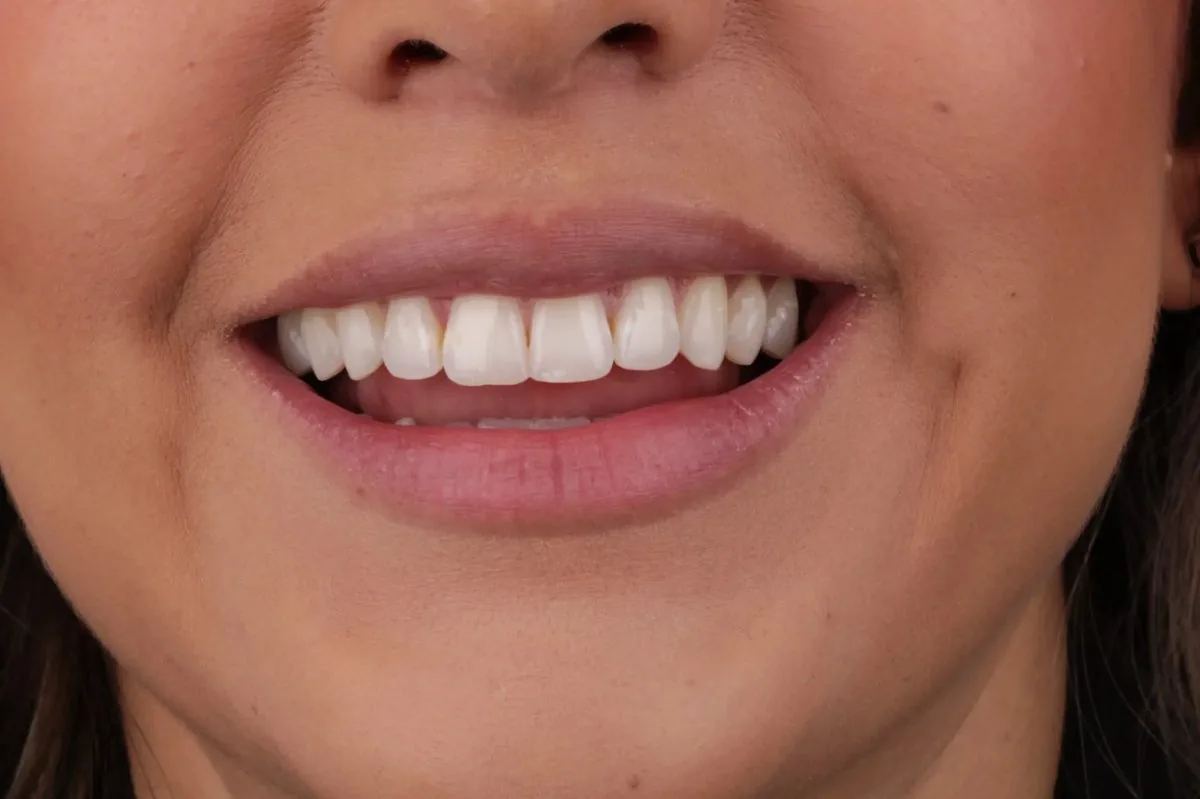
 Before
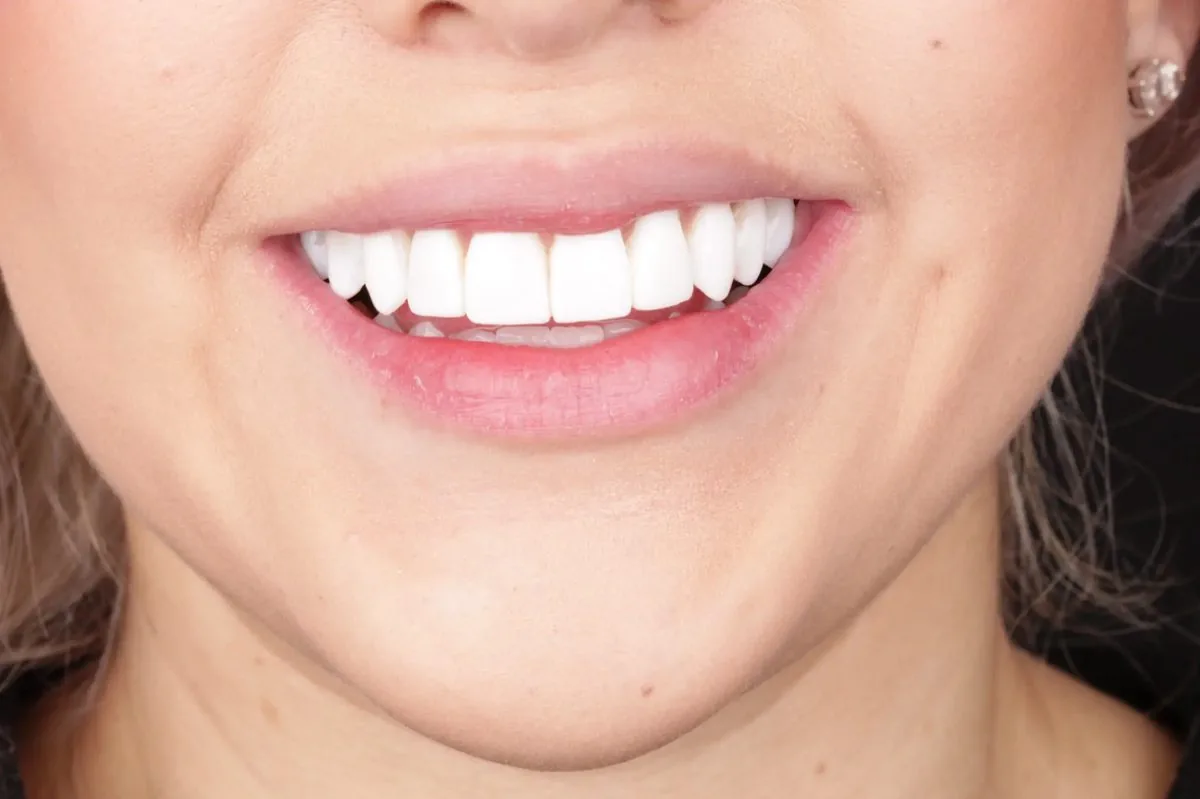
 After
After
| Patient | Apollonia, television personality |
| Chief Complaint | Teeth too short and slightly yellow — wanted a fuller, whiter smile for on-camera work |
| Treatment | 10 no-prep composite veneers, upper arch |
| Material | Composite resin |
| Shade | BL (bleach shade) |
| Pre-Treatment | None — no tooth reduction, additive only |
| Investment | $10,000 |
| Appointments | 3 visits |
| Location | Lakewood, Colorado |
| Clinical Reviewer | Dr. Brennan Bonati, DDS |
Apollonia's Story
Apollonia worked in television. Her smile was on camera regularly, and she knew it. Her teeth were not dramatically discolored or damaged — they were simply shorter than she wanted, slightly yellow, and the overall smile corridor felt narrow. On screen, that translated to a smile that looked smaller and less confident than she felt. She wanted a fuller, brighter result that would read well on camera without looking overdone or artificial.
The goal was to add length, add brightness, and widen the smile corridor — all without touching her natural teeth. She was a strong candidate for no-prep composite veneers: her existing teeth were healthy, her bite was sound, and the changes she wanted were additive rather than corrective.
 Click to enlarge
 Click to enlarge
The Treatment Plan
Ten no-prep composite veneers on the upper arch, shade BL. BL is the brightest category in the standard shade guide — the kind of white that reads as intentional and polished on camera without crossing into the artificial territory that high-definition cameras can expose. No tooth structure was reduced. The composite was bonded directly to the existing enamel, sculpted to add length and fullness, and finished to a high polish.
The case was completed in three appointments: an initial consultation and records visit, a delivery appointment where all ten veneers were placed, and a final refinement visit to fine-tune the shape and occlusion. Apollonia was very happy with the result.
Clinical Insight
Composite veneers are often underestimated as a cosmetic solution, particularly for patients who have seen dramatic porcelain veneer transformations and assume composite cannot achieve a comparable result. In cases like Apollonia's — where the goal is to add length, add brightness, and widen the smile corridor on teeth that are already healthy and well-proportioned — composite is not a compromise. It is the right material for the job.
The no-prep approach is especially appropriate when the patient's existing teeth are not overly prominent. Adding composite to a tooth that is already at the correct facial position can result in a slightly bulkier feel, but for patients with teeth that are shorter or slightly recessed, the additive composite creates exactly the right volume. Apollonia's case is a textbook example: the before teeth were slightly short and narrow, and the composite additions created the fuller, more prominent smile she needed for on-camera work.
Free Resource
Am I a Candidate? Download Your Free Guide to Find Out
The complete self-assessment checklist — good candidate indicators, pre-treatment conditions to resolve, and what to expect at your first consultation. Clinically reviewed by Brennan Bonati, DDS.
No spam. No sales call. One email with your download link.
At a Glance
Short, slightly yellow teeth with a narrow smile corridor — not ideal for on-camera work.
Additive, no-prep approach added length and brightness without touching natural tooth structure.
10 composite veneers, upper arch, BL shade. 3 appointments. $10,000.
Fuller, brighter, camera-ready smile. Apollonia was very happy with the result.
Apollonia’s transformation highlights how composite veneers can create a fuller, brighter smile with no-prep techniques, which is ideal for patients who want to avoid enamel removal while achieving a natural look. Candidates considering this treatment should review the veneer candidacy criteria to ensure suitability. While the veneer procedure for composite veneers is typically quicker and less invasive than porcelain options, understanding the cost considerations for composite veneers is essential for informed decision-making. To see more examples of similar smile enhancements, visit the composite veneers case study hub.
Inspired by Apollonia's Story?
See What's Possible — Get a Free Cost Estimate
Find out what composite veneers would cost for your specific case — no obligation.
Related Reading
- Composite Veneers: When They're the Right Choice
- Porcelain vs. Composite Veneers: Which Is Right for You?
- How Much Do Veneers Cost? The Complete Guide
- Alex — Composite Veneers for Intrinsic Staining
Frequently Asked Questions
Composite veneers typically last 5 to 10 years with proper care. They are more susceptible to staining and chipping than porcelain but can be easily repaired or replaced when needed.
Yes. Because no tooth structure is removed in a no-prep composite case, the veneers can be removed and the teeth returned to their original state. This makes composite an excellent option for patients who want a conservative approach.
In the hands of a skilled clinician, composite veneers can achieve excellent aesthetics. However, porcelain offers superior translucency and stain resistance over time. Composite is best suited for patients seeking a conservative, reversible, or interim solution.
Find Veneers Near You
Not in Colorado? Browse all locations →