Both porcelain veneers and dental crowns restore damaged teeth — but they remove very different amounts of tooth structure. A veneer covers only the front surface. A crown encases the entire tooth. This guide explains the clinical criteria that determine which is right for your situation.
Veneers vs. Crowns: The Comparison
| Factor | Porcelain Veneers | Dental Crowns |
|---|---|---|
| Best For | Cosmetic improvements on structurally sound teeth | Structurally compromised teeth needing full coverage |
| Cost Per Tooth | $900 – $2,500 | $1,000 – $3,500 |
| Tooth Reduction | Front surface only (0.3–0.5mm) | All surfaces (1.5–2mm circumferential) |
| Lifespan | 15 – 20+ years | 15 – 25+ years |
| Strength | Strong for front teeth — not for heavy bite forces | Maximum strength — suitable for molars and bite-bearing teeth |
| Reversibility | Irreversible but conservative | Irreversible — significant tooth structure removed |
| Appointments | 2 visits over 2–3 weeks | 2 visits over 2–3 weeks |
For a full cost breakdown including payment plans and financing, see the complete cost guide.
When Each Option Makes Sense
The decision is structural, not cosmetic. A veneer is appropriate when the tooth has adequate remaining enamel, no large existing restorations, and the bite forces on that tooth are manageable. A crown is required when the tooth has been significantly weakened by decay, fracture, root canal treatment, or large composite fillings that leave insufficient enamel for veneer bonding.
The four situations that require a crown over a veneer: (1) prep margins would land on composite rather than enamel, (2) insufficient remaining tooth structure, (3) bite contacts must land on the restoration, (4) the tooth needs full coverage for structural reasons. If none of these apply, a veneer is the more conservative choice.
Real Patient Cases
See how real patients navigated this decision with their cosmetic dentist.
Danielle — Replacing Failed Crowns with Veneers
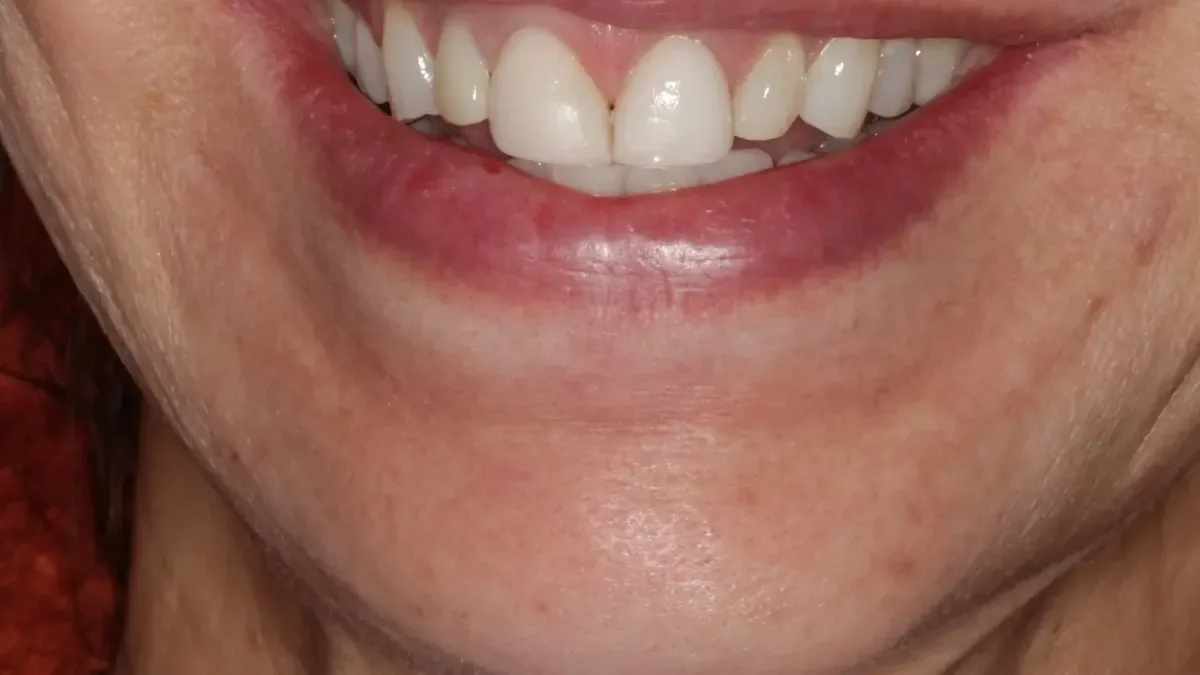 Before
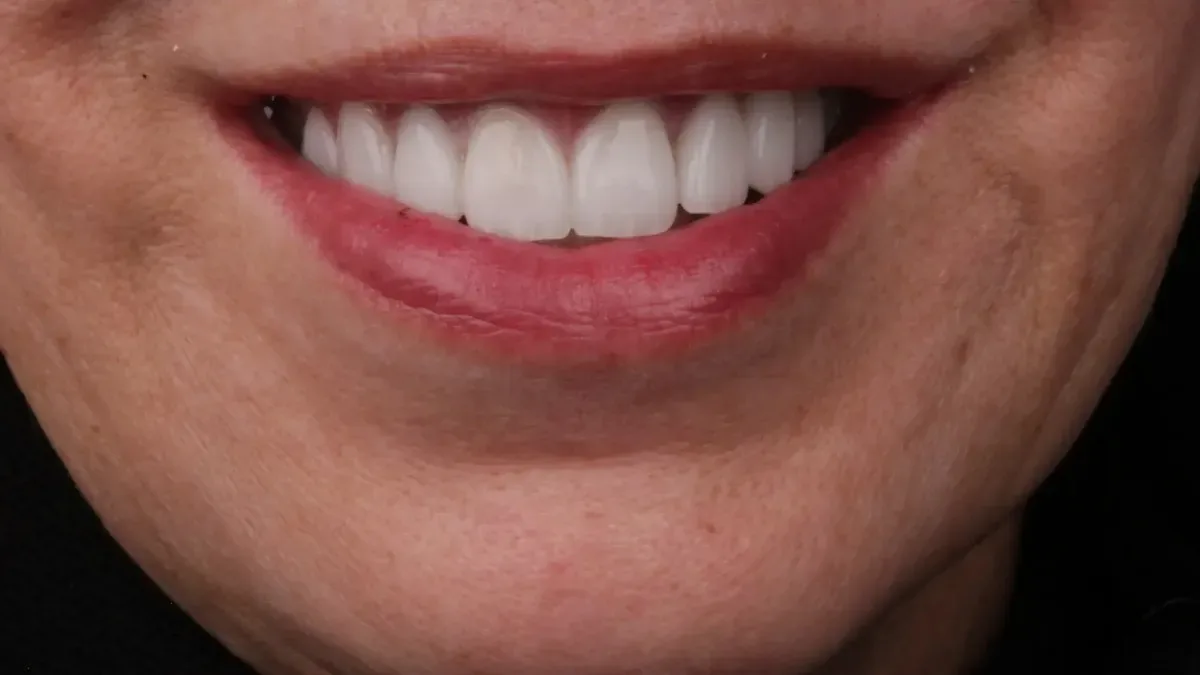 After
After
Old mismatched crowns replaced with a combination of veneers and crowns for a uniform result.
View Danielle's full case →Joan — Full-Mouth Crowns for Collapsed Bite
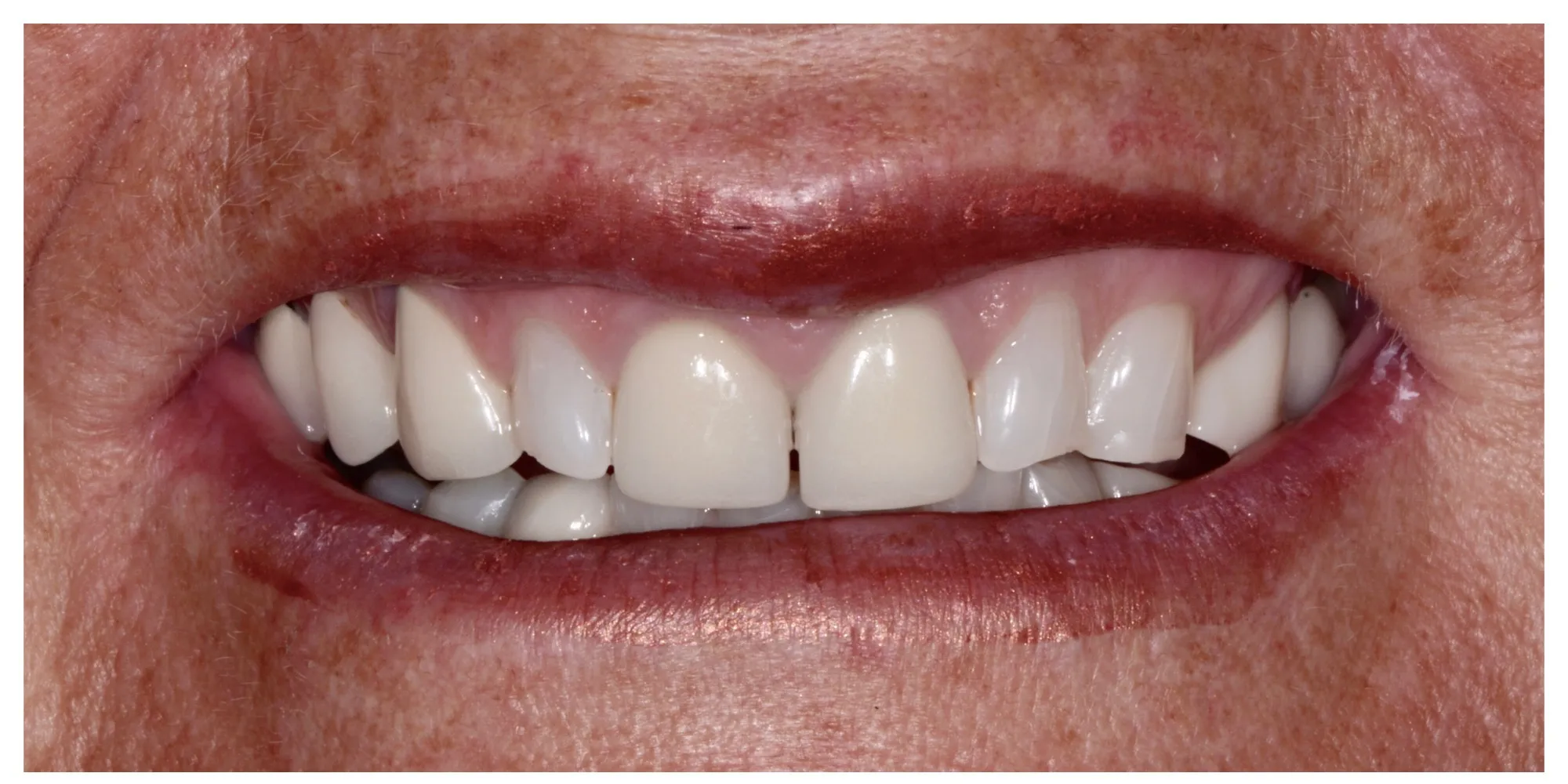 Before
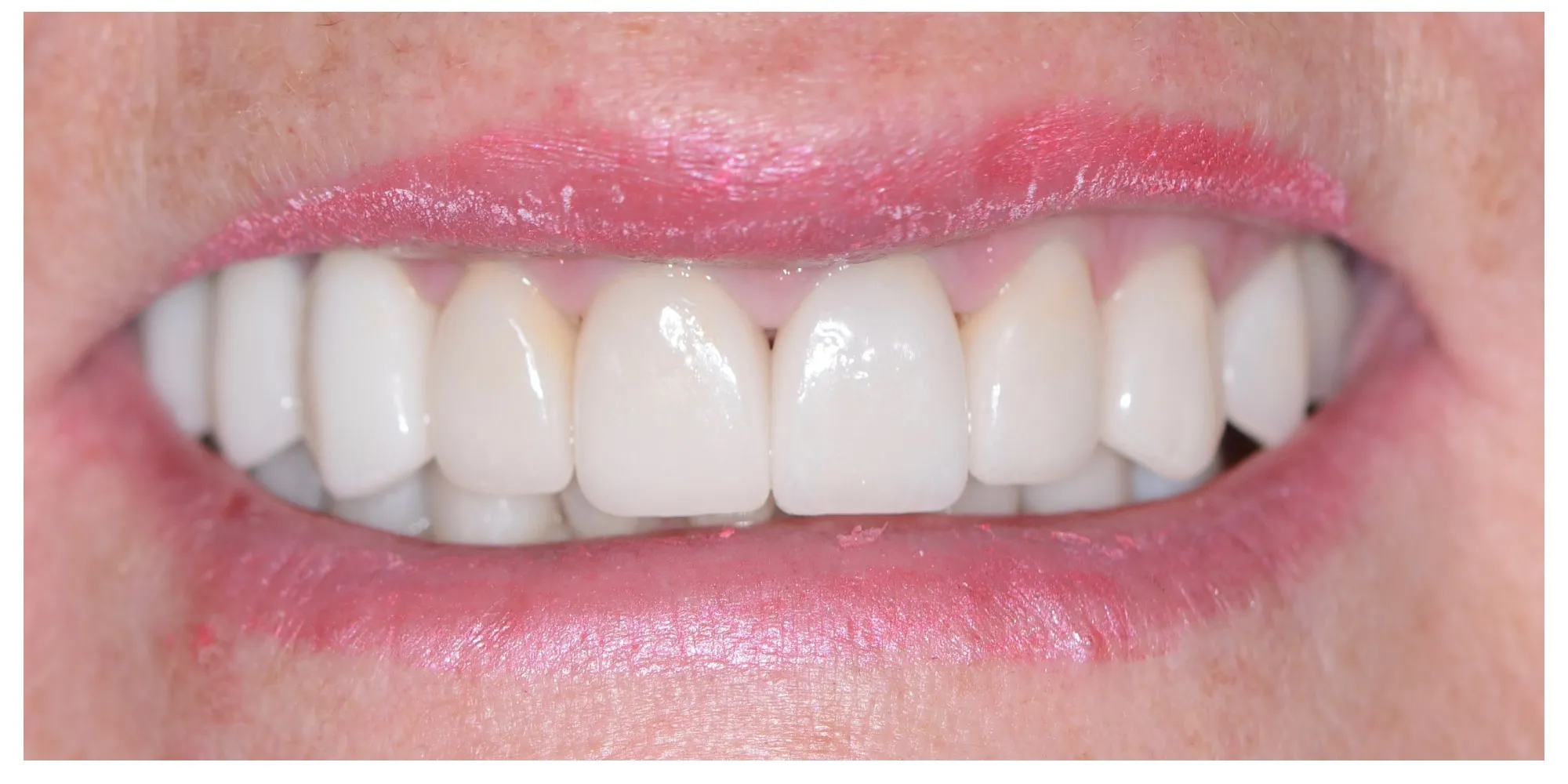 After
After
Severe wear and structural damage required full-coverage crowns rather than veneers — 24 E.max restorations.
View Joan's full case →I Understand My Options — Now What?
You know the difference. Here’s how to take the next step.
Frequently Asked Questions
No — a veneer bonds to natural tooth enamel. If a tooth already has a crown, the replacement would be a new crown, not a veneer. However, adjacent teeth with crowns can have veneers placed on neighboring natural teeth to create a uniform appearance across the smile.
Yes — crowns provide 360-degree coverage and can withstand heavier bite forces. This makes them appropriate for molars, teeth with root canals, and teeth that bear significant chewing load. Veneers are strong enough for front teeth where forces are primarily shearing rather than compressive. For a full cost comparison, see our cost guide.
A dentist recommends a crown when the tooth lacks sufficient healthy enamel for veneer bonding, has large existing fillings, needs structural reinforcement after root canal treatment, or must bear heavy bite forces. The recommendation is based on long-term prognosis — a veneer on a structurally compromised tooth has a higher failure rate.