Danielle's Smile Refresh: Replacing Mismatched Crowns and Old...
Clinically Reviewed by Brennan Bonati, DDS — Cosmetic & Restorative Dentistry
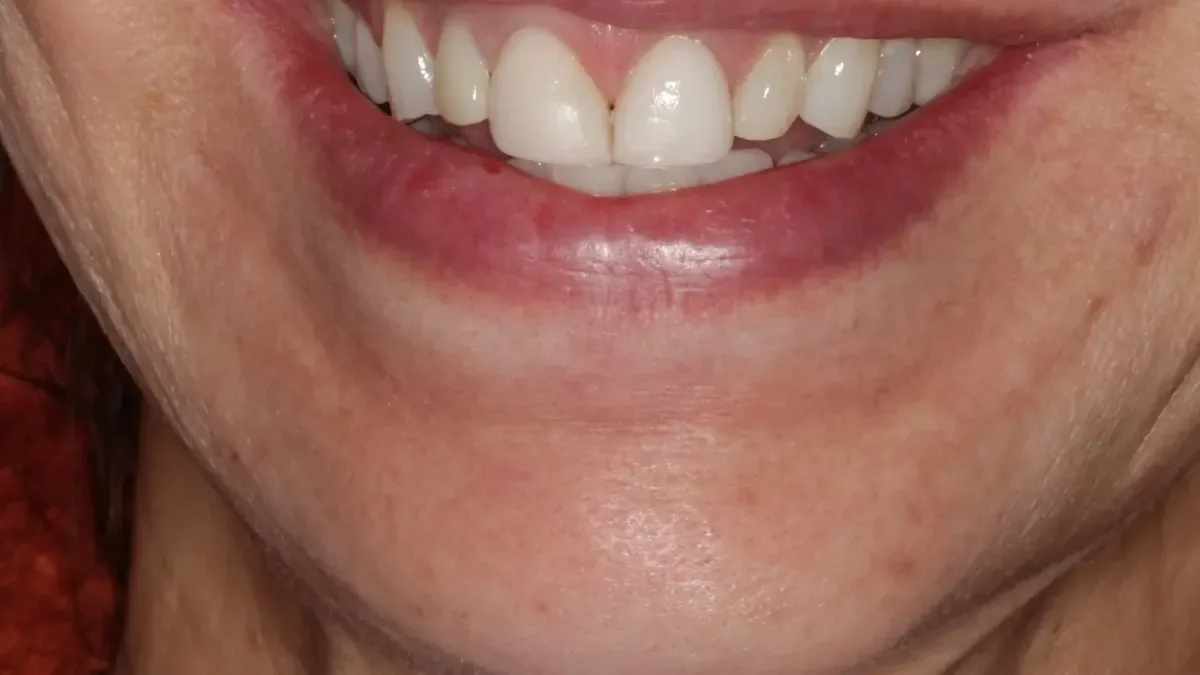 Before
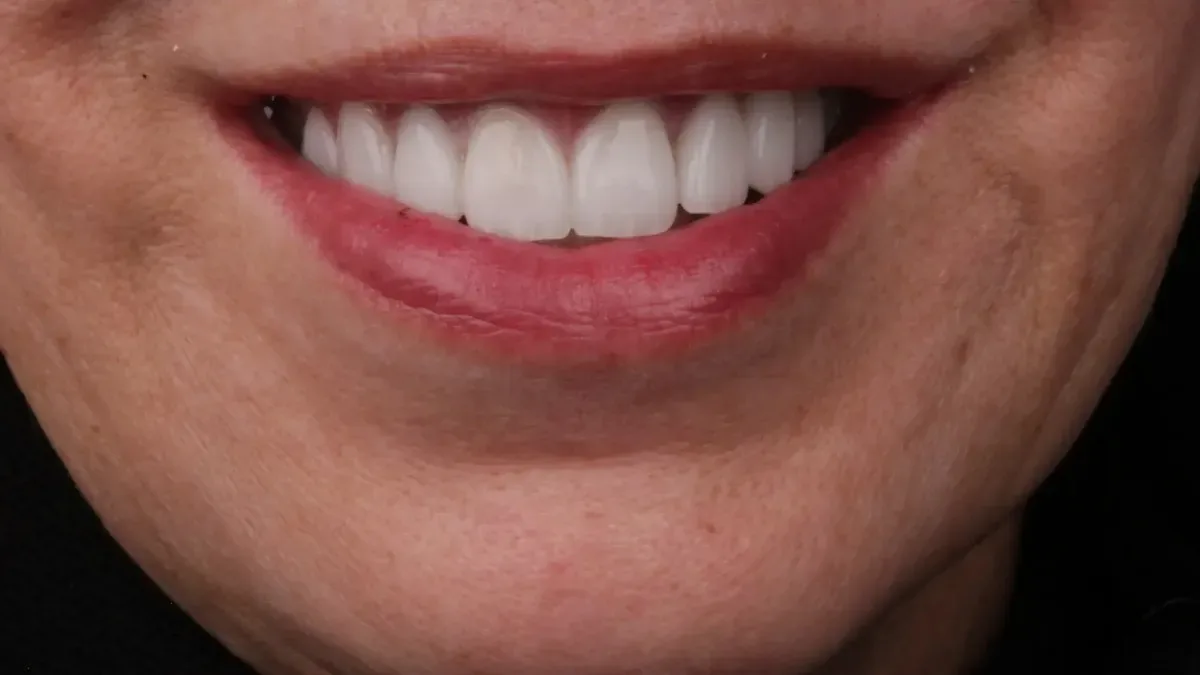 After
After
| Patient | Danielle, early 40s |
| Chief Complaint | Old composite veneers discoloring and chipping; mismatched crowns; uneven smile |
| Treatment | 6 porcelain veneers replacing old composites and mismatched crowns |
| Material | E.max (lithium disilicate) |
| Teeth Treated | 6 upper anterior teeth |
| Investment Range | $9,000 – $15,000 |
| Appointments | 4 visits over approximately 3 weeks |
| Location | Lakewood, Colorado |
| Clinical Reviewer | Dr. Brennan Bonati, DDS |
Danielle's Story
Danielle had her original composite veneers placed in her late twenties. At the time, they were a significant improvement — they covered some discoloration and gave her a more uniform smile. But composites are porous, and over the years they had absorbed staining from coffee, wine, and food. By the time she came in for a consultation, they were noticeably darker than her natural teeth and two had begun to chip at the edges.
The situation was complicated by the fact that two of her upper teeth had crowns placed by a previous dentist that never quite matched the rest of her smile. The shade was slightly off, and the contour was different from her natural teeth. The combination of the discolored composites and the mismatched crowns had left her smile looking patchy and inconsistent.
What Danielle wanted was simple: a smile that looked like it belonged to her. Not dramatically different, not Hollywood white — just even, natural, and consistent.
The Treatment Plan
The treatment plan involved removing all six old composite veneers and the two mismatched crowns, and replacing them with six E.max porcelain veneers designed to match each other and complement Danielle's natural coloring.
The sequence:
- Consultation and shade selection — photographs and shade matching to determine the target color
- Preparation and temporaries — old composites and crowns removed; teeth prepared; temporaries placed in the new shade
- Temporary wear period — two weeks to verify shade, shape, and comfort
- Delivery — final E.max veneers bonded
Clinical Insight
Replacing composite veneers with porcelain is one of the most common elective cosmetic procedures. Composites are an excellent short-term solution — they are less expensive and require less tooth preparation — but they are not as durable or stain-resistant as porcelain. Most composite veneers need to be replaced or significantly touched up within 5 to 10 years.
The challenge in Danielle's case was the two existing crowns. Crowns require more tooth preparation than veneers, which means the underlying tooth structure is different. Getting the new veneers to match the crowns — or replacing the crowns entirely — required careful planning. In this case, the crowns were replaced with new E.max restorations designed to match the veneers precisely.
The Result
The final result was a uniform, natural smile with consistent color and contour across all six upper anterior teeth. The E.max veneers provided excellent shade stability and a natural translucency that the old composites could not replicate.
Danielle noted that the most significant change was not the shade — it was the consistency. For the first time, her smile looked like it was all one thing, not a collection of different dental work done at different times.
Free Resource
Am I a Candidate? Download Your Free Guide to Find Out
The complete self-assessment checklist — good candidate indicators, pre-treatment conditions to resolve, and what to expect at your first consultation. Clinically reviewed by Brennan Bonati, DDS.
No spam. No sales call. One email with your download link.
At a Glance
Old composite veneers had discolored and chipped over 10+ years; two mismatched crowns left the smile patchy and inconsistent.
Porcelain veneers are stain-resistant and can be precisely shade-matched across multiple units — making them ideal for replacing aging composites and mismatched restorations.
Six E.max porcelain veneers replacing old composites and mismatched crowns on the upper anterior teeth.
A uniform, natural smile with consistent color and contour. Danielle described it as the first time her smile looked like it all belonged together.
Related Reading
- How Much Do Veneers Cost? The Complete Guide — understand all the factors that affect pricing
- Types of Veneers: Porcelain, Composite, and E.max Compared — learn which material is right for your case
- What to Expect During the Veneer Procedure — a step-by-step guide to the process
- Am I a Candidate for Veneers? — find out if veneers are right for your situation
- Veneer Results and Long-Term Care — what to expect after your restorations are placed
- Financing Options for Veneers — payment plans and ways to make treatment more affordable
What This Case Helps Explain
Danielle's transformation showcases how porcelain veneers can effectively replace old composite restorations that discolor and chip over time. This case highlights the benefits of E.max porcelain veneers for achieving uniform color and durability. Patients considering such treatment should review the veneer candidacy criteria to understand if porcelain veneers are suitable for their dental condition. Understanding the investment range for porcelain veneers is essential for planning, as costs vary depending on materials and complexity. For a broader perspective on treating discoloration, this case is part of the discoloration case category, which illustrates various approaches to restoring stained teeth.
Inspired by Danielle's Story?
I Want to Smile Like Danielle — Book My Free Consultation
Schedule a no-obligation consultation with a trusted Colorado cosmetic dentist. Most patients are seen within 1–2 weeks.
Frequently Asked Questions
How long do composite veneers last compared to porcelain?
Composite veneers typically last 5 to 10 years before needing significant repair or replacement. Porcelain veneers, with proper care, typically last 15 to 20 years or longer. Porcelain is also significantly more stain-resistant than composite, which is why patients who drink coffee, tea, or wine regularly often find that composites discolor faster than expected.
Can porcelain veneers be placed over existing crowns?
No — veneers bond to natural tooth enamel. If a tooth already has a crown, the crown would need to be replaced with a new crown that matches the veneers. In Danielle's case, the two existing crowns were replaced with new E.max restorations designed to match the six veneers precisely.
Will porcelain veneers stain like my old composites?
Porcelain is significantly more stain-resistant than composite resin. The glaze on porcelain veneers is non-porous, which means coffee, tea, wine, and other staining agents cannot penetrate the surface. However, the cement used to bond the veneers can stain over time at the margins, which is why regular professional cleaning is important.
Find Veneers Near You
All documented cases were treated in the Denver metro area. If veneers are being considered, explore cost and provider information for your city:
Not in Colorado? Browse all locations →
Explore More Cases
Each case below includes a full clinical breakdown with before-and-after documentation.