Clinically Reviewed by Brennan Bonati, DDS

Veneers for Uneven Teeth

How veneers create a uniform smile line by correcting teeth of different lengths and shapes.

Veneers for Uneven Teeth

Understanding veneers for uneven teeth is an important part of your veneer research. This guide covers what you need to know, based on current clinical evidence and real patient outcomes. For a real-world example, explore Jason's before and after results.

Real Patient Result

Ryan — Mild Crowding & Uneven Lengths

Before veneers — Ryan — Mild Crowding & Uneven Lengths Before
After veneers — Ryan — Mild Crowding & Uneven Lengths After

Crowded, uneven anterior teeth corrected without orthodontics in two appointments.

Read the full case →
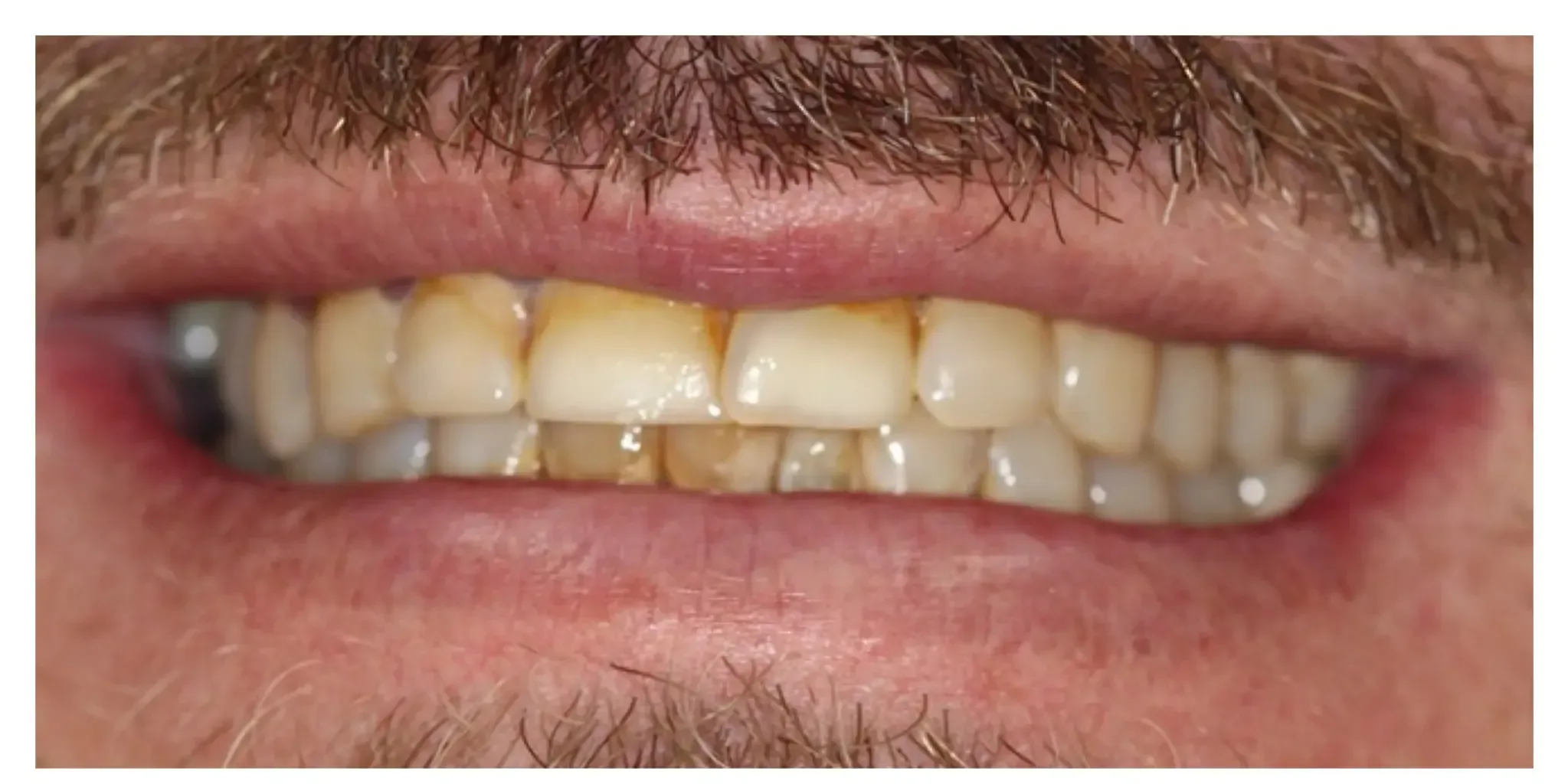
Uneven, misaligned teeth before porcelain veneer correction
Mild to moderate misalignment, size discrepancies, and rotations can all be corrected with veneers without orthodontic treatment.

In cosmetic dentistry practice, veneers can effectively mask mild to moderate rotation—generally up to 15 degrees—without compromising longevity. However, teeth with rotations exceeding 20 degrees or significant crowding pose challenges; veneering such teeth often requires excessive reduction of enamel, increasing sensitivity and weakening bond strength. Additionally, veneers on severely rotated teeth are at higher risk for debonding due to unfavorable stress distribution and difficulty achieving complete seating. For these cases, orthodontic alignment prior to veneer placement is advisable to optimize tooth position and ensure veneer durability. Patients should understand that pursuing orthodontics first may extend treatment time but significantly reduces the risk of premature veneer failure.

Clinically reviewed by Brennan Bonati, DDS — Cosmetic & Restorative Dentistry

Many patients considering veneers have questions about veneers for uneven teeth, as well as the cost of veneers. The information below is clinically reviewed by Brennan Bonati, DDS, and reflects current best practices in cosmetic dentistry.

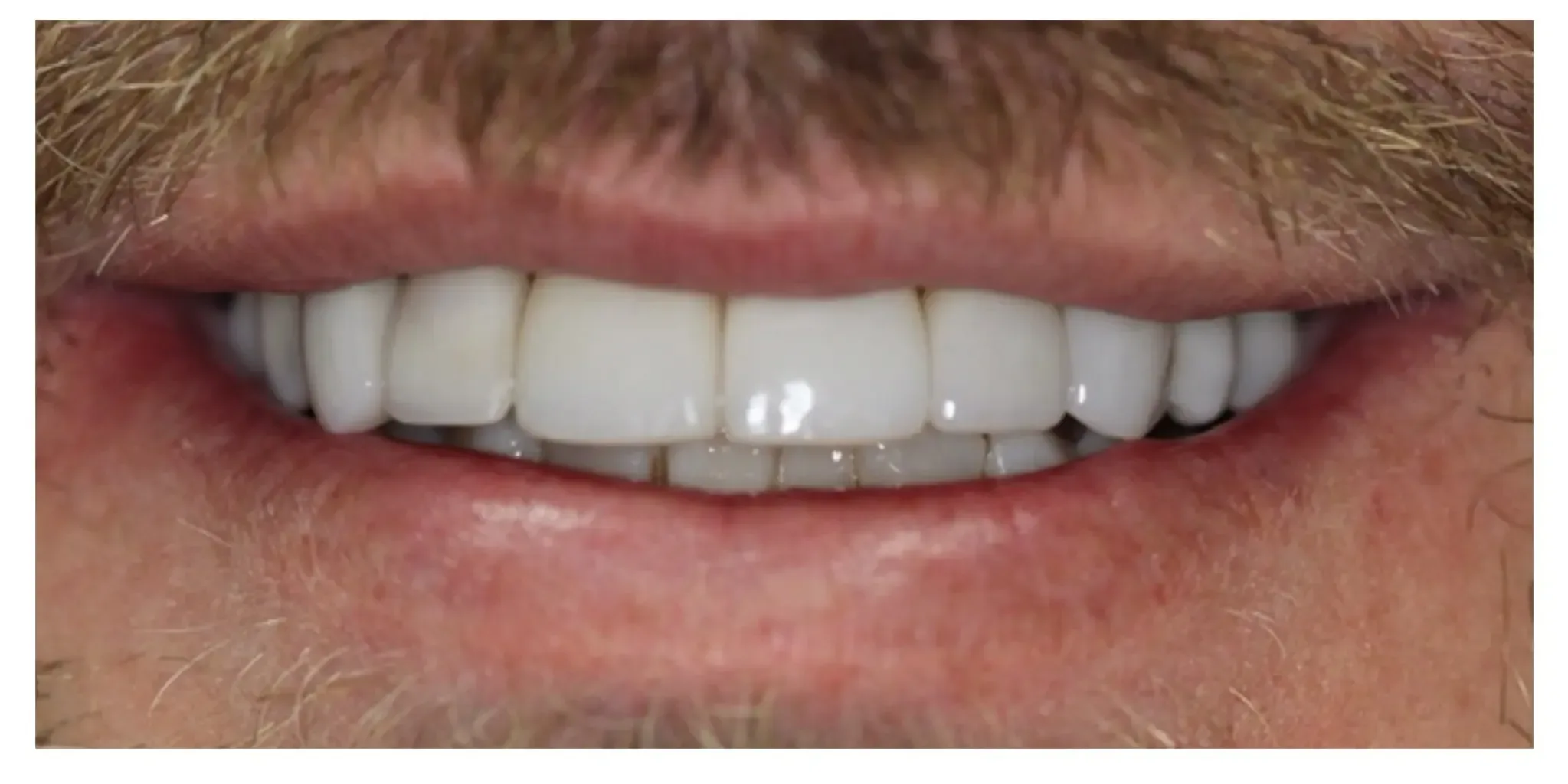
Even, aligned smile after porcelain veneers
After treatment: porcelain veneers create the appearance of perfectly aligned, proportionate teeth.
Real Patient Case
Uneven TeethDiscolorationPorcelain Veneers

Tricia — Uneven Sizing & Discoloration

Challenge: Uneven tooth sizing and persistent discoloration that bothered her for years.

Treatment: Porcelain veneers to correct size, shape, and color uniformly.

Outcome: A dramatically more balanced, even smile with natural-looking color.

See Tricia's Case → View Full Case Study

What You Should Know

Most patients's situation is unique. The guidance provided here is general in nature and should not replace a consultation with a qualified cosmetic dentist who can evaluate your specific case. Factors like your bite, the condition of your existing teeth, and your overall oral health all play a role in determining the best treatment approach, as seen in our before and after veneers examples.

Next Steps

If readiness to explore whether veneers near you are suitable is present, a free veneers cost estimator can provide a personalized cost range in under two minutes. The provider directory can also be browsed to find vetted cosmetic dentists in the area.

Important Limitations to Consider

Veneers are not a universal solution. They require sufficient enamel for bonding, a stable bite, and healthy gum tissue. Patients with active periodontal disease, severe bruxism, or significant misalignment may need to address those conditions first — or may be better served by orthodontics, crowns, or other restorations. The information on this page is educational and does not substitute for a clinical evaluation by a licensed dentist.

Clinical Perspective: Correcting Uneven Teeth with Veneers

Uneven teeth — whether from size discrepancies, spacing, or asymmetry — are one of the most common reasons patients seek cosmetic dental treatment. Veneers can address these concerns effectively, but the approach depends on the specific nature of the unevenness.

For teeth that are simply different sizes (common with peg laterals or generalized microdontia), veneers can build out the smaller teeth to match the larger ones without any reduction of the larger teeth. This is often a no-prep or minimal-prep case. For teeth with spacing issues (diastemas or gaps), veneers can close the spaces by widening the adjacent teeth — but this requires careful design to ensure the proportions remain natural. A tooth that is widened too much to close a gap will look disproportionately wide relative to its height.

The diagnostic wax-up is essential for uneven-teeth cases because it allows the patient to see the proposed result before any irreversible preparation begins. It also reveals whether the unevenness can be fully corrected with veneers alone, or whether orthodontic movement is needed first to bring the teeth into a position where the veneer design can achieve the desired result without over-reduction.

What Causes Uneven Teeth?

Uneven teeth can result from genetics (teeth that naturally grow to different lengths), wear patterns (grinding that shortens certain teeth), gum recession (exposing more root on some teeth), or previous dental work that doesn't match. Understanding the cause helps determine the best treatment approach. If grinding is the cause, addressing the habit with a night guard is essential before placing veneers — otherwise the same forces that created the unevenness will damage the restorations. See our guide on veneers for worn teeth.

Frequently Asked Questions

Yes — for mild to moderate unevenness. Veneers can create a uniform smile line by adding length to shorter teeth and reshaping teeth that are too wide or narrow. However, if the unevenness is caused by a significant bite problem or severe misalignment, orthodontic treatment may be needed first. See veneers vs. braces for guidance.

It depends on how many teeth are visibly uneven. Some patients only need 2–4 veneers to even out their smile line, while others benefit from 6–10 for full symmetry. Your cosmetic dentist will design a plan during consultation. Use our free estimator to get a personalized cost range.

Yes — when placed by a skilled cosmetic dentist. The key is designing veneers that create symmetry while still looking like natural teeth (slight variations in translucency, subtle surface texture). Overly uniform, perfectly identical veneers can look artificial. A good ceramist builds in natural characterization. See our before and after results for examples.

Next Steps
I’ve Done My Research — Now What?
📄
Free Download
The Veneer Candidacy Guide
A clinically reviewed checklist — what to ask, what to watch for, and how to prepare.
$
Cost Estimator
What Would It Cost?
Get a personalized cost range in under 2 minutes — no commitment, no contact info required.
📚
Education Hub
Keep Learning
Explore types, procedures, results, and everything else about veneers.
📍
Find a Dentist
Schedule a Consult
Find a vetted cosmetic dentist near you and book a consultation.
Free Estimate