Veneers for Chipped or Broken Teeth: Are You a Candidate?
A chipped or broken tooth can be a source of both physical discomfort and self-consciousness. Whether from a sports injury, an accident, or biting down on something hard, dental trauma is a common experience. The good news is that modern cosmetic dentistry offers several excellent solutions to restore your smile's appearance and function. One of the most popular and effective options is the dental veneer.
But are veneers the right choice for every chipped tooth? The answer depends on the extent of the damage, the tooth's location, your overall oral health, and factors such as the cost of veneers. This guide will help you understand when a chipped tooth veneer is the ideal solution and when alternative treatments like dental bonding or crowns might be more appropriate.
When is a Veneer the Best Repair for a Chipped Tooth?
A porcelain veneer is a thin shell custom-made to fit over the front surface of a tooth. According to the American Dental Association (ADA), veneers can be a durable and aesthetically pleasing solution for restoring teeth that are chipped, discolored, or misshapen. They are most suitable for minor to moderate chips where the tooth's structural integrity is not compromised.
Not all chips are the same. In clinical practice, chips from acute trauma typically present as isolated enamel fractures with well-defined margins. Wear from grinding (bruxism), on the other hand, results in generalized enamel loss with smooth, flattened surfaces.
This distinction matters because treating a grinding patient's worn teeth with veneers designed for trauma repair fails to address the ongoing mechanical stress. Over 70% of grinding patients receiving traditional veneers without occlusal management experience premature veneer failure within two years.
The takeaway: veneers placed without addressing grinding forces can lead to recurrent chipping, debonding, or cracking. An accurate diagnosis of the cause of chipping is essential to ensure long-term durability and protect your investment.
If grinding is your primary concern rather than a single traumatic chip, see our guide on veneers for worn teeth.
Joan — Full-Mouth Rehabilitation for Collapsed Bite
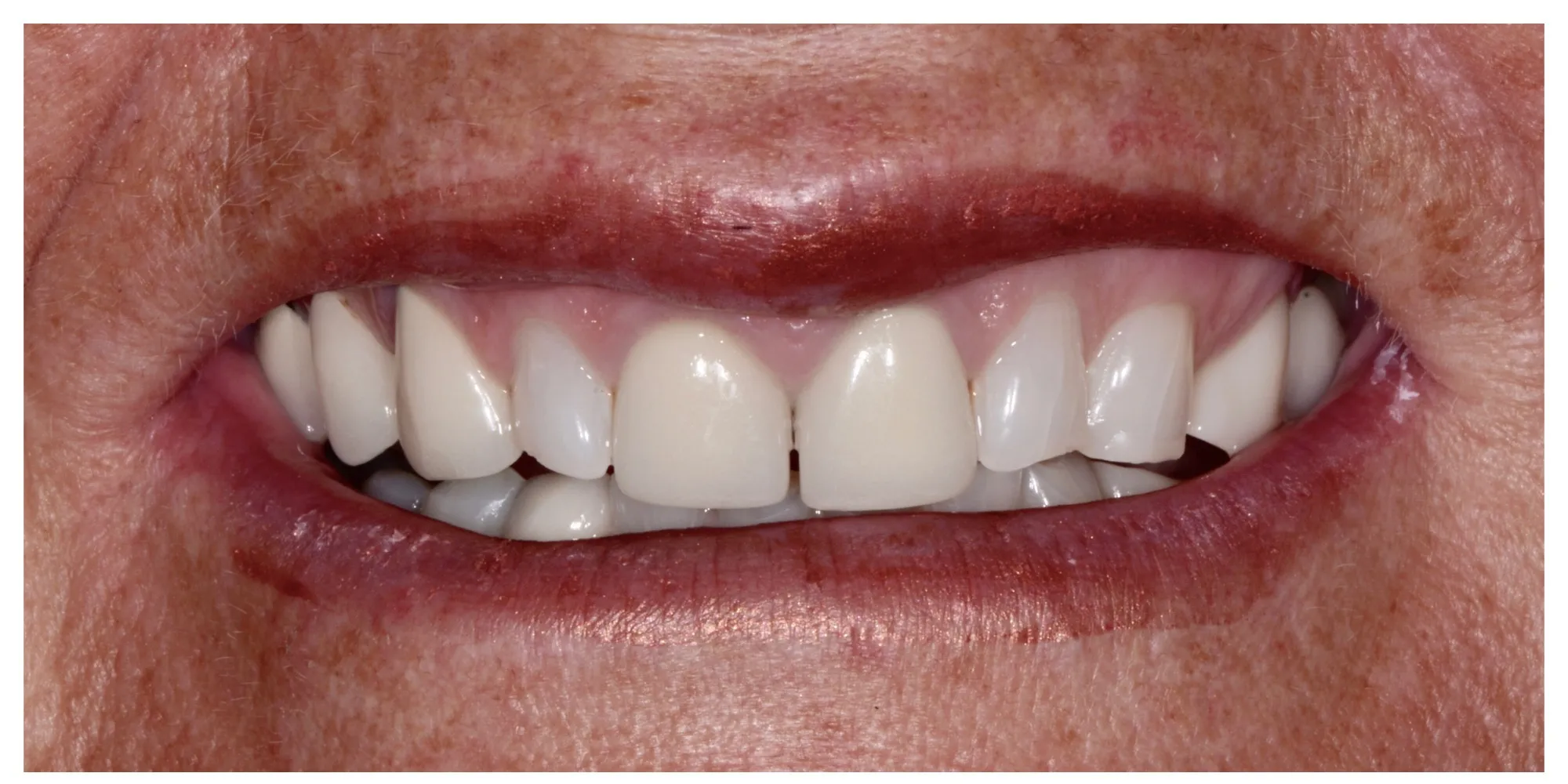 Before
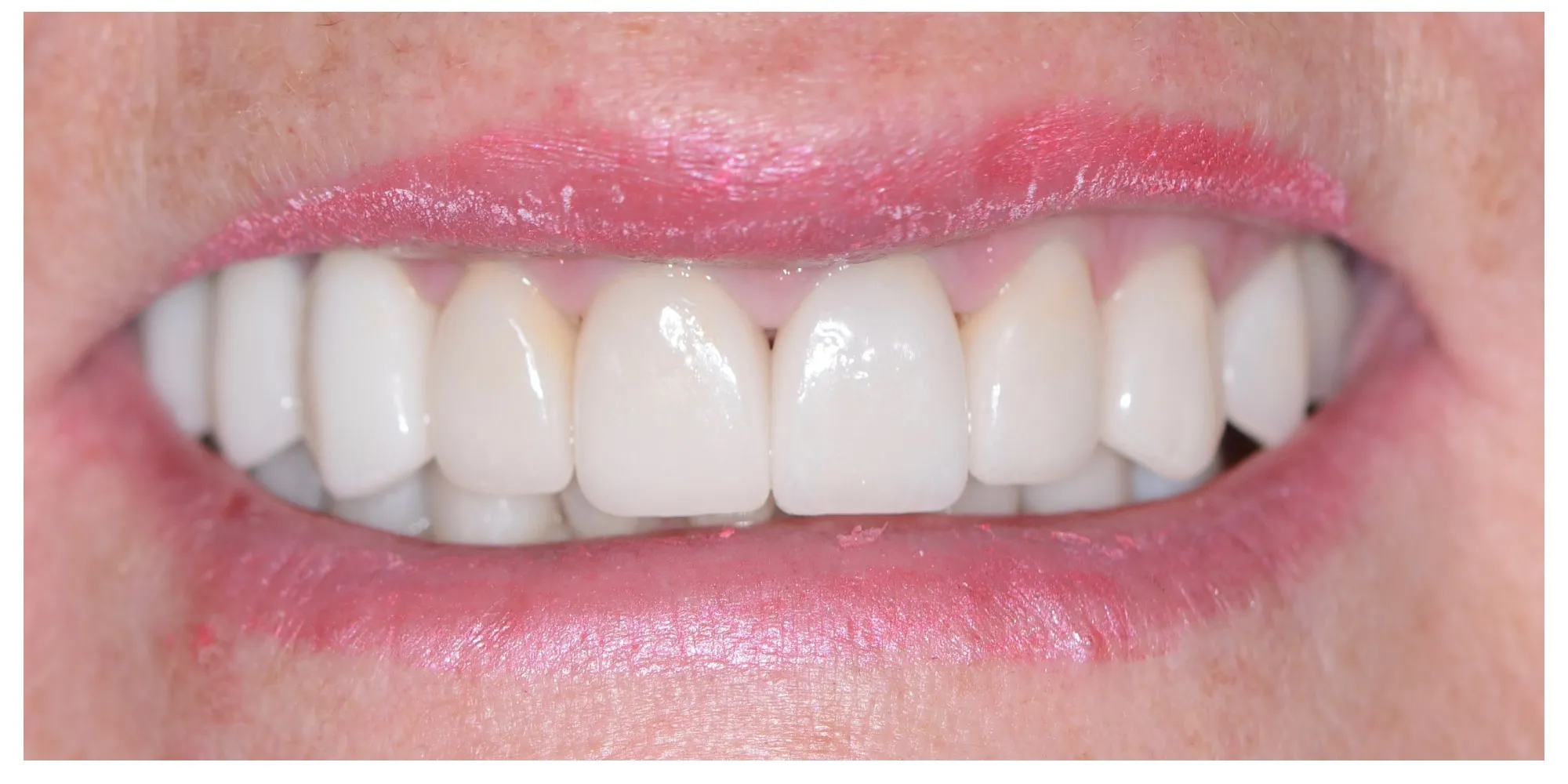 After
After
Years of grinding had collapsed her bite entirely. 24 E.max crowns restored her smile and stopped the destructive cycle.
View Joan's full case →Want to keep learning about chipped teeth? Here's what else you should know before making a decision.
When Are You a Good Candidate?
Consider a veneer if your situation involves:
- Small to Moderate Chips: Veneers excel at covering surface-level damage. If the chip is primarily a cosmetic concern and doesn't extend deep into the tooth, a veneer can seamlessly restore its original shape.
- Healthy Tooth Structure: The underlying tooth must be strong enough to support the veneer. A dentist will perform a thorough examination, including X-rays, to ensure there are no deep cracks or decay that could threaten the tooth's long-term health.
- Front Teeth Involvement: Veneers are the gold standard for cosmetic repair on front teeth (the "smile zone"). Their translucency and custom shading mimic natural tooth enamel perfectly, making the restoration virtually undetectable.
- Desire for a Long-Term Solution: Porcelain veneers are highly resistant to staining and can last for 10-15 years or more with proper care, making them a durable choice for a cracked tooth restoration. See our full veneer results guide for what to expect long-term.
Veneers vs. Bonding vs. Crowns: Which is Right for You?
Understanding your options is key. While a chipped tooth veneer is an excellent choice, it's not the only one. Dental bonding, composite veneers, and crowns are also common treatments for broken tooth repair. The best option depends on the size of the chip, cost considerations, and your long-term goals. Composite veneers can be a cost-effective middle ground — less durable than porcelain but more conservative than a crown and stronger than simple bonding.
The American Academy of Cosmetic Dentistry (AACD) emphasizes a conservative approach, recommending the treatment that preserves the most natural tooth structure. Here’s how they compare:
| Feature | Porcelain Veneers | Dental Bonding | Dental Crowns |
|---|---|---|---|
| Best For | Minor to moderate chips on front teeth, cosmetic improvements. | Very small, minor chips in low-bite pressure areas. | Large chips, significant cracks, or when tooth structure is weak. |
| Material | Thin shell of medical-grade porcelain. | Tooth-colored composite resin. | Porcelain, ceramic, or metal alloy that covers the entire tooth. |
| Durability | Very durable and stain-resistant (10-15+ years). | Less durable, prone to staining and chipping (3-10 years). | Extremely durable, offers maximum protection (15-25+ years). |
| Procedure | Requires two visits; minimal enamel removal. | Single visit; no enamel removal. | Requires two visits; significant enamel removal. |
The Candidacy Assessment: What Does a Dentist Look For?
Determining your candidacy for a veneer involves more than just looking at the chip; reviewing before and after veneers can also provide valuable insight. A cosmetic dentist will conduct a comprehensive structural integrity assessment before beginning the veneer procedure. This includes:
- Evaluating the Chip Size: If a chip is too large and compromises a significant portion of the tooth, a veneer may not have enough surface area to bond to securely. In these cases, a full dental crown is often recommended for a more robust cracked tooth restoration.
- Checking for Cracks: The dentist will check for hidden cracks that could spread. A veneer can sometimes hold a minor crack together, but a deep crack that threatens the tooth's nerve may require a crown or even root canal therapy.
- Assessing Bite and Alignment: Your bite (occlusion) plays a crucial role. If you have a grinding habit (bruxism) or a misaligned bite that puts excessive pressure on the chipped tooth, this issue must be addressed first. A veneer on a high-stress point could be prone to fracturing.
Will Insurance Cover a Veneer for Dental Trauma?
This is a common question. Typically, veneers are considered a cosmetic procedure and are not covered by dental insurance. However, there's an important exception: dental trauma. If your tooth was chipped due to an accident or injury, some insurance plans may cover a portion of the restorative treatment, even if it's a veneer. It is often categorized as a necessary broken tooth repair rather than a purely cosmetic choice.
It is essential to contact your insurance provider directly and provide them with documentation from your dentist regarding the cause of the injury. VeneersAuthority.com is an educational platform and does not provide medical or insurance advice; always verify coverage with your carrier.
Yes, a veneer is an excellent option for a broken or chipped front tooth, provided the damage is not too severe. If the break is minor to moderate and doesn't compromise the tooth's core structure, including cost for fewer veneers, a veneer can restore its shape and appearance beautifully. For more extensive breaks, a crown may be a better long-term solution.
The choice between a crown and a veneer depends on the extent of the damage. A veneer is more conservative, requiring less tooth reduction, and is ideal for cosmetic fixes. A crown is a better choice for large chips or fractures, as it covers the entire tooth, providing superior strength and protection.
The cost of a single porcelain veneer can vary significantly based on your location and the dentist's experience, typically ranging from $900 to $2,500 per tooth. While this is more expensive than dental bonding, the durability and stain resistance of porcelain often make it a more cost-effective solution in the long run. For a personalized cost breakdown, use our free estimator tool.
Ryan — Why Gum Health Comes First
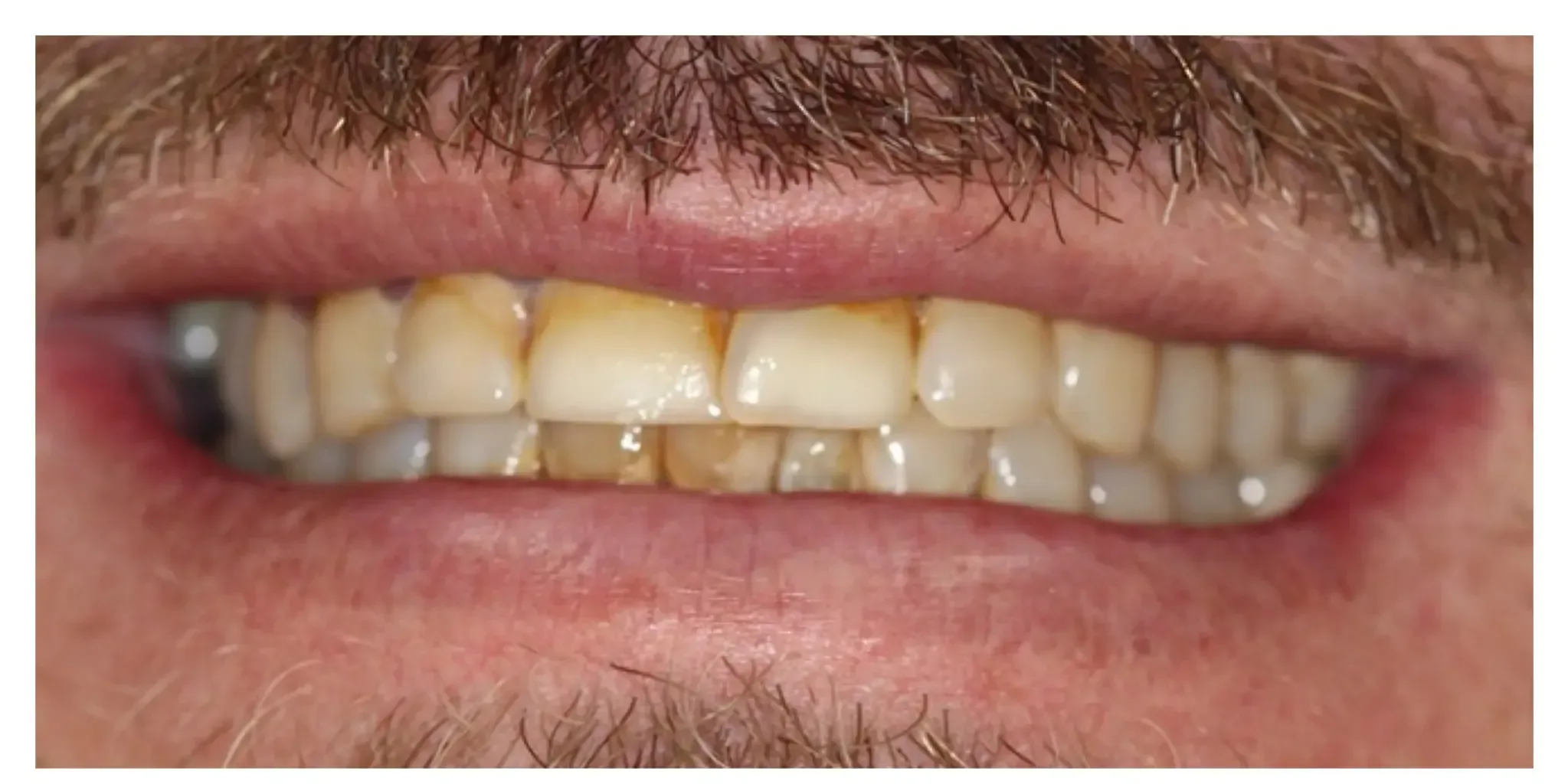 Before
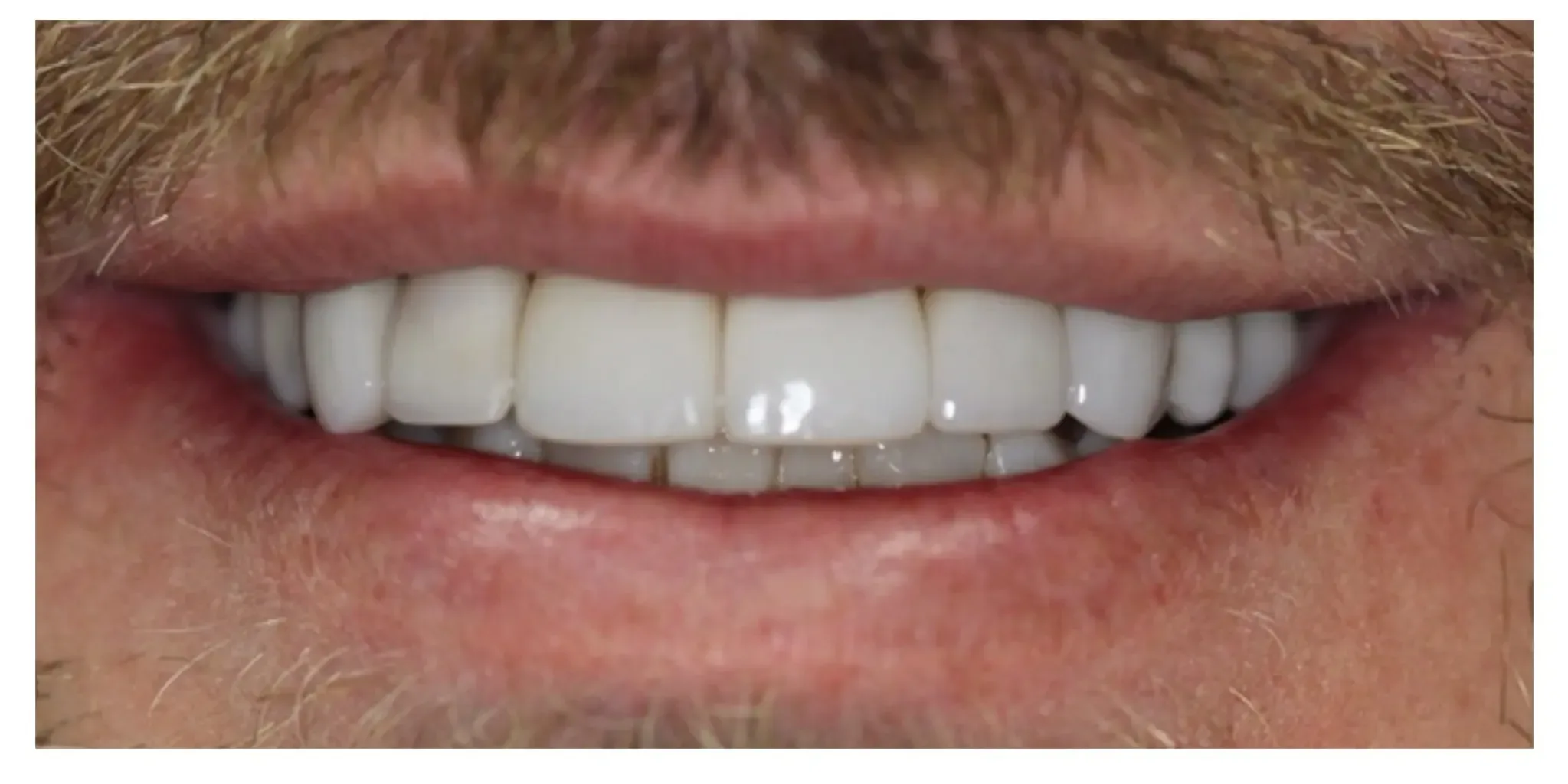 After
After
Ryan wanted veneers but had active gum disease. Periodontal treatment came first, then 8 porcelain veneers completed the transformation.
View Ryan's full case →