Alex's Composite Veneers: The Smile That Made Him Stop Hiding
Clinically Reviewed by Brennan Bonati, DDS — Cosmetic & Restorative Dentistry
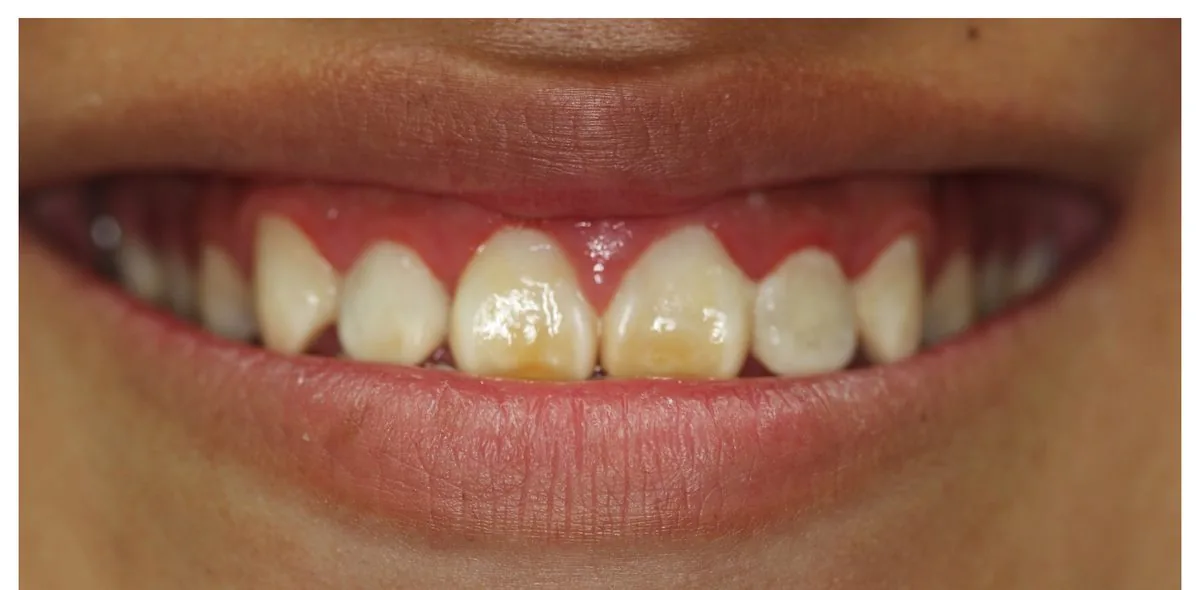 Before
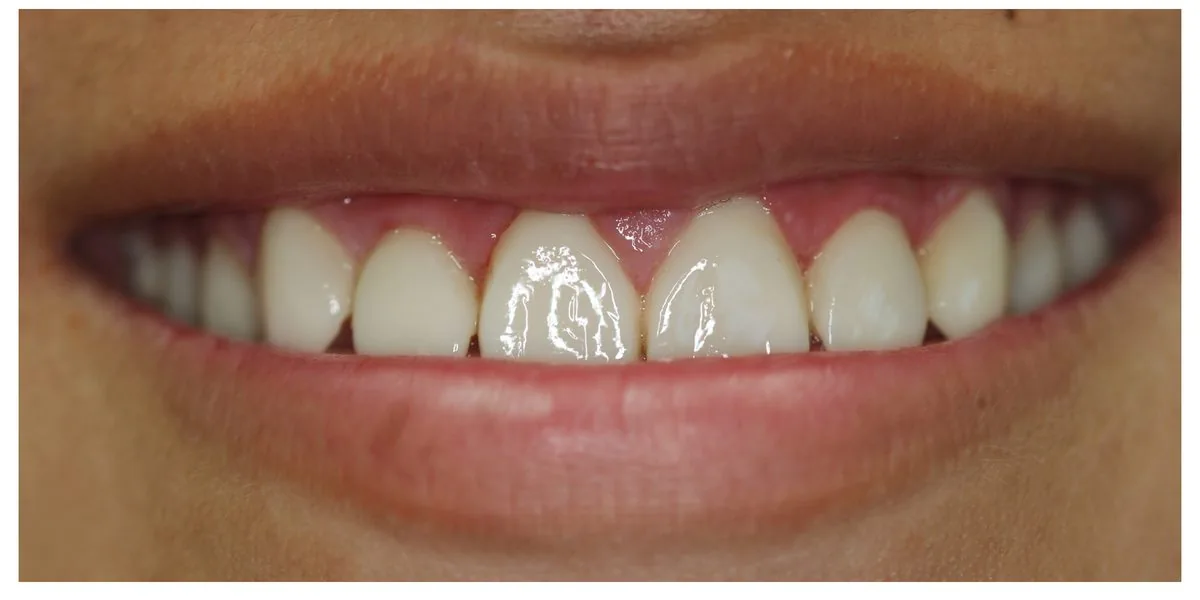 After
After
| Patient | Alex, high school student |
| Chief Complaint | Intrinsic staining — embarrassed to smile, avoided showing teeth in photos and social situations |
| Treatment | 8 no-prep composite veneers, upper arch |
| Material | Composite resin |
| Shade | B1 |
| Pre-Treatment | None — no tooth reduction, additive only |
| Investment Range | $4,000 – $6,000 |
| Appointments | 2–3 visits (records + delivery) |
| Location | Lakewood, Colorado |
| Clinical Reviewer | Dr. Brennan Bonati, DDS |
Alex's Story
Alex was in high school when he came in. He had intrinsic staining — the kind that sits inside the tooth structure itself, not on the surface — and no amount of brushing or whitening was going to change it. He was embarrassed about it. He avoided smiling in photos. His parents noticed he simply did not smile the way other kids his age did, and they wanted to do something about it before it affected him any further.
The goal was straightforward: cover the staining, give him a bright, even smile, and do it in a way that preserved his natural teeth completely. At his age, that last point was non-negotiable. Whatever was done needed to be reversible, additive, and leave all his tooth structure intact for the decades ahead.
The Treatment Plan
Eight no-prep composite veneers on the upper arch. No reduction of enamel, no drilling — just etching, bonding, and sculpting composite resin directly onto the existing tooth surfaces. Shade B1 was selected: bright and clean, noticeably whiter than his stained natural teeth, but natural enough to look like healthy teeth rather than a cosmetic procedure.
The case was completed in two to three appointments. The first visit was for records — photos, impressions, and treatment planning. The second visit was delivery: all eight veneers placed and finished in a single session. Alex walked out with a completely different smile.
Clinical Insight
Intrinsic staining is one of the most common reasons young patients seek cosmetic dental treatment, and it is also one of the most misunderstood. Patients — and sometimes their parents — often arrive having already tried whitening strips, professional bleaching, or both, and are frustrated that nothing worked. The reason is straightforward: whitening agents work by oxidizing surface and subsurface stain molecules. When the stain is embedded within the dentin or enamel structure itself — as with fluorosis or developmental discoloration — there is nothing on the surface for the whitening agent to reach.
Composite veneers are the ideal solution for this presentation in younger patients. The additive approach means zero tooth structure is sacrificed. The material bonds directly to enamel, is fully repairable chairside, and can be upgraded to porcelain veneers at any point in the future if the patient chooses. For a high school student, this is the right answer: effective, reversible, and affordable.
The Result
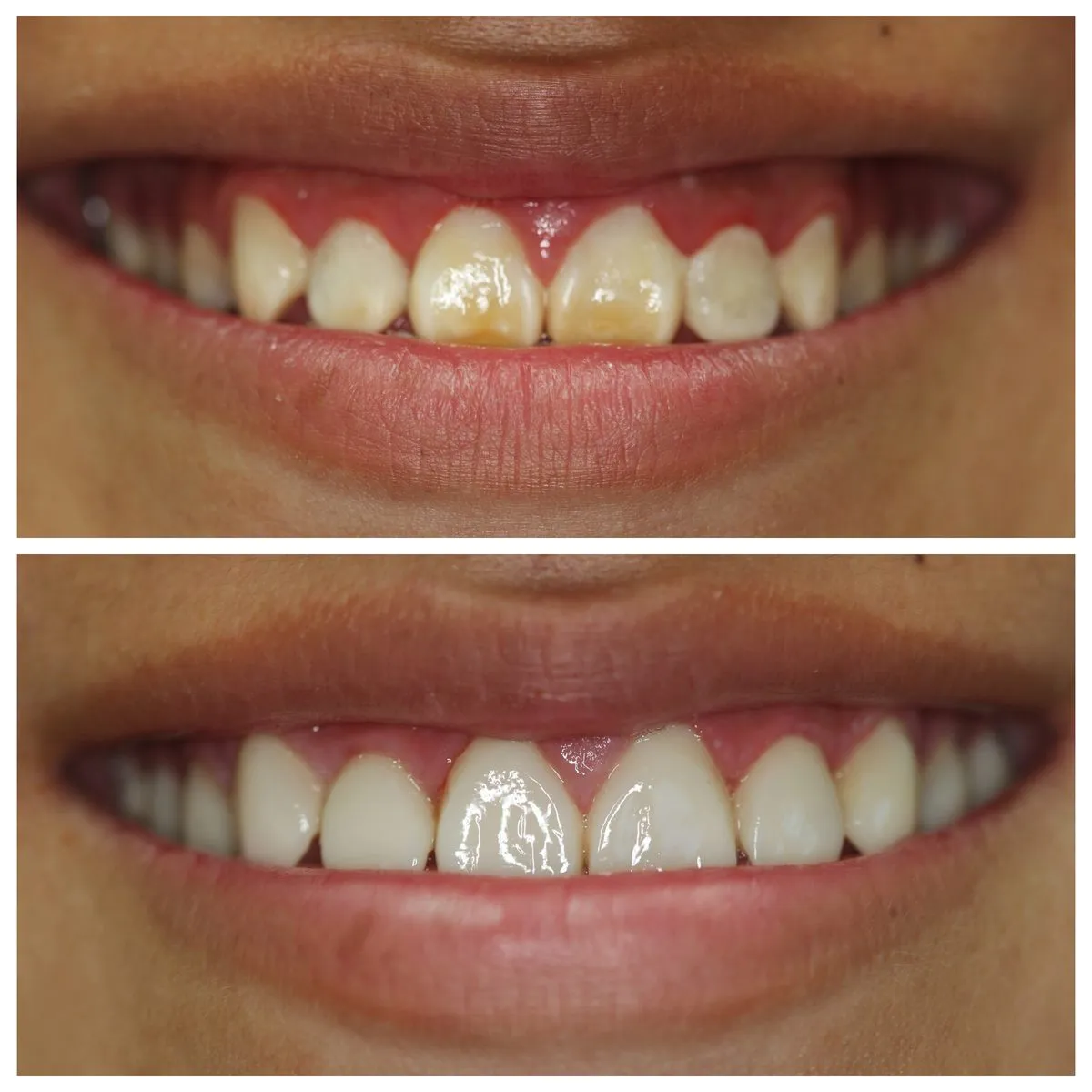
Alex's parents said it best: before the veneers, he never smiled. After, he smiled all the time. That is the outcome that matters. The clinical result was excellent — eight well-contoured, well-shaded composite veneers that looked natural and bright. But the real result was a teenager who stopped hiding his face.
 Click to enlarge
Free Resource
Am I a Candidate? Download Your Free Guide to Find Out
The complete self-assessment checklist — good candidate indicators, pre-treatment conditions to resolve, and what to expect at your first consultation. Clinically reviewed by Brennan Bonati, DDS.
No spam. No sales call. One email with your download link.
At a Glance
Intrinsic staining — whitening had no effect. Alex avoided smiling throughout high school.
No-prep, fully reversible, preserves all tooth structure. Ideal for a young patient with decades of dental health ahead.
8 composite veneers, upper arch, shade B1. 2–3 appointments. No tooth reduction.
His parents said he never smiled before. After the veneers, he smiled all the time.
Alex's case demonstrates how composite veneers can effectively mask intrinsic staining without the need for tooth reduction, making it ideal for patients seeking a no-prep veneer candidacy option. This minimally invasive approach contrasts with porcelain veneers, which often require enamel removal but offer different longevity profiles discussed in how long composite veneers last. Understanding the investment range for composite veneers helps patients like Alex weigh affordability against aesthetic goals. For a broader view of similar transformations, explore the composite veneers case gallery.
Inspired by Alex's Story?
See What's Possible — Get a Free Cost Estimate
Find out what composite veneers would cost for your specific case — no obligation, no sales pressure.
Frequently Asked Questions
Are composite veneers a good option for teenagers?
Yes, in many cases composite veneers are the ideal option for younger patients. Because they are placed additively — with no removal of natural tooth structure — they preserve the teeth completely. This is especially important for younger patients whose teeth are still fully vital and healthy. Composite veneers can be placed as soon as the teeth have fully erupted and the gum line has stabilized, typically in the mid-to-late teens. They can also be replaced or upgraded to porcelain veneers later in life if the patient desires a more permanent solution.
What causes intrinsic tooth staining and can it be whitened?
Intrinsic staining occurs within the tooth structure itself, as opposed to extrinsic staining which sits on the surface. Common causes include fluorosis, tetracycline antibiotic use during childhood, trauma to the tooth, or developmental conditions. Because the stain is inside the tooth, conventional whitening treatments are largely ineffective. Veneers — whether composite or porcelain — are the most reliable solution because they cover the visible surface of the tooth entirely.
How long do composite veneers last?
Composite veneers typically last 5 to 10 years with proper care. They are more susceptible to chipping and staining than porcelain veneers, but they have the significant advantage of being repairable chairside. Avoiding hard foods, wearing a night guard if you grind, and maintaining regular dental hygiene will maximize their lifespan.
What is the difference between no-prep and minimal-prep composite veneers?
No-prep composite veneers involve placing the composite material directly onto the existing tooth surface with no reduction of enamel. Minimal-prep veneers involve a very slight reduction — typically 0.3 to 0.5mm — to create space for the material without making the final result look bulky. The choice depends on the starting tooth anatomy and the desired outcome.
Related Reading
- Composite Veneers: When They're the Right Choice
- Porcelain vs. Composite Veneers: Which Is Right for You?
- How Much Do Veneers Cost? The Complete Guide
- Am I a Candidate for Veneers?
Find Veneers Near You
Not in Colorado? Browse all locations →