Andrea's Transformation: Closing Gaps from Congenitally Missing Teeth
Clinically Reviewed by Brennan Bonati, DDS — Cosmetic & Restorative Dentistry
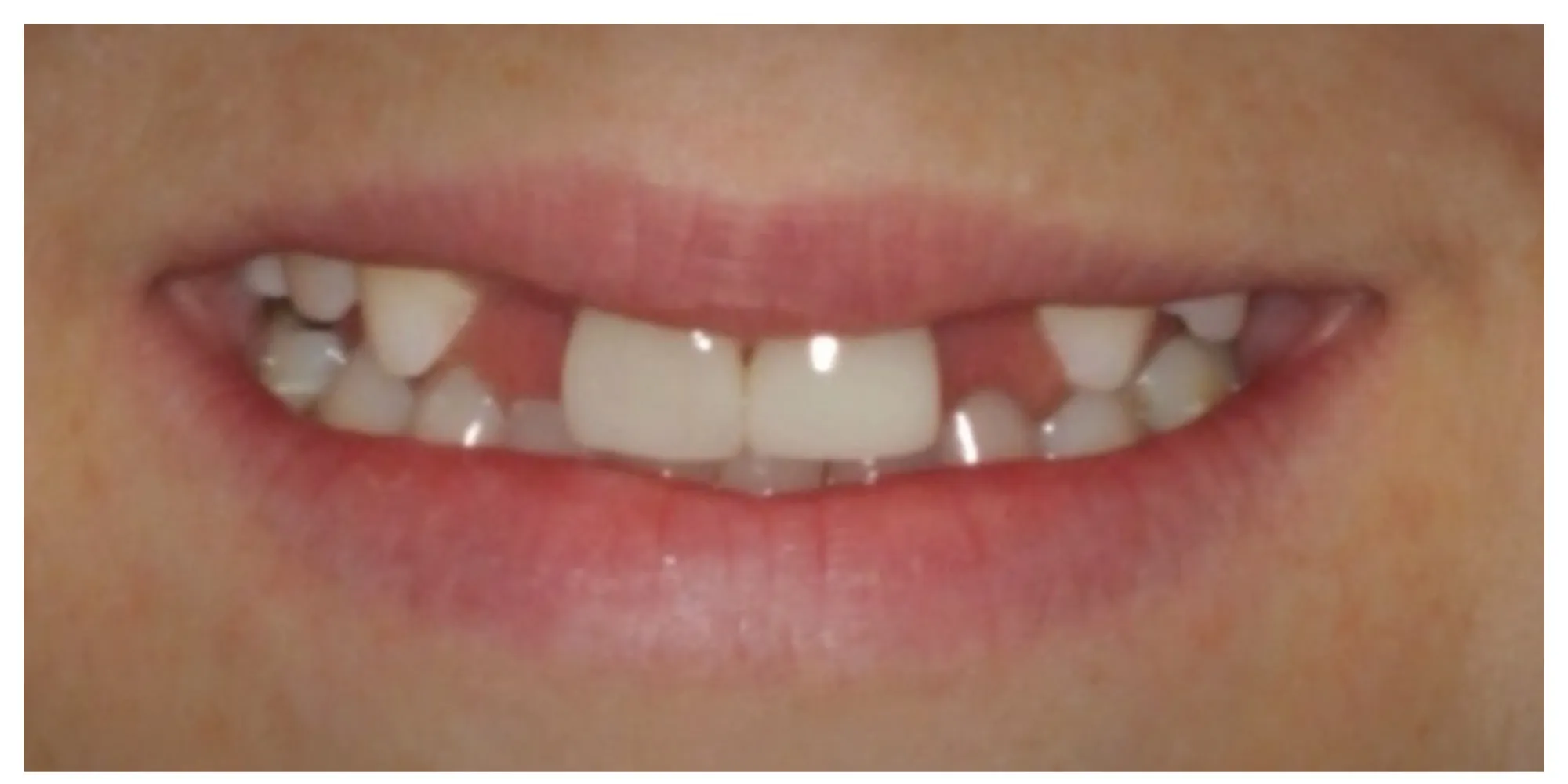 Before
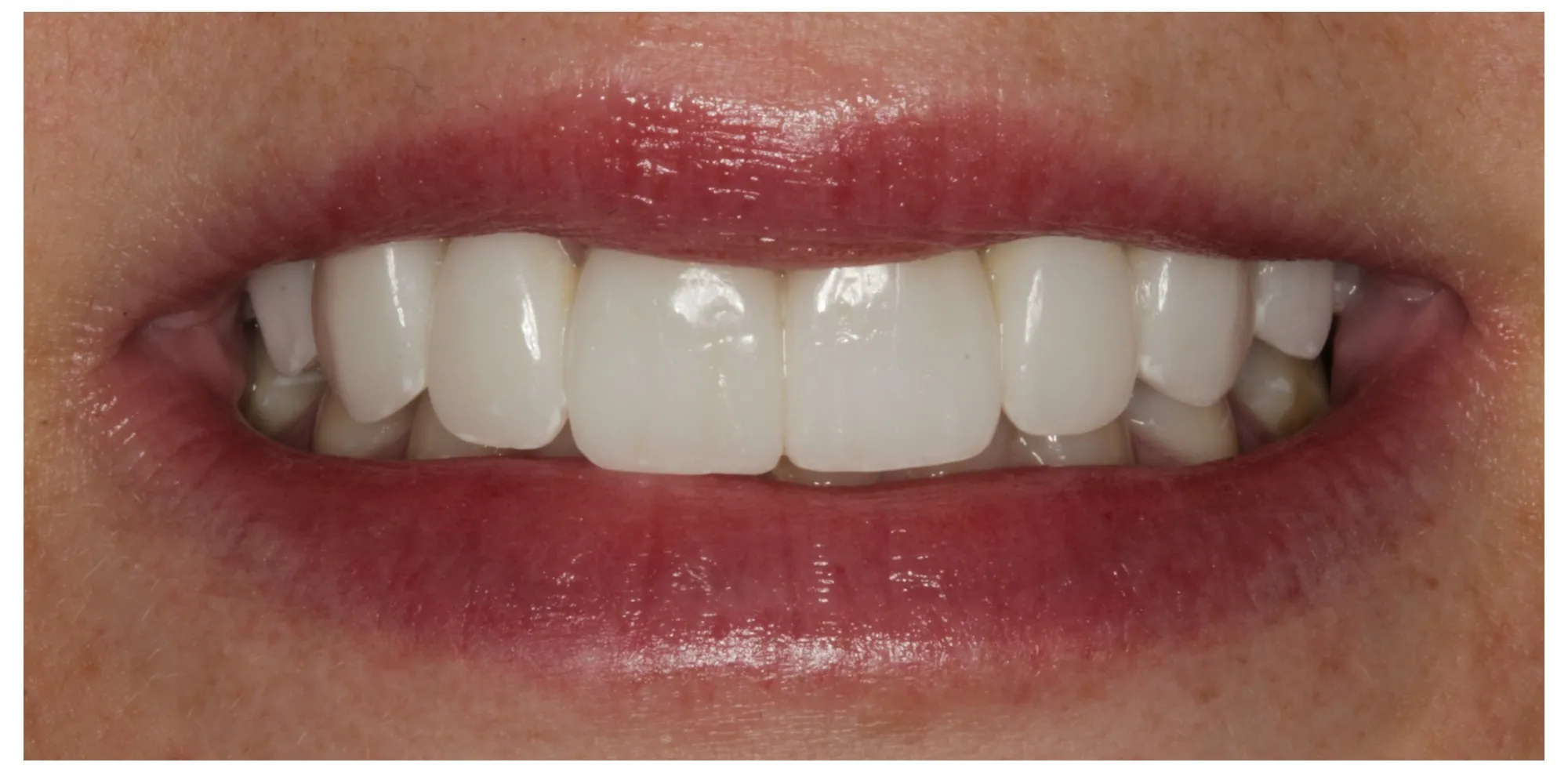 After
After
| Patient | Andrea, mid 30s |
| Chief Complaint | Congenitally missing upper lateral incisors; gaps in smile since childhood |
| Treatment | 3-unit bridge (×2) + 4 porcelain veneers (8 teeth total) |
| Material | E.max (lithium disilicate) |
| Teeth Treated | 8 teeth — 2 bridges + 4 veneers |
| Investment Range | $14,000 – $22,000 |
| Appointments | 5 visits over approximately 4 weeks |
| Location | Lakewood, Colorado |
| Clinical Reviewer | Dr. Brennan Bonati, DDS |
Andrea's Story
Andrea had lived her entire life with gaps where her upper lateral incisors should have been. Born with a condition called congenital hypodontia, she never developed those two teeth — and for over three decades, she had learned to smile carefully, speak guardedly, and avoid situations where her teeth might be noticed.
She had been told as a teenager that implants were an option, but the cost and the timeline — and the fact that her jaw was still developing — meant treatment kept getting deferred. By the time she came in for a consultation, she had a clear picture of what she wanted: a complete, natural-looking smile that she didn't have to think about.
The challenge with congenitally missing teeth is that the space is often irregular. Adjacent teeth may have drifted, the bone may be thinner in the gap, and the proportions of the surrounding teeth may not naturally accommodate a replacement without some reshaping. In Andrea's case, the gaps were well-maintained — she had worn a retainer for years — but the adjacent canines had a slightly pointed appearance that would need to be softened to create the illusion of lateral incisors.
The Treatment Plan
After a thorough consultation and smile design session, the treatment plan involved two 3-unit bridges to replace the missing laterals, combined with four porcelain veneers on the adjacent central incisors and canines to create a harmonious, proportional smile. The bridges would be supported by the central incisors and canines on either side of the gap.
The treatment sequence:
- Consultation and records — photographs, impressions, and a digital smile design to preview the result
- Smile try-in — a wax-up showing Andrea exactly how the final result would look before any preparation
- Preparation day — all abutment teeth prepared in a single session; temporaries placed
- Temporary wear period — approximately three weeks to verify aesthetics, phonetics, and comfort
- Delivery day — final E.max restorations bonded
Clinical Insight
Replacing congenitally missing teeth with bridges rather than implants is a decision that depends on several factors: the age of the patient, the condition of the adjacent teeth, bone volume, and the patient's timeline and budget. In Andrea's case, bridges were the right choice — her adjacent teeth were healthy but would benefit from the aesthetic refinement that preparation and veneering would provide, and the treatment timeline was significantly shorter than the implant route.
The key aesthetic challenge in this case was proportion. The lateral incisor is one of the most important teeth in smile design — it frames the central incisors and creates the transition to the canine. Getting the width, length, and contour right required careful planning in the wax-up phase and precise communication with the laboratory.
The Result
The final result was a complete, natural smile with no visible gaps and proportions that looked as though Andrea had always had all her teeth. The E.max restorations provided excellent translucency and shade matching to her natural dentition.
Andrea described the experience of seeing her final smile for the first time as overwhelming. For the first time in her adult life, she could smile without thinking about it.
Free Resource
Am I a Candidate? Download Your Free Guide to Find Out
The complete self-assessment checklist — good candidate indicators, pre-treatment conditions to resolve, and what to expect at your first consultation. Clinically reviewed by Brennan Bonati, DDS.
No spam. No sales call. One email with your download link.
At a Glance
Andrea was born missing her upper lateral incisors, leaving gaps in her smile for over 30 years.
Bridges combined with veneers on adjacent teeth allowed for a complete smile transformation in a single treatment phase — shorter and less invasive than the implant route.
Two 3-unit E.max bridges replacing the missing laterals, plus 4 porcelain veneers on the central incisors and canines.
A complete, natural smile with no visible gaps. Andrea can smile without thinking about it for the first time in her adult life.
Related Reading
- How Much Do Veneers Cost? The Complete Guide — understand all the factors that affect pricing
- Types of Veneers: Porcelain, Composite, and E.max Compared — learn which material is right for your case
- What to Expect During the Veneer Procedure — a step-by-step guide to the process
- Am I a Candidate for Veneers? — find out if veneers are right for your situation
- Veneer Results and Long-Term Care — what to expect after your restorations are placed
- Financing Options for Veneers — payment plans and ways to make treatment more affordable
Andrea's case illustrates how veneers combined with bridges can effectively close gaps caused by congenitally missing teeth, a common challenge in cosmetic dentistry. Patients facing similar issues should review the veneers for gaps category to understand treatment possibilities. Determining candidacy for veneers is crucial when planning combined restorative treatments like bridges and veneers. Porcelain veneers, such as E.max porcelain veneers, provide a natural appearance and durability. Patients should also consider the general cost of veneers to plan their investment wisely.
Inspired by Andrea's Story?
I Want to Smile Like Andrea — Book My Free Consultation
Schedule a no-obligation consultation with a trusted Colorado cosmetic dentist. Most patients are seen within 1–2 weeks.
Frequently Asked Questions
Can congenitally missing teeth be replaced with veneers?
Veneers alone cannot replace missing teeth — they bond to existing tooth structure. In Andrea's case, bridges were used to span the gaps left by the missing laterals, with veneers on the adjacent teeth to refine the overall aesthetics. Implants are another option for replacing missing teeth and may be preferable in cases where the adjacent teeth are healthy and do not need cosmetic work.
What is the difference between a bridge and an implant for a missing tooth?
A bridge spans the gap using the adjacent teeth as anchors (abutments), which requires those teeth to be prepared (reduced) to accept crowns. An implant replaces the root of the missing tooth with a titanium post and does not involve the adjacent teeth. Implants are generally considered the gold standard for tooth replacement, but bridges are a faster, less invasive option when the adjacent teeth will benefit from crowns or veneers anyway.
How long do bridges last?
With proper care, E.max bridges typically last 15 to 20 years or longer. The longevity depends on oral hygiene, bite forces, and whether the patient wears a night guard if they grind. Regular professional cleaning under the bridge is important to prevent decay at the margins.
Find Veneers Near You
All documented cases were treated in the Denver metro area. If veneers are being considered, explore cost and provider information for your city:
Not in Colorado? Browse all locations →
Explore More Cases
Each case below includes a full clinical breakdown with before-and-after documentation.