Sarah's Complex Case: Veneers Around Existing Implants
Clinically Reviewed by Brennan Bonati, DDS — Cosmetic & Restorative Dentistry
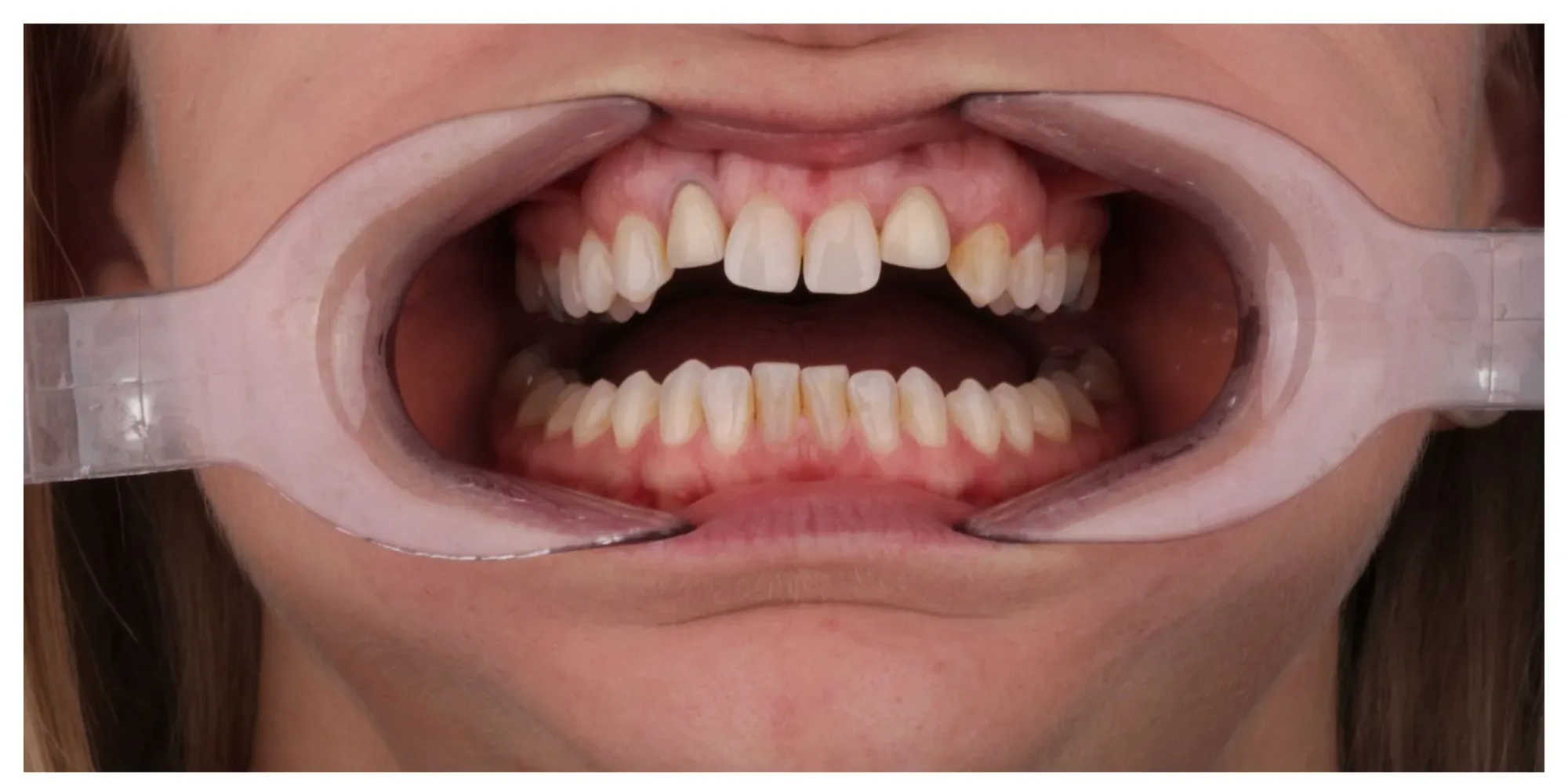 Before
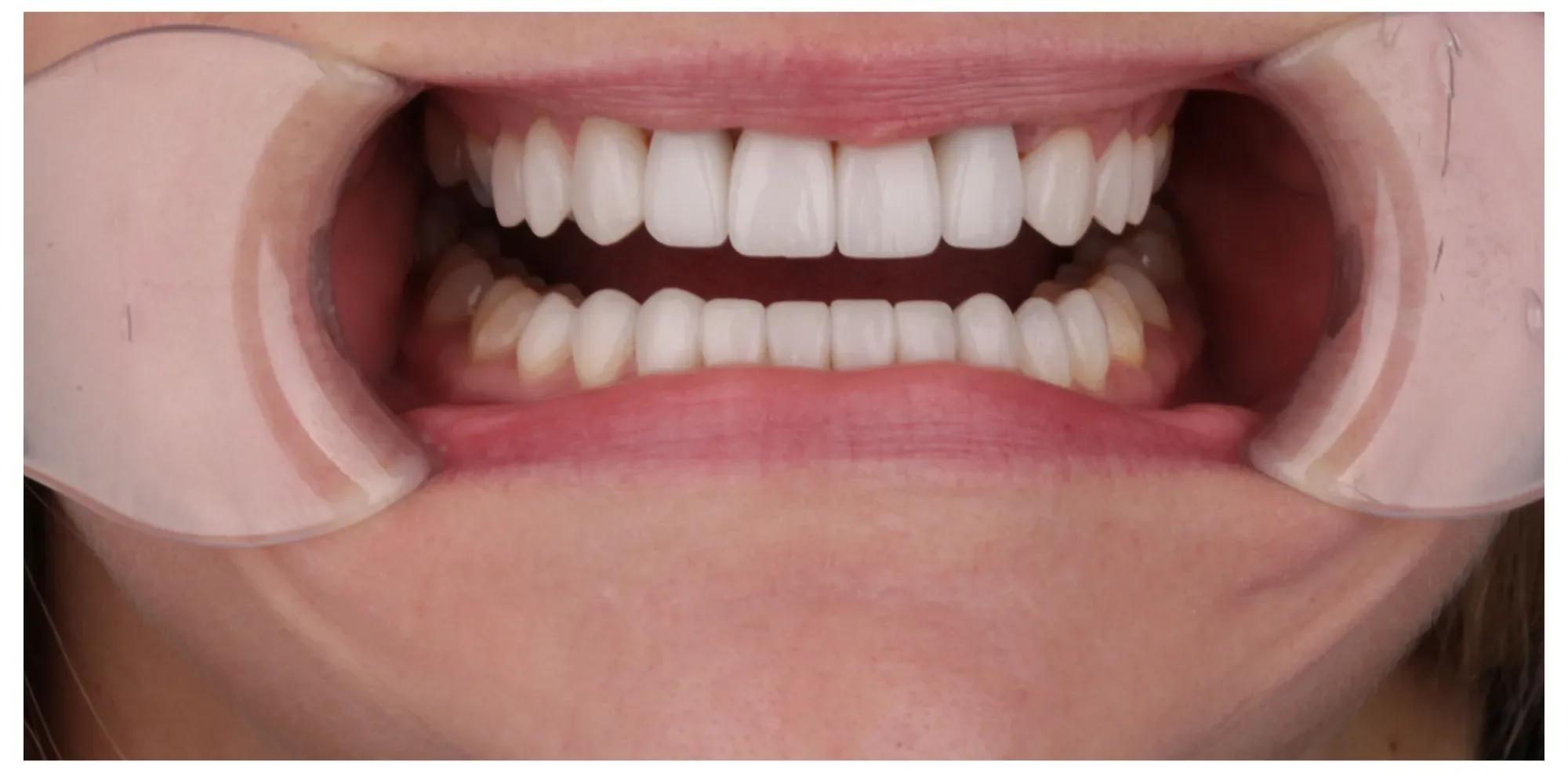 After
After
| Patient | Sarah, late 40s |
| Chief Complaint | Discoloration and uneven smile; existing implants constraining treatment options |
| Treatment | 10 porcelain veneers placed around existing implant crowns |
| Material | E.max (lithium disilicate) |
| Teeth Treated | 10 natural teeth + coordination with 2 existing implant crowns |
| Investment Range | $18,000 – $28,000 |
| Appointments | 6 visits over approximately 5 weeks |
| Location | Lakewood, Colorado |
| Clinical Reviewer | Dr. Brennan Bonati, DDS |
Sarah's Story
Sarah had two dental implants placed several years earlier to replace teeth she had lost. The implants were functional and well-integrated, but the crowns on them had never quite matched the rest of her smile — and over the years, her natural teeth had discolored while the implant crowns remained the same shade.
By the time she came in for a consultation, the mismatch was significant. Her natural teeth were noticeably darker than the implant crowns, and the overall smile lacked the uniformity she was looking for. She wanted a complete smile transformation, but the implants created a constraint: unlike natural teeth, implant crowns cannot be prepared for veneers. The implant crowns would need to be replaced or the veneers would need to be designed to match them.
Sarah's case required careful planning to achieve a seamless result — one where the veneers on her natural teeth and the crowns on her implants looked like a single, cohesive smile.
The Treatment Plan
After a thorough evaluation of the implants and surrounding tissues, the treatment plan involved placing 10 E.max porcelain veneers on Sarah's natural teeth and replacing the two implant crowns with new E.max crowns designed to match the veneers precisely.
- Consultation and records — full mouth evaluation including implant assessment, photographs, and shade analysis
- Smile design — digital wax-up coordinating the veneer design with the new implant crown specifications
- Preparation day — all 10 natural teeth prepared; temporaries placed; implant crowns sent to lab for replacement
- Temporary wear period — approximately three weeks to verify aesthetics and function
- Delivery — all 12 restorations (10 veneers + 2 implant crowns) delivered in a single appointment
- Post-delivery verification — bite check and final photographs
Clinical Insight
Cases involving existing implants require a fundamentally different planning approach than straightforward veneer cases. Implant crowns cannot be prepared for veneers — the crown is attached to the implant abutment, and there is no natural tooth structure underneath. This means the implant crowns must either be replaced entirely or the veneers must be designed to match them.
In Sarah's case, replacing the implant crowns was the right decision because the existing crowns were not the correct shade or contour for the new smile design. Coordinating the fabrication of 10 veneers and 2 implant crowns to match each other requires precise communication with the laboratory and a well-documented shade prescription.
The Result
The final result was a seamless, uniform smile where the veneers and implant crowns were indistinguishable from each other. The E.max restorations provided excellent shade matching and natural translucency across all 12 units.
Sarah described the result as exceeding her expectations. The challenge of working around existing implants had made her skeptical that a truly uniform result was possible — but the careful planning and laboratory precision delivered exactly that.
Free Resource
Am I a Candidate? Download Your Free Guide to Find Out
The complete self-assessment checklist — good candidate indicators, pre-treatment conditions to resolve, and what to expect at your first consultation. Clinically reviewed by Brennan Bonati, DDS.
No spam. No sales call. One email with your download link.
At a Glance
Existing implant crowns constrained the smile design; natural teeth had discolored while implant crowns remained unchanged, creating a visible mismatch.
Porcelain veneers on natural teeth combined with replacement implant crowns allowed for a fully coordinated smile — all 12 restorations fabricated to the same shade and contour specification.
10 E.max porcelain veneers on natural teeth + 2 new E.max implant crowns, all delivered in a single appointment.
A seamless, uniform smile where veneers and implant crowns are indistinguishable. Sarah described it as exceeding her expectations.
Related Reading
- How Much Do Veneers Cost? The Complete Guide — understand all the factors that affect pricing
- Types of Veneers: Porcelain, Composite, and E.max Compared — learn which material is right for your case
- What to Expect During the Veneer Procedure — a step-by-step guide to the process
- Am I a Candidate for Veneers? — find out if veneers are right for your situation
- Veneer Results and Long-Term Care — what to expect after your restorations are placed
- Financing Options for Veneers — payment plans and ways to make treatment more affordable
Sarah's case demonstrates how veneers for gaps can be successfully applied even when existing dental implants limit treatment options. This complex approach often requires careful planning to determine if a patient is an ideal candidate for veneers considering their unique dental history. The use of porcelain veneers like E.max allows for durable and aesthetic results around implants. Understanding the cost considerations for porcelain veneers is essential for patients facing complex restorative needs. Additionally, learning about the veneer procedure helps set realistic expectations for treatment duration and appointments.
Inspired by Sarah's Story?
I Want to Smile Like Sarah — Book My Free Consultation
Schedule a no-obligation consultation with a trusted Colorado cosmetic dentist. Most patients are seen within 1–2 weeks.
Frequently Asked Questions
Can veneers be placed on teeth next to implants?
Yes — veneers can be placed on natural teeth adjacent to implants. The challenge is ensuring the veneers match the implant crowns in shade and contour. In most cases, this requires replacing the implant crowns at the same time so all restorations can be fabricated to the same specification.
Can implant crowns be veneered?
No. Veneers bond to natural tooth enamel. Implant crowns are made of porcelain or zirconia and do not have enamel to bond to. If an implant crown needs to be changed cosmetically, it must be replaced entirely.
How do you match veneers to existing implant crowns?
Shade matching between veneers and implant crowns requires precise laboratory communication and often a custom shade prescription. In cases where an exact match is critical, it is generally preferable to replace the implant crowns at the same time as the veneers so all restorations are fabricated together from the same shade prescription.
Find Veneers Near You
All documented cases were treated in the Denver metro area. If veneers are being considered, explore cost and provider information for your city:
Not in Colorado? Browse all locations →
Explore More Cases
Each case below includes a full clinical breakdown with before-and-after documentation.