Henderson's Full-Mouth Reconstruction: Bruxism, Wear, and a...
Clinically Reviewed by Brennan Bonati, DDS — Cosmetic & Restorative Dentistry
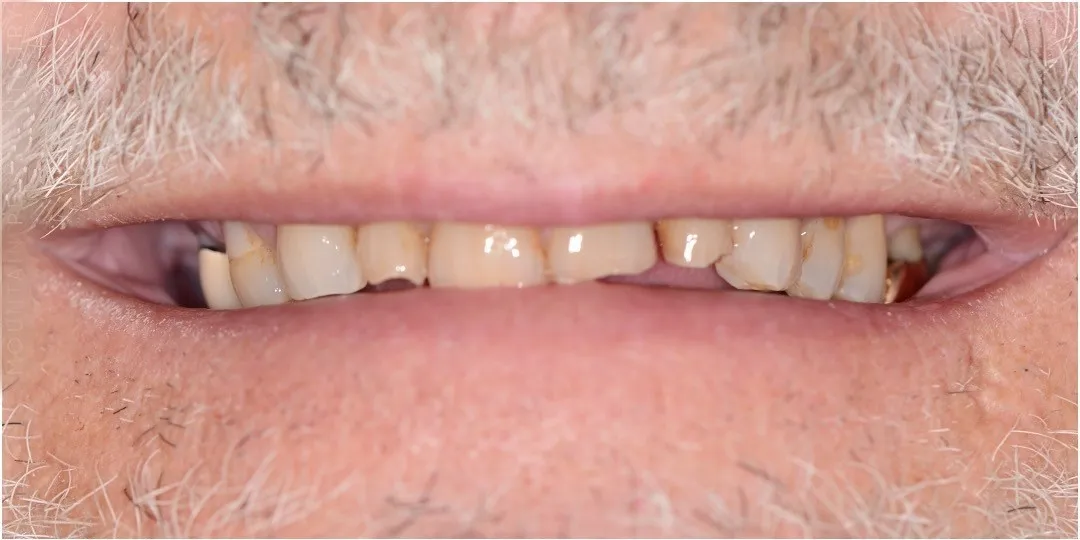 Before
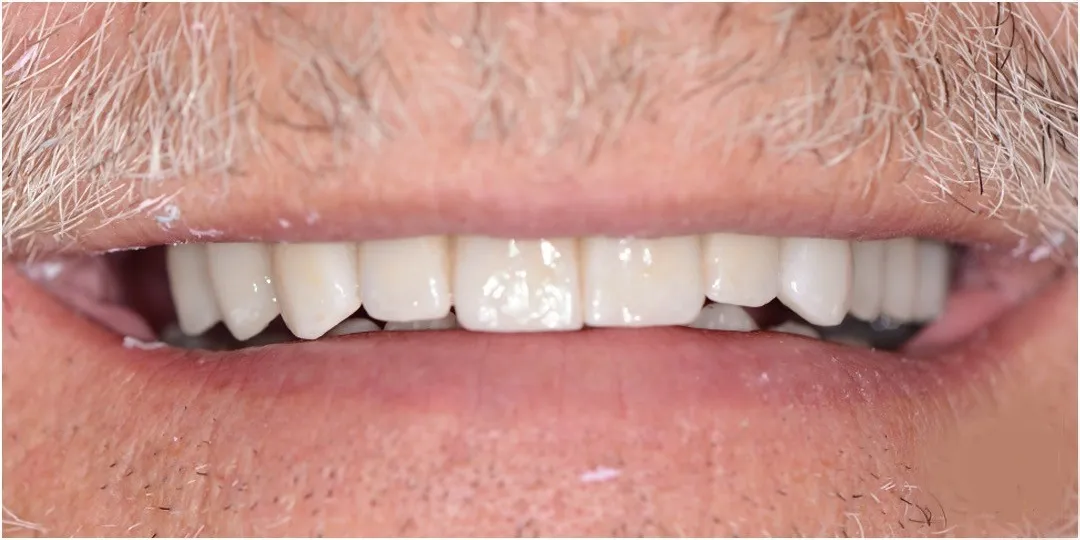 After
After
| Patient | Henderson, mid 50s |
| Chief Complaint | Severe bruxism; extensive tooth destruction; multiple failing restorations; collapsed bite |
| Treatment | 22 E.max crowns — full mouth reconstruction |
| Material | E.max (lithium disilicate) |
| Teeth Treated | 22 teeth — full mouth |
| Investment Range | $45,000 – $65,000 |
| Appointments | 8 visits over approximately 7 weeks |
| Location | Lakewood, Colorado |
| Clinical Reviewer | Dr. Brennan Bonati, DDS |
Henderson's Story
Henderson had been a grinder his entire adult life. He had gone through multiple sets of night guards, had several teeth crack and require crowns over the years, and had watched his smile gradually deteriorate despite his best efforts to protect it. By the time he came in for a consultation, the situation was critical: multiple existing crowns were failing, several teeth had fractured below the gum line, and his bite had collapsed to the point where he was experiencing significant jaw pain and difficulty chewing.
He had been putting off comprehensive treatment for years, partly because of cost and partly because he had never found a dentist who gave him a clear, complete picture of what needed to be done. He came in wanting that clarity: a full assessment, a complete treatment plan, and honest answers about what was possible.
The assessment was sobering. Henderson needed a full-mouth reconstruction — 22 crowns across both arches, with a significant bite opening to restore the vertical dimension he had lost.
The Treatment Plan
The treatment plan involved 22 E.max crowns across both arches with a 5mm bite opening.
- Consultation and records — full mouth evaluation, bite records, photographs, and mounted models
- Extraction of non-restorable teeth — two teeth that had fractured below the gum line were extracted; implants planned for future replacement
- Upper arch preparation — all upper teeth prepared; temporaries placed
- Lower arch preparation — all lower teeth prepared; temporaries placed
- Temporary wear period — four weeks to verify bite, aesthetics, and comfort
- Upper delivery
- Lower delivery
- Night guard and final verification
Clinical Insight
Henderson's case was one of the most complex in our documented series. The combination of severe bruxism, multiple failing restorations, and a significantly collapsed bite required careful planning at every stage. The bite opening of 5mm was among the largest we have performed, and the temporary phase was extended to four weeks to ensure the muscles and joints had fully adapted before the final porcelain was fabricated.
The two extracted teeth will eventually be replaced with implants — a second phase of treatment that Henderson is planning for the following year. The implant sites were preserved during the reconstruction to ensure adequate bone volume for future placement.
The Result
The final result was a complete transformation — 22 E.max crowns providing full-length, properly proportioned teeth in both arches with a restored bite and correct vertical dimension. Henderson's jaw pain resolved during the temporary phase as his muscles adapted to the new bite position.
He wears his night guard every night without exception. He describes the reconstruction as the best investment he has ever made in his health — not just his smile, but his ability to eat, sleep, and function without pain.
Free Resource
Am I a Candidate? Download Your Free Guide to Find Out
The complete self-assessment checklist — good candidate indicators, pre-treatment conditions to resolve, and what to expect at your first consultation. Clinically reviewed by Brennan Bonati, DDS.
No spam. No sales call. One email with your download link.
At a Glance
Decades of severe bruxism had destroyed Henderson's natural tooth structure, caused multiple crown failures, and collapsed his bite.
22 crowns were necessary because the tooth destruction was too extensive for veneers. A 5mm bite opening restored the vertical dimension lost to years of grinding.
22 E.max crowns across both arches with a 5mm bite opening. Eight appointments over seven weeks including a four-week temporary phase.
Complete smile transformation. Jaw pain resolved during the temporary phase. Henderson describes it as the best investment he has made in his health.
Related Reading
- How Much Do Veneers Cost? The Complete Guide — understand all the factors that affect pricing
- Types of Veneers: Porcelain, Composite, and E.max Compared — learn which material is right for your case
- What to Expect During the Veneer Procedure — a step-by-step guide to the process
- Am I a Candidate for Veneers? — find out if veneers are right for your situation
- Veneer Results and Long-Term Care — what to expect after your restorations are placed
- Financing Options for Veneers — payment plans and ways to make treatment more affordable
Henderson's full-mouth reconstruction showcases how severe worn teeth from bruxism can be effectively treated with a comprehensive bite rebuild. This case highlights the importance of understanding veneer candidacy when multiple failing restorations and collapsed bite are involved. The use of porcelain E.max crowns in full-arch rehabilitation demonstrates a durable and aesthetic solution. Patients considering this treatment often want to know about the investment required for full mouth reconstructions. For those new to veneers, this case also helps explain what veneers are and how they restore function and appearance.
Inspired by Henderson's Story?
I Want Results Like Henderson's — Book My Free Consultation
Schedule a no-obligation consultation with a trusted Colorado cosmetic dentist. Most patients are seen within 1–2 weeks.
Frequently Asked Questions
What happens to teeth that can't be saved in a full-mouth reconstruction?
Teeth that cannot be saved — typically those that have fractured below the gum line or have insufficient remaining structure — are extracted. The extraction sites can be preserved with bone grafting for future implant placement. In Henderson's case, two teeth were extracted and the sites were preserved for implants to be placed in a second phase of treatment.
How do you manage a 5mm bite opening?
A 5mm bite opening is managed through a careful temporary phase. The temporaries are placed at the new bite position, and the patient wears them for 4 to 6 weeks while the muscles, joints, and bite adapt. If the opening is too aggressive, the patient will experience discomfort or muscle fatigue in the temporaries, and adjustments can be made before the final porcelain is fabricated.
Can bruxism be cured?
Bruxism cannot be cured, but it can be managed. Night guards protect the teeth from the forces of grinding during sleep. In some cases, Botox injections into the masseter muscles can reduce the force of grinding. Stress management and sleep hygiene can also help. For patients with severe bruxism like Henderson, a night guard is a permanent, non-negotiable part of dental maintenance.
Find Veneers Near You
All documented cases were treated in the Denver metro area. If veneers are being considered, explore cost and provider information for your city:
Not in Colorado? Browse all locations →
Explore More Cases
Each case below includes a full clinical breakdown with before-and-after documentation.