Nikki's Bite Rebuild: Full-Arch Restoration After Years of Grinding
Clinically Reviewed by Brennan Bonati, DDS — Cosmetic & Restorative Dentistry
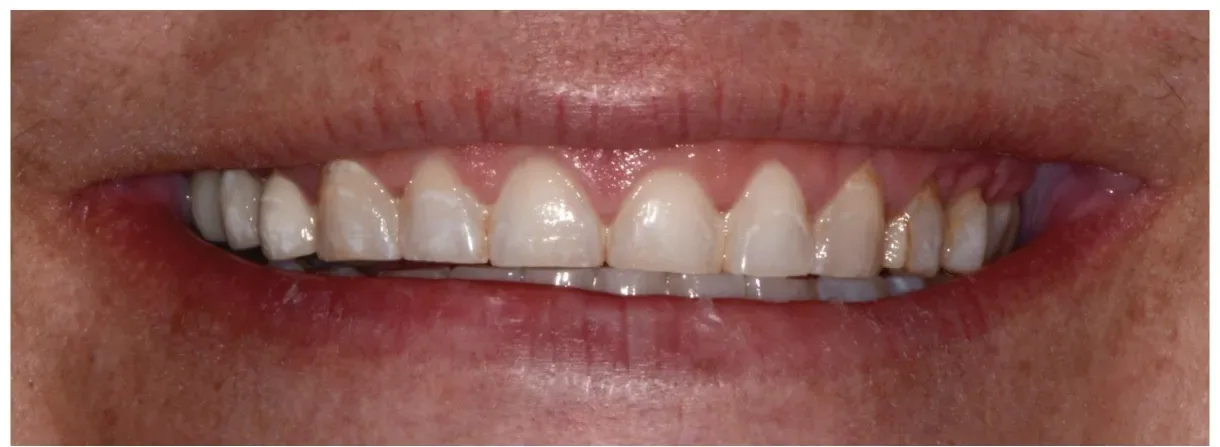 Before
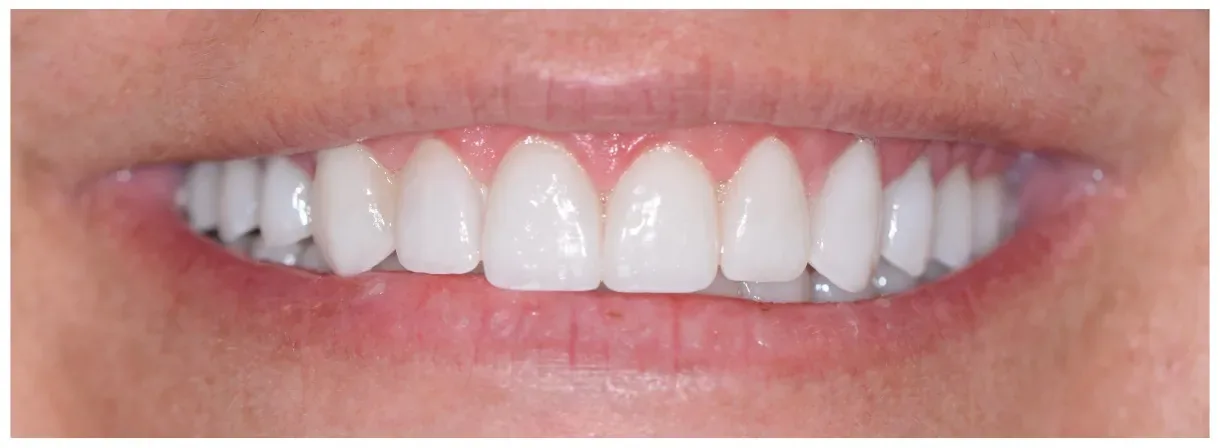 After
After
| Patient | Nikki, late 40s |
| Chief Complaint | Severe bruxism; flattened teeth; collapsed bite; jaw pain and muscle fatigue |
| Treatment | Full-mouth E.max crown reconstruction with bite rebuild |
| Material | E.max (lithium disilicate) |
| Teeth Treated | Full mouth — upper and lower arches |
| Investment Range | $45,000 – $65,000 |
| Appointments | 8 visits over approximately 6 weeks |
| Location | Lakewood, Colorado |
| Clinical Reviewer | Dr. Brennan Bonati, DDS |
Nikki's Story
Nikki had been grinding her teeth for as long as she could remember. She had worn through three sets of night guards over the years, and each time she replaced one, her dentist would note that her teeth had gotten a little shorter. By the time she came in for a consultation, the damage was extensive: her teeth were flat across the top, her bite had collapsed, and she was experiencing daily jaw pain and muscle fatigue that made it difficult to concentrate at work.
She had been told by two previous dentists that she needed "a lot of work" but had never received a clear treatment plan or a realistic cost estimate. She came in wanting answers: what exactly needed to be done, how long would it take, and what would it cost?
The clinical picture was unambiguous. Nikki needed a full-mouth reconstruction — a complete rebuild of every tooth in both arches, with a significant bite opening to restore the vertical dimension she had lost.
The Treatment Plan
The treatment plan involved full-arch E.max crown restorations on both arches with a 4mm bite opening to restore vertical dimension.
- Consultation and records — full mouth evaluation, bite records, photographs, and mounted models
- Deprogrammer phase — two weeks in a bite deprogrammer to relax the muscles and identify true centric relation
- Upper arch preparation — all upper teeth prepared; temporaries placed
- Lower arch preparation — all lower teeth prepared; temporaries placed
- Temporary wear period — four weeks to verify bite, aesthetics, and comfort
- Upper delivery — upper arch crowns delivered
- Lower delivery — lower arch crowns delivered
- Night guard and final verification
Clinical Insight
Nikki's case was complicated by the fact that her muscles had adapted to her collapsed bite over many years. When teeth wear down gradually, the jaw muscles adjust to the new position — and those muscles need to be relaxed and reprogrammed before accurate bite records can be taken. The deprogrammer phase was essential: without it, the bite records would reflect the adapted muscle position rather than the true centric relation, leading to a reconstruction that perpetuates the problem.
The four-week temporary phase was also critical. Opening a bite by 4mm is a significant change to the entire masticatory system. The temporaries allowed Nikki's muscles, joints, and bite to adapt to the new position before the final porcelain was fabricated — ensuring that the final restorations would be comfortable from day one.
The Result
The final result was a complete transformation — full-length, properly proportioned teeth in both arches with a restored bite and correct vertical dimension. Nikki's jaw pain resolved within the first week of wearing her temporaries, as the muscles finally had the space they needed to function without strain.
She wears her night guard every night. The combination of the reconstruction and the protective guard has given her a smile and a level of comfort she had not experienced in over a decade.
Free Resource
Am I a Candidate? Download Your Free Guide to Find Out
The complete self-assessment checklist — good candidate indicators, pre-treatment conditions to resolve, and what to expect at your first consultation. Clinically reviewed by Brennan Bonati, DDS.
No spam. No sales call. One email with your download link.
At a Glance
Decades of bruxism had flattened Nikki's teeth and collapsed her bite, causing daily jaw pain and muscle fatigue.
Full-mouth crown reconstruction was necessary because the wear was too extensive for veneers. A 4mm bite opening was required to restore the lost vertical dimension.
Full-arch E.max crown restoration — upper and lower — with a 4mm bite opening. Eight appointments over six weeks including a deprogrammer phase.
Jaw pain resolved within the first week of temporaries. Full-length teeth, restored bite, and a comfortable smile for the first time in over a decade.
Related Reading
- How Much Do Veneers Cost? The Complete Guide — understand all the factors that affect pricing
- Types of Veneers: Porcelain, Composite, and E.max Compared — learn which material is right for your case
- What to Expect During the Veneer Procedure — a step-by-step guide to the process
- Am I a Candidate for Veneers? — find out if veneers are right for your situation
- Veneer Results and Long-Term Care — what to expect after your restorations are placed
- Financing Options for Veneers — payment plans and ways to make treatment more affordable
Nikki's full-arch bite rebuild after years of grinding illustrates the challenges of treating severe bruxism-related wear and collapsed bite. This case emphasizes the critical role of determining candidacy for full-mouth veneer treatment when jaw pain and muscle fatigue are present. The selection of porcelain E.max crowns highlights their strength and longevity in bite restoration. Understanding the full mouth cost considerations is essential for patients facing similar extensive treatment. Additionally, this case helps explain the veneer procedure from preparation to final placement.
Inspired by Nikki's Story?
I Want Results Like Nikki's — Book My Free Consultation
Schedule a no-obligation consultation with a trusted Colorado cosmetic dentist. Most patients are seen within 1–2 weeks.
Frequently Asked Questions
What is a bite deprogrammer and why is it used?
A bite deprogrammer is a removable appliance worn for 1 to 3 weeks before taking bite records for a full-mouth reconstruction. It works by contacting only the front teeth, which relaxes the posterior muscles and allows the jaw to settle into its true centric relation position. Without a deprogrammer, bite records taken on a patient with a long history of bruxism may reflect the adapted muscle position rather than the correct jaw relationship.
How much bite opening is safe?
The amount of bite opening that is safe depends on the individual patient's anatomy and the degree of wear. In most cases, 3 to 5mm of anterior opening is well-tolerated. The temporary phase is the safety net: if the bite opening is too aggressive, the patient will experience discomfort in the temporaries, and adjustments can be made before the final porcelain is fabricated.
Will bruxism damage the new crowns?
Bruxism can damage any dental restoration over time, including E.max crowns. A custom night guard is essential for any patient with a history of grinding. The night guard distributes the forces of bruxism evenly across all teeth and significantly extends the lifespan of the restorations. Without a night guard, even the strongest porcelain crowns will eventually show wear.
Find Veneers Near You
All documented cases were treated in the Denver metro area. If veneers are being considered, explore cost and provider information for your city:
Not in Colorado? Browse all locations →
Explore More Cases
Each case below includes a full clinical breakdown with before-and-after documentation.