Home / Learn About Veneers / Am I a Candidate? / How Many Do I Need?

How Many Veneers Do I Need?

Clinically Reviewed by Brennan Bonati, DDS — Cosmetic & Restorative Dentistry

See What Your Case Would Cost →

"How many veneers do I need?" is one of the most common questions patients ask — and the answer is almost never a simple number. The right count depends on your smile corridor (the teeth visible when you smile fully), the condition of your existing teeth, and your cosmetic goals. This guide breaks down the three most common treatment scopes with real patient examples so you can understand what to expect before your consultation.

The Smile Corridor: Why the Number Matters

When you smile widely, most people show between 8 and 12 teeth. This visible zone is called the smile corridor, and it is the primary factor in determining how many veneers are needed. Treating fewer teeth than the full corridor creates a visible line where the veneered teeth end and the natural teeth begin — a mismatch in color, shape, and texture that is difficult to hide.
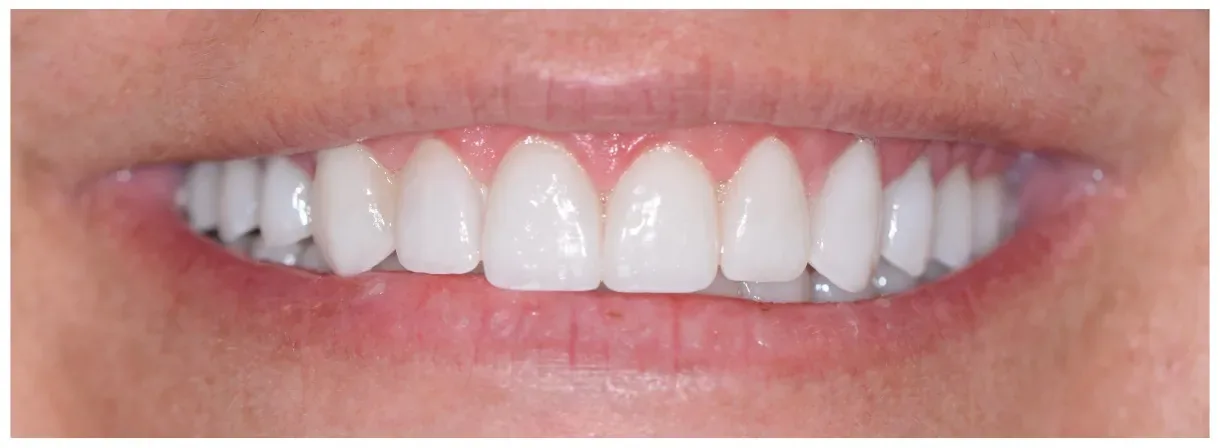
Wide natural smile after porcelain veneers showing the full smile corridor
The "smile corridor" — the teeth visible when you smile widely — typically includes 8 to 10 upper teeth. Treating fewer than the full corridor often results in a visible mismatch between restored and unrestored teeth.

This is why the minimum recommendation for most cosmetic cases is 8 to 10 veneers on the upper arch. Patients who ask about 2 or 4 veneers are almost always better served by treating the full corridor. A diagnostic wax-up — a physical or digital model of the proposed smile — is the definitive tool for confirming the exact number. It removes guesswork and lets you see the result before any irreversible work begins.

The single biggest mistake patients make is assuming they can "start with a few and add more later." Veneers are custom-designed as a set — the color, shape, and proportions are calibrated to work together. Adding veneers later means the new ones must match aged originals, which is extremely difficult. The diagnostic wax-up exists specifically to prevent this problem: it shows the full scope upfront so the patient and dentist agree on the plan before any tooth is touched.


Clinically reviewed by Brennan Bonati, DDS — Cosmetic & Restorative Dentistry

The Three Treatment Scopes

In clinical practice, veneer cases fall into three broad categories based on the number of teeth treated. Each scope addresses different levels of cosmetic and functional need. The table below provides a quick comparison, followed by a detailed breakdown with real patient examples.

Scope Teeth Treated Typical Cost Range Best For
10 Upper 8–10 upper teeth $16,000 – $25,000 Cosmetic concerns limited to the upper smile corridor
10 Over 10 Upper + lower arches (16–20 teeth) $18,000 – $35,000 Visible lower teeth need correction too; mixed-material strategy
Full Reconstruction 20–28 restorations (veneers + crowns) $45,000 – $65,000 Bite collapse, severe wear, missing teeth, structural damage

Cost ranges reflect national averages for porcelain (E.max) restorations. Actual costs vary by market and case complexity. Get your personalized estimate.

Scope 1: 10 Upper Veneers — The Standard Smile Makeover

The most common veneer case treats the upper smile corridor — typically 8 to 10 teeth from canine to canine, sometimes extending to the first premolars. This scope is ideal for patients whose primary concerns are cosmetic: crooked teeth, chips, discoloration, gaps, or uneven shapes that are limited to the upper arch. The lower teeth are either already acceptable or not visible enough to warrant treatment.

Ten upper veneers allow the ceramist to design a cohesive set — matching color, proportion, and surface texture across the entire visible smile. The result is a natural, balanced appearance that looks like a complete set of beautiful teeth rather than a few repaired ones.

Real Case — 10 Upper Veneers

Hannah had crooked, short, discolored teeth and wanted a longer, straighter, naturally whiter smile. Ten E.max porcelain veneers on the upper arch delivered a complete transformation in 5 visits.

Hannah before veneers — crooked, short, discolored upper teeth Before
Hannah after 10 E.max porcelain veneers — straight, bright, natural smile After
Cosmetic Makeover · 10 E.max Veneers
Hannah — Crooked, Short & Discolored to a Complete Smile
$18,000
View Full Case Study →

Scope 2: 10 Over 10 — Upper and Lower Arches

When the lower teeth are also visible — worn, chipped, discolored, or misaligned — treating only the upper arch leaves the smile looking incomplete. A 10-over-10 approach treats both arches for a fully cohesive result. This doesn't always mean 20 porcelain veneers. A clinically sound and cost-effective strategy is to use E.max porcelain on the upper arch (where cosmetic scrutiny is highest) and composite veneers on the lower arch (where demands are lower and a no-prep approach is often possible).

This mixed-material approach allows the dentist to invest the higher-cost, higher-durability material where it matters most while keeping the overall investment accessible. When shade-matched carefully, the two materials look seamless together.

Real Case — 10 Over 10 (Mixed Materials)

Brandon K. had mismatched dental work, an old zirconia bridge, and discolored teeth across both arches. A full smile makeover with E.max upper restorations and composite lower veneers created a cohesive, natural result.

Brandon K before full smile makeover — mismatched dental work and discoloration Before
Brandon K after full smile makeover — cohesive E.max upper and composite lower veneers After
Full Smile Makeover · 16 Restorations (E.max + Composite)
Brandon K. — E.max Upper + Composite Lower for a Complete Transformation
$18,000 – $25,000
View Full Case Study →

Scope 3: Full-Mouth Reconstruction — Beyond Veneers

When the problem goes beyond cosmetics — bite collapse from years of grinding, missing teeth, severely compromised tooth structure — the case moves from a veneer plan to a full-mouth reconstruction. These cases involve 20 to 28 restorations that may include a mix of veneers, crowns, bridges, and implant crowns. The goal is not just a beautiful smile but a fully functional bite engineered to last.

Full reconstructions require more diagnostic planning (including a bite deprogrammer and comprehensive records), more appointments, and a significantly higher investment. But for patients with decades of wear, grinding damage, or failed previous dental work, this is the only path to a lasting result. The temporary phase becomes especially critical — it serves as a "test drive" of the new bite and smile design before the final porcelain is fabricated.

Real Case — Full-Mouth Reconstruction

Joanne's case is one of the clearest examples of when veneers alone aren't enough. Decades of grinding had collapsed her bite and caused chronic jaw pain. A full reconstruction with 20 restorations — veneers, crowns, and implant crowns — restored both function and aesthetics.

Joanne before full mouth rehabilitation — severely worn teeth and collapsed bite Before
Joanne after full mouth rehabilitation — restored smile with E.max porcelain veneers and crowns After
Full Rehabilitation · 20 Restorations
Joanne — Full-Mouth Bite Correction & Restoration
$45,000 – $65,000
View Full Case Study →

The Diagnostic Wax-Up: How the Final Number Is Determined

Regardless of which scope applies, the diagnostic wax-up is the tool that confirms the exact number of veneers needed. It is a physical or digital model of the proposed smile design that shows how each tooth will look after treatment. The wax-up reveals whether 8 veneers are sufficient or whether 10 are needed to cover the full corridor. It shows whether the lower arch needs treatment. And it exposes any functional issues — like bite interference or insufficient tooth structure — that would change the plan.

Many patients arrive at a consultation convinced they need 4 veneers. After reviewing the wax-up, they see that 4 leaves a visible mismatch and that 8 or 10 creates the cohesive result they actually want. The wax-up is not an upsell — it is the clinical standard for planning any quality veneer case. Without it, both the patient and the dentist are guessing.

Download the Free Candidacy Guide

A printable checklist to bring to your consultation — covers what to ask, what to look for, and red flags to avoid.

We respect your privacy. Unsubscribe anytime.

Explore All Candidacy Topics

Explore whether veneers are right for your specific dental concerns. Each guide below covers a different condition and how veneers can help.

Frequently Asked Questions

Technically yes, but it is rarely recommended. Four veneers cover only the central and lateral incisors. The canines and premolars — visible when you smile — remain untreated, creating a mismatch in color, shape, and texture. Most patients who start with four end up wishing they had treated the full smile corridor. A diagnostic wax-up will show exactly why 8 to 10 is the clinical standard.

The smile corridor is the group of teeth visible when you smile fully — typically 8 to 12 teeth including the central incisors, lateral incisors, canines, and often the first premolars. Treating fewer teeth than the full corridor results in a visible line where veneered teeth end and natural teeth begin. A quality cosmetic dentist designs the case to treat the entire corridor for a seamless, natural result.

A diagnostic wax-up is a physical or digital model of the proposed smile design. It shows exactly how many teeth need to be treated to achieve a cohesive result. Many patients believe four or six veneers will be enough, but the wax-up reveals that untreated teeth create a mismatch. It removes guesswork and allows both patient and dentist to agree on the scope before any irreversible work begins.

Fewer veneers cost less upfront, but the result may not meet expectations. Treating only a few teeth often leads to a mismatched appearance that requires additional veneers later — effectively paying twice. The better approach is to plan the full scope from the start using a diagnostic wax-up, then explore financing options to make the investment manageable.

It depends on how much of your lower teeth show when you smile and talk. Some patients show very little of their lower arch and achieve a beautiful result with upper veneers only. Others — especially those with worn, chipped, or discolored lower teeth — benefit from a 10-over-10 approach. Composite veneers on the lower arch are a cost-effective option that can be matched to the upper porcelain for a cohesive result.

Ten veneers typically cover the upper smile corridor. A full-mouth reconstruction involves 20 to 28 restorations across both arches and addresses not just cosmetics but also bite collapse, severe wear, missing teeth, or structural damage. Full reconstructions are more complex, require more appointments, and cost significantly more — but they are necessary when the bite and tooth structure have been compromised beyond what veneers alone can fix. See Joanne's full reconstruction case for a real example.