Brandon K.'s Full Smile Makeover: From Hiding His Smile to Showing...
Clinically Reviewed by Brennan Bonati, DDS — Cosmetic & Restorative Dentistry
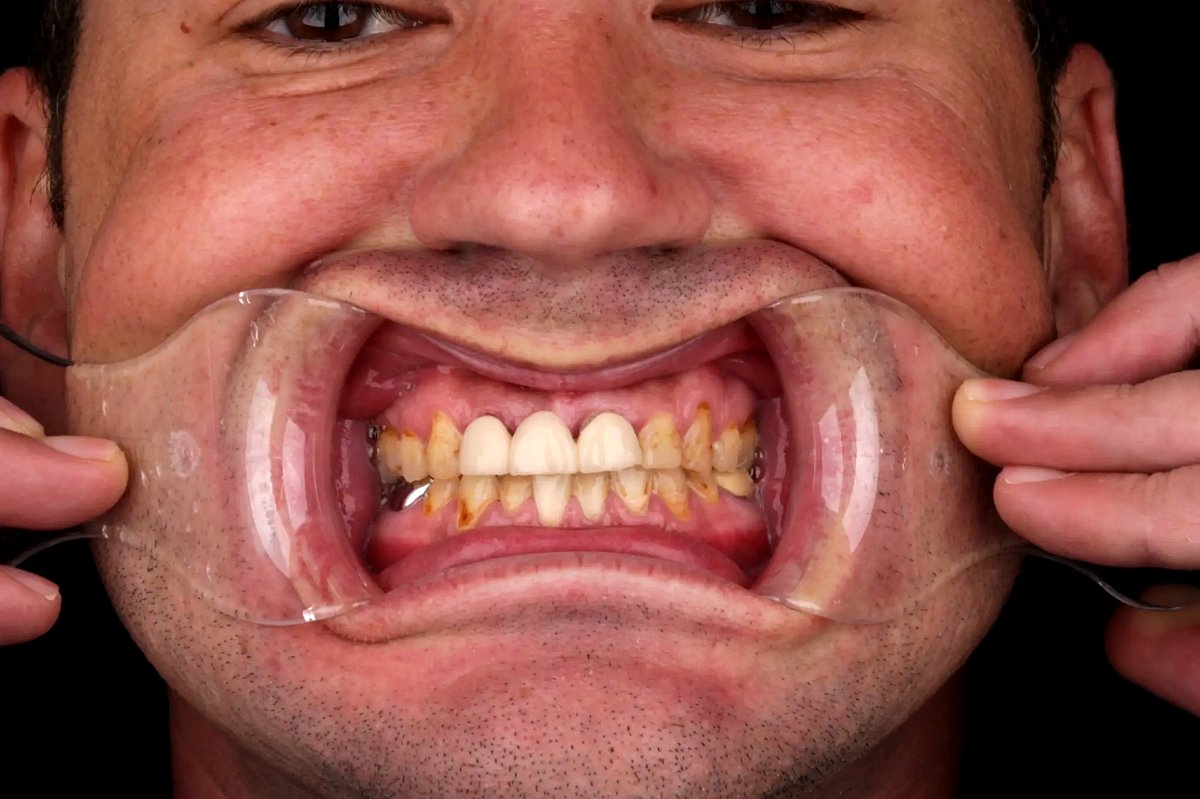
 Before
 After
After
| Patient | Brandon K., 30s |
| Chief Complaint | Mismatched old dental work — discolored bridge and composite build-ups that never matched |
| Treatment | Upper: 3-unit E.max bridge (#6 pontic, #7–#8 abutments) + 7 E.max veneers; Lower: 6 composite veneers (16 total restorations) |
| Material | E.max (lithium disilicate) upper arch; composite lower arch |
| Shade | B1 |
| Pre-Treatment | Scaling and root planing (SRP) completed prior to cosmetic phase |
| Investment Range | $18,000 – $25,000 |
| Appointments | 5 visits |
| Location | Lakewood, Colorado |
| Clinical Reviewer | Dr. Brennan Bonati, DDS |
Brandon's Story
Brandon K. came in with a problem that was both clinical and deeply personal. For years, he had been living with dental work that simply did not match — a zirconia bridge that had been placed years earlier had never looked right against his natural teeth, and composite build-ups on the adjacent teeth had discolored and chipped over time. The result was a smile that looked patchy, mismatched, and aged. Brandon had learned to hide it.
 Click to enlarge
By the time Brandon came in for a consultation, he described himself as someone who never smiled — not in photos, not in social situations, not in professional settings. He would actively turn away or cover his mouth. The discomfort was not just cosmetic; it had become a habit, a reflex built over years of self-consciousness about his teeth.
What he wanted was straightforward: a smile that matched, that looked natural, and that he did not have to think about hiding. He was not looking for something theatrical — he wanted to look like himself, just with teeth that worked together as a cohesive whole.
The Treatment Plan
Before any cosmetic work could begin, Brandon required scaling and root planing (SRP) — a deep cleaning procedure to address periodontal buildup and ensure healthy gum tissue as the foundation for new restorations. Placing veneers or crowns over compromised gum tissue leads to poor margins and long-term failure, so the SRP phase was non-negotiable.
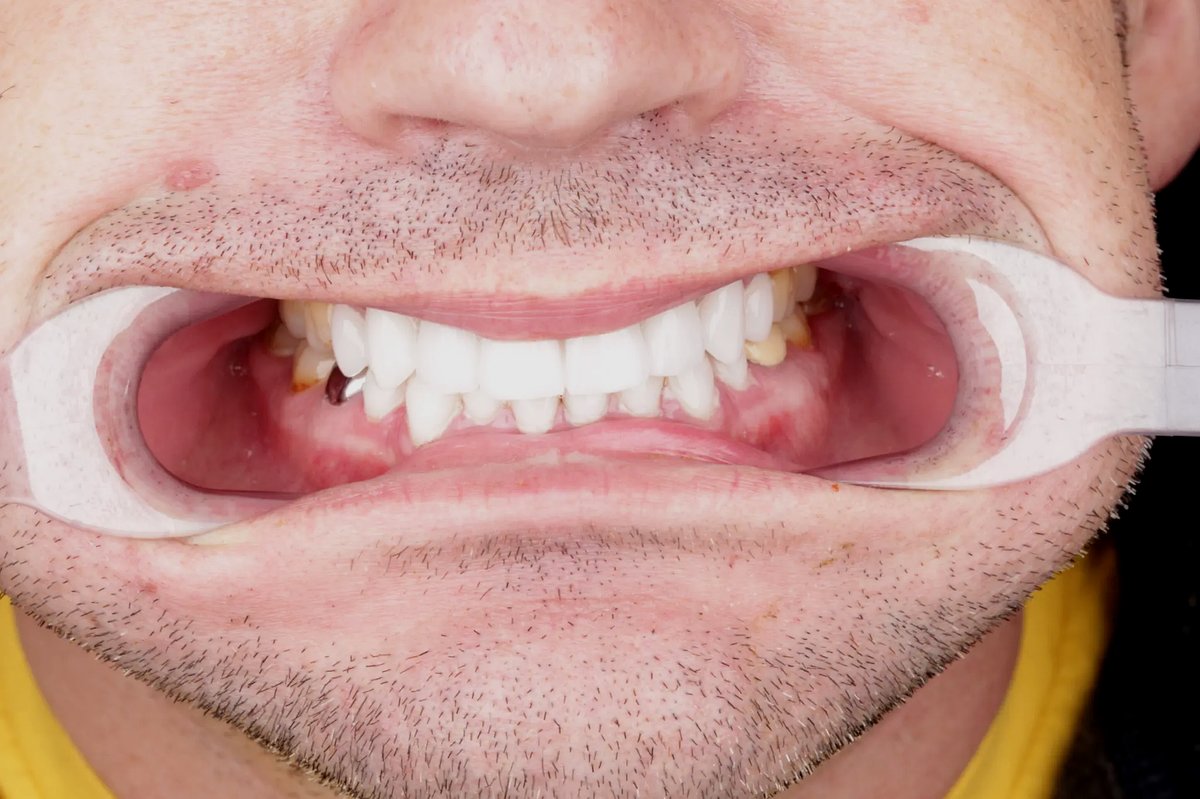
Once periodontal health was established, the treatment plan addressed both arches with a material strategy designed to maximize aesthetics and value. The upper arch received the full E.max treatment: the old zirconia bridge was removed and replaced with a new 3-unit E.max bridge (tooth #6 as the pontic, teeth #7 and #8 as abutments), and seven E.max veneers were placed on the remaining upper anterior teeth. E.max was chosen for the upper arch because of its superior translucency, strength, and ability to be shade-matched precisely across multiple units.
The lower arch received six composite veneers. The lower teeth are less visible during normal conversation and smiling, and composite allowed for an additive, no-prep approach that preserved all natural tooth structure while still delivering a significant improvement in color and shape. The composite was shade-matched to the upper E.max restorations to create a seamless, unified result across both arches.
 Click to enlarge
The treatment was completed across five appointments: a consultation and records visit, the SRP appointment, a prep and temporization day for the upper arch, a delivery appointment for both arches, and a final follow-up to verify the bite and capture final photographs.
Clinical Insight
Brandon's case illustrates one of the most common challenges in full smile makeovers: the existing dental work. When a patient has old bridges, crowns, or composite build-ups that have discolored or were never properly matched, the new restorations must be designed not just to look good in isolation but to replace and unify everything that came before them.
The key decision in this case was the bridge. Replacing a 3-unit bridge is more involved than placing individual veneers — the abutment teeth (#7 and #8) require preparation, impressions, and a laboratory fabrication period. The pontic (#6) must be designed to emerge naturally from the gum tissue and match the adjacent veneers in contour and shade. Getting all of this right across ten upper restorations simultaneously requires precise shade communication with the laboratory and careful attention to the emergence profile of the bridge pontic.
The mixed-material approach — E.max upper, composite lower — is a clinically sound strategy that is often underutilized. It allows the dentist to invest the higher-cost, higher-durability material where it matters most (the upper anterior teeth, which bear the greatest cosmetic scrutiny and functional load) while using composite on the lower arch where the aesthetic demands are lower and a no-prep approach is possible. The result is a full-mouth transformation at a more accessible investment than an all-E.max case.
The Result
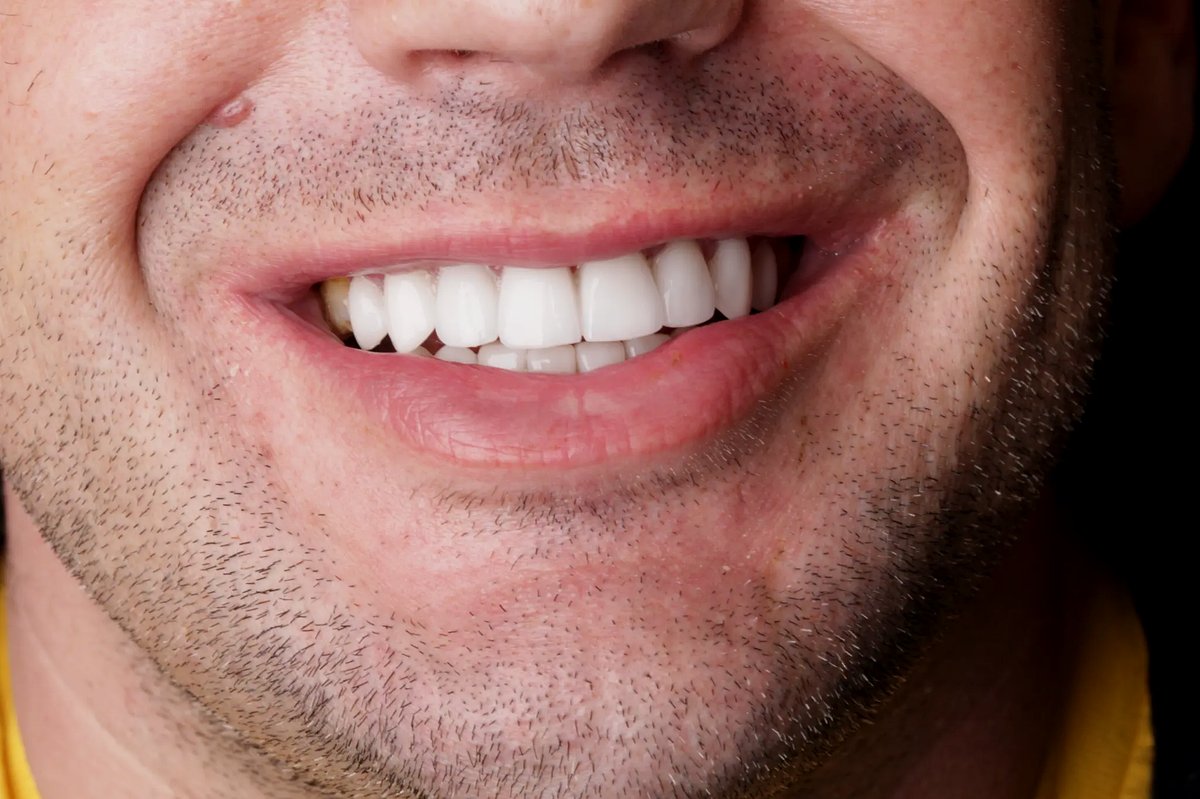
The transformation for Brandon was both clinical and personal. The new E.max bridge and upper veneers created a uniform, bright, natural-looking upper arch — no mismatches, no discoloration, no patches of old composite showing through. The lower composite veneers complemented the upper work seamlessly, completing the smile without drawing attention to themselves.
Click to enlarge
Click to enlarge
 Click to enlarge
Brandon's reaction at delivery was one of the most memorable moments of the case. He had described himself as someone who never smiled — who would actively hide his teeth in every photo and social situation. When he saw the final result, he said he was not used to smiling and that he used to always hide his teeth. Then he smiled big. That reaction is what this work is about.
At a Glance
Old mismatched bridge and composite build-ups had discolored and never matched. Brandon hid his smile for years.
The existing bridge had to be replaced to unify the upper arch. E.max veneers on the remaining upper teeth and composite veneers on the lower arch completed the transformation with a material strategy matched to each arch's needs.
SRP first, then 3-unit E.max bridge + 7 E.max upper veneers + 6 composite lower veneers. 16 total restorations in 5 visits.
A unified, natural smile in shade B1. Brandon went from hiding his teeth to smiling without thinking about it.
Free Resource
Am I a Candidate? Download Your Free Guide
The complete self-assessment checklist — good candidate indicators, pre-treatment conditions to resolve, and what to expect at your first consultation. Clinically reviewed by Brennan Bonati, DDS.
No spam. No sales call. One email with your download link.
What This Case Helps Explain
Brandon K.'s full smile makeover demonstrates the effective use of a hybrid approach with porcelain veneers on the upper arch and composite veneers on the lower arch to achieve a natural, harmonious smile. This case underscores the importance of selecting the right veneer material based on location and patient needs, as detailed in our candidacy information at who is a good candidate for veneers. The cost considerations for combining materials are explained in our general veneers cost guide and more specifically in the composite veneer cost page. For further examples of similar transformations, explore the full smile makeover case studies.
Inspired by Brandon's Story?
See What's Possible — Book My Free Consultation
Schedule a no-obligation consultation with a trusted Colorado cosmetic dentist. Most patients are seen within 1–2 weeks.
Related Reading
- How Much Do Veneers Cost? The Complete Guide — understand all the factors that affect pricing for cases like Brandon's
- Types of Veneers: Porcelain, Composite, and E.max Compared — why E.max was chosen for the upper arch
- Composite Veneers: What They Are and When They're the Right Choice — the case for composite on the lower arch
- What to Expect During the Veneer Procedure — a step-by-step guide to the process Brandon went through
- Financing Options for Veneers — payment plans and ways to make treatment more affordable
Frequently Asked Questions
Can you mix E.max veneers on top and composite veneers on the bottom?
Yes — and in many cases it is the ideal approach. E.max (lithium disilicate) is the gold standard for upper anterior restorations because of its strength, translucency, and longevity. Composite veneers on the lower arch are a cost-effective complement: the lower teeth are less visible, subject to less cosmetic scrutiny, and composite allows for additive placement without any tooth reduction. When shade-matched carefully, the two materials can look seamless together. Brandon K.'s case is a good example — the upper E.max and lower composite were matched to shade B1 and the result is cohesive and natural.
What happens when an old bridge doesn't match the surrounding teeth?
An old bridge that no longer matches — whether due to shade changes in the natural teeth, original lab error, or material aging — is one of the most common reasons patients seek a full smile makeover. The solution depends on the condition of the abutment teeth and the underlying implants or natural roots. In Brandon's case, the existing zirconia bridge was removed and replaced with a new E.max 3-unit bridge fabricated to match the seven new veneers placed on the rest of the upper arch, creating a uniform, cohesive result across all 10 upper restorations.
Why is SRP sometimes required before veneers?
Scaling and root planing (SRP) is a deep cleaning procedure that removes calculus and bacterial deposits from below the gumline. It is required before cosmetic work when a patient has active periodontal disease or significant buildup that would compromise the gum health around new restorations. Placing veneers or crowns over inflamed, infected gum tissue leads to poor margins, gum recession, and compromised long-term outcomes. In Brandon's case, SRP was completed first to ensure a healthy foundation before any cosmetic work began.
What is shade B1 and how does it compare to bleach shades?
B1 is the lightest shade in the standard Vita Classic shade guide — it is a bright, natural white that reads as clean and healthy without appearing artificial. It sits just below the ultra-bright bleach shades (BL1–BL4) on the whiteness spectrum. For patients like Brandon who want a noticeably whiter smile that still looks like real teeth, B1 is often the ideal choice. It provides a significant improvement over yellowed or stained natural teeth while maintaining the subtle translucency and variation that makes a smile look genuine rather than painted.
Find Veneers Near You
Not in Colorado? Browse all locations →