Jason's Case: Why Full-Arch Crowns Were the Right Choice Over Veneers
Clinically Reviewed by Brennan Bonati, DDS — Cosmetic & Restorative Dentistry
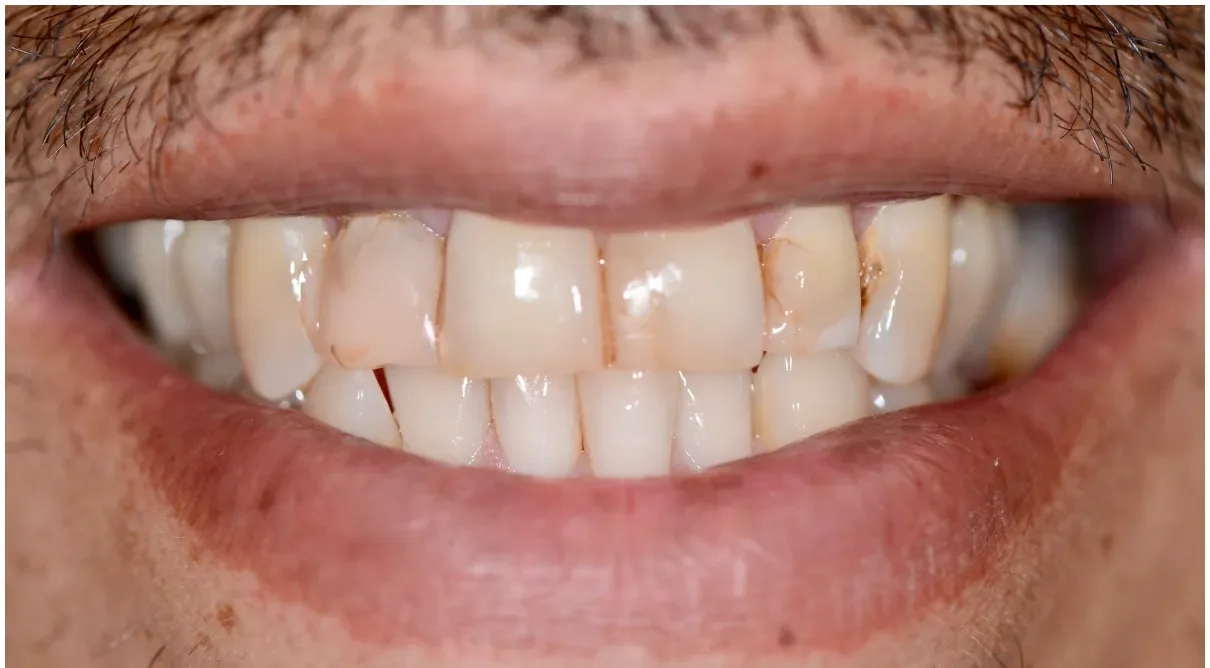 Before
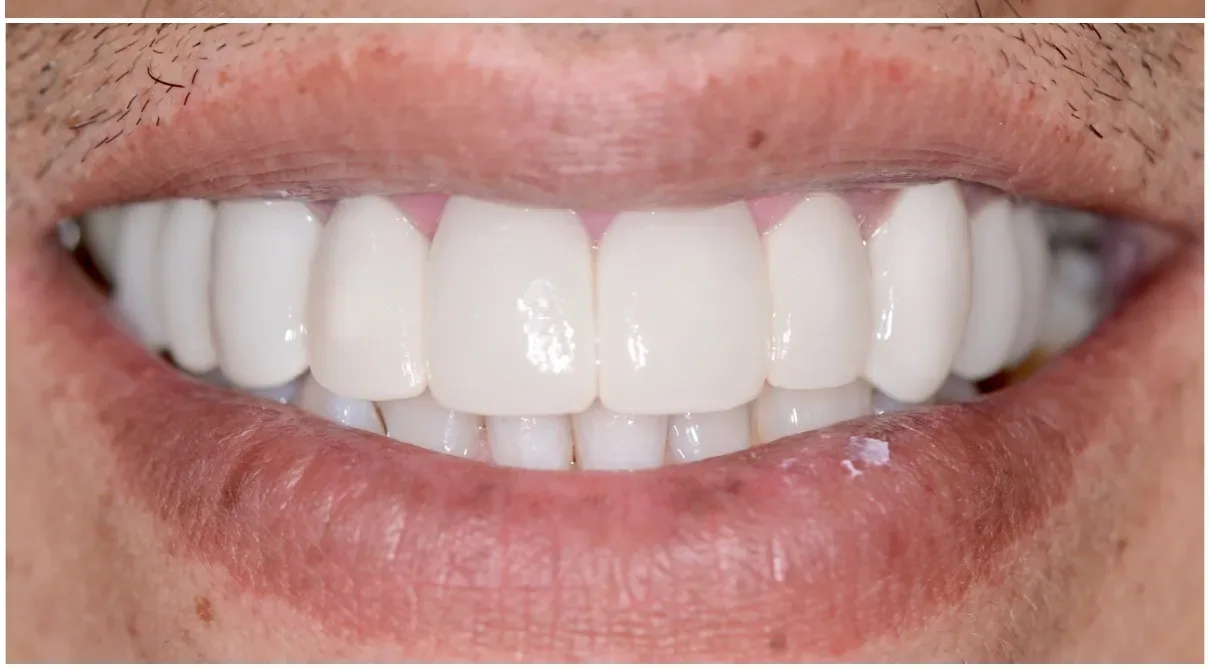 After
After
| Patient | Jason, mid 40s |
| Chief Complaint | Severe tooth wear from bruxism; teeth too short and damaged for veneers |
| Treatment | Full-arch crown restoration — all upper and lower teeth |
| Material | E.max (lithium disilicate) |
| Teeth Treated | Full arch — upper and lower |
| Investment Range | $40,000 – $60,000 |
| Appointments | 7 visits over approximately 6 weeks |
| Location | Lakewood, Colorado |
| Clinical Reviewer | Dr. Brennan Bonati, DDS |
Jason's Story
Jason came in knowing something was wrong. He had been grinding his teeth for years — he could feel it when he woke up, and his jaw was often sore in the morning. But it wasn't until he looked at photographs of his teeth that he understood the extent of the damage. His teeth had worn down to roughly half their original length. The edges were flat, the surfaces were rough, and the enamel on several teeth was almost entirely gone.
He had been told by a previous dentist that veneers could fix the problem. But when he came in for a consultation, the clinical picture was clear: Jason was not a veneer candidate. Veneers require a minimum thickness of tooth structure to bond to — and Jason's teeth, particularly the lower anteriors, had been worn to the point where there was insufficient enamel remaining for a reliable veneer bond. Placing veneers on teeth with this level of wear would result in a poor long-term outcome.
What Jason needed was a full-arch crown restoration — a complete rebuild of every tooth in both arches.
The Treatment Plan
The treatment plan involved full-arch crown restorations on both the upper and lower arches, with a significant bite opening to restore the vertical dimension that had been lost to years of grinding.
- Consultation and records — full mouth evaluation, bite records, photographs, and mounted models
- Bite equilibration — initial adjustment to identify the correct centric relation before preparation
- Upper arch preparation — all upper teeth prepared in a single session; temporaries placed
- Lower arch preparation — all lower teeth prepared; temporaries placed
- Temporary wear period — four weeks to verify bite, aesthetics, and comfort
- Delivery — all upper and lower crowns delivered
- Night guard — custom night guard fabricated to protect the new restorations
Clinical Insight
Jason's case illustrates one of the most important distinctions in cosmetic dentistry: the difference between a veneer candidate and a crown candidate. Veneers are appropriate when there is sufficient enamel remaining and the tooth structure is fundamentally sound. When teeth have been worn to the point where enamel is largely gone — as in Jason's case — crowns are necessary because they provide full-coverage protection and do not rely on enamel bonding for retention.
The other critical factor in Jason's case was the cause of the wear. Bruxism — chronic grinding — is a parafunctional habit that will continue after treatment unless it is managed. A night guard is not optional for a patient like Jason; it is essential. Without it, the new restorations will suffer the same fate as the natural teeth.
The Result
The final result was a complete smile transformation — full-length, properly proportioned teeth in both arches with a restored bite and correct vertical dimension. The E.max crowns provided the strength needed to withstand Jason's bite forces while delivering a natural, aesthetic result.
Jason was fitted with a custom night guard at his final appointment. He wears it every night. The combination of the new restorations and the protective guard has eliminated his morning jaw pain.
Free Resource
Am I a Candidate? Download Your Free Guide to Find Out
The complete self-assessment checklist — good candidate indicators, pre-treatment conditions to resolve, and what to expect at your first consultation. Clinically reviewed by Brennan Bonati, DDS.
No spam. No sales call. One email with your download link.
At a Glance
Severe bruxism had worn Jason's teeth to half their original length. Insufficient enamel remained for veneers — crowns were the only viable option.
Full-coverage crowns were necessary because Jason's teeth had insufficient enamel for veneer bonding. Crowns also provide better protection against ongoing bruxism forces.
Full-arch E.max crown restoration — all upper and lower teeth — with bite opening to restore lost vertical dimension.
Complete smile transformation with proper tooth length and a restored bite. Night guard prescribed to protect the investment long-term.
Related Reading
- How Much Do Veneers Cost? The Complete Guide — understand all the factors that affect pricing
- Types of Veneers: Porcelain, Composite, and E.max Compared — learn which material is right for your case
- What to Expect During the Veneer Procedure — a step-by-step guide to the process
- Am I a Candidate for Veneers? — find out if veneers are right for your situation
- Veneer Results and Long-Term Care — what to expect after your restorations are placed
- Financing Options for Veneers — payment plans and ways to make treatment more affordable
What This Case Helps Explain
Jason's case is a clear example of when full-arch crowns are a better solution than veneers, especially in severe wear cases caused by bruxism. It highlights the limitations of veneers for patients who are not ideal candidates, as detailed in the veneer candidacy criteria. This treatment involves a more extensive dental restoration procedure than typical veneer placement. Understanding the cost differences between crowns and veneers is important, so reviewing the general veneers and crowns cost guide is recommended. While Jason’s treatment is not part of the discoloration case category, it provides valuable context for patients with severe dental damage where veneers are not suitable.
Inspired by Jason's Story?
I Want Results Like Jason's — Book My Free Consultation
Schedule a no-obligation consultation with a trusted Colorado cosmetic dentist. Most patients are seen within 1–2 weeks.
Frequently Asked Questions
Why wasn't Jason a candidate for veneers?
Veneers bond to tooth enamel. When teeth have been severely worn by grinding, the enamel layer is often partially or completely gone — particularly on the biting edges. Without sufficient enamel, a veneer bond is unreliable and the restoration is likely to fail prematurely. In Jason's case, the wear was extensive enough that full-coverage crowns were the only appropriate treatment.
What is the difference between a veneer and a crown?
A veneer covers only the front surface of the tooth and requires minimal tooth preparation. A crown covers the entire tooth — front, back, sides, and biting surface — and requires more extensive preparation. Crowns are necessary when there is significant structural damage, decay, or insufficient enamel for veneer bonding.
Does a night guard really make a difference after full-mouth restoration?
Absolutely. Bruxism generates forces that can fracture porcelain, loosen crowns, and damage the underlying tooth structure. A custom night guard distributes these forces evenly across all teeth and significantly extends the lifespan of the restorations. For patients with a history of grinding, a night guard is not optional — it is an essential part of the treatment.
Find Veneers Near You
All documented cases were treated in the Denver metro area. If veneers are being considered, explore cost and provider information for your city:
Not in Colorado? Browse all locations →
Explore More Cases
Each case below includes a full clinical breakdown with before-and-after documentation.