Mary's Case: When Whitening Doesn't Work — Intrinsic Staining and...
Clinically Reviewed by Brennan Bonati, DDS — Cosmetic & Restorative Dentistry
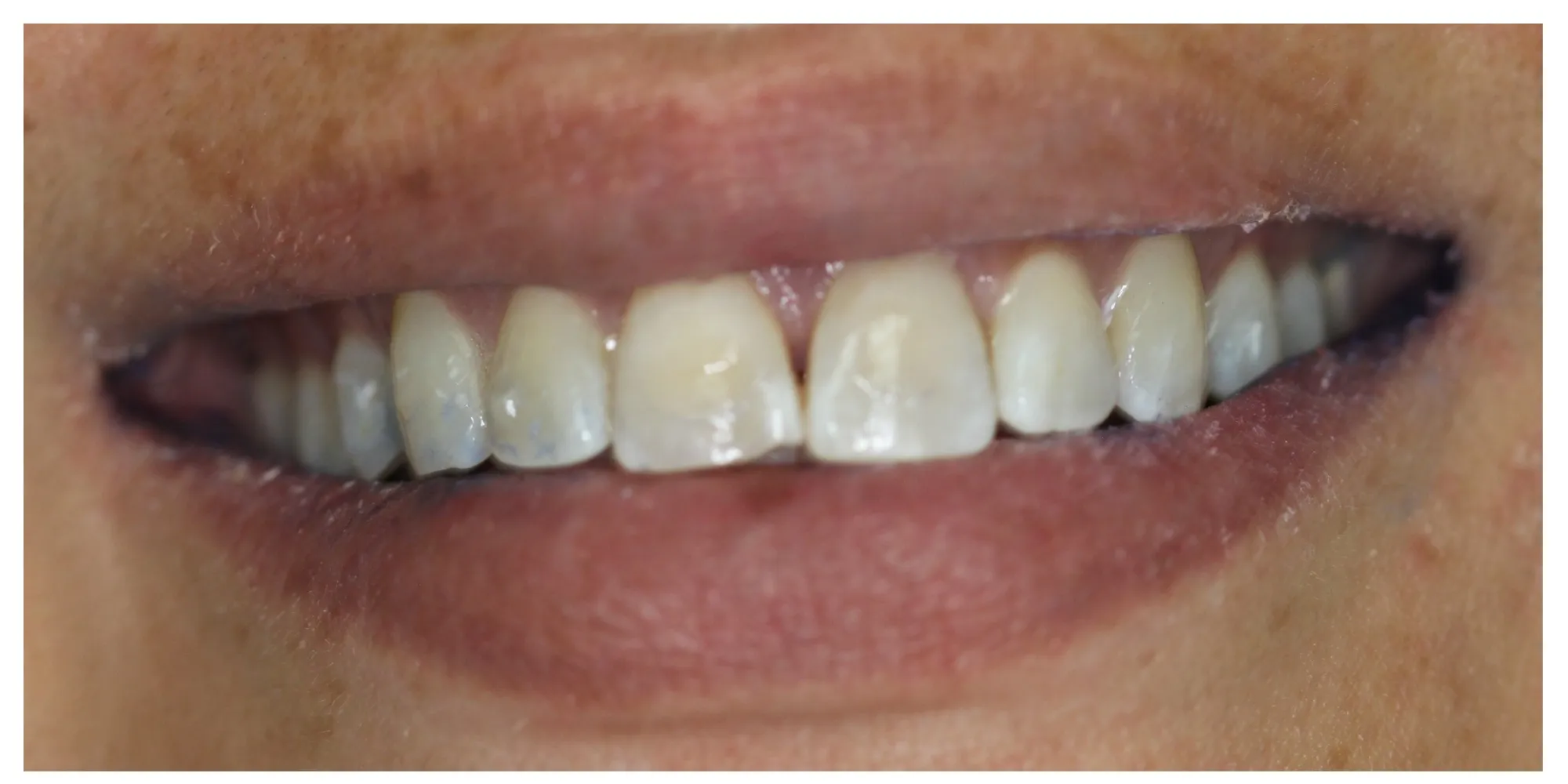 Before
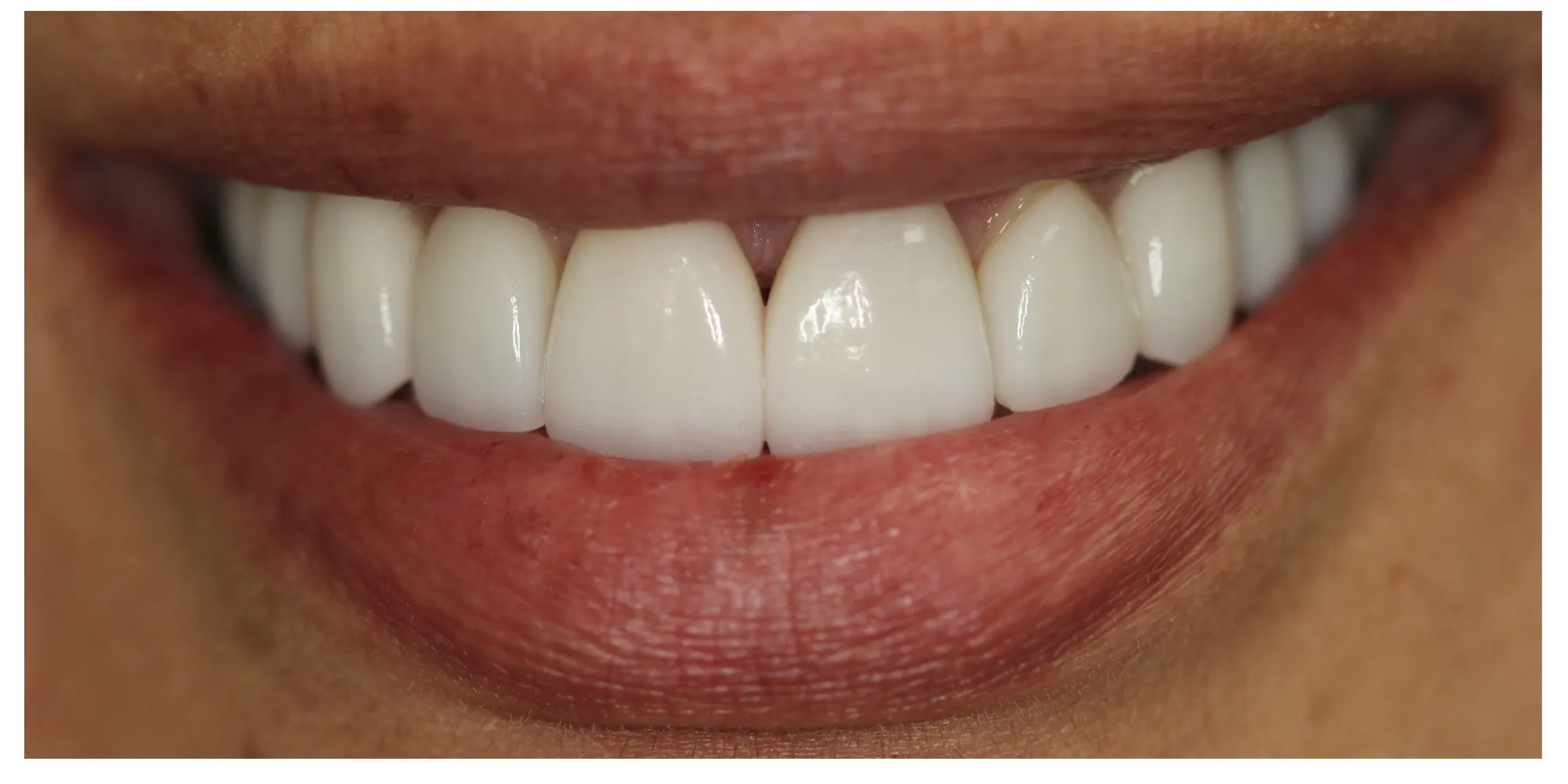 After
After
| Patient | Mary, early 50s |
| Chief Complaint | Severe intrinsic staining (tetracycline); whitening ineffective; wants white smile |
| Treatment | 20 E.max porcelain veneers — full smile |
| Material | E.max (lithium disilicate) |
| Teeth Treated | 20 teeth — full upper and lower smile |
| Investment Range | $28,000 – $40,000 |
| Appointments | 5 visits over approximately 4 weeks |
| Location | Lakewood, Colorado |
| Clinical Reviewer | Dr. Brennan Bonati, DDS |
Mary's Story
Mary had been self-conscious about her teeth since she was a teenager. She had taken tetracycline antibiotics as a child — a common treatment at the time — and the medication had caused deep, permanent staining inside the tooth structure itself. The staining was not on the surface; it was in the dentin, the layer beneath the enamel. No amount of whitening would touch it.
She had tried professional whitening twice. Both times, the result was minimal — her teeth lightened slightly at the surface but the underlying gray-brown banding remained clearly visible. She had been told by a previous dentist that veneers were the only option, but the cost had always felt prohibitive.
By the time she came in for a consultation, she had decided she was ready. She had spent decades hiding her smile in photographs and avoiding situations where her teeth might be noticed. She wanted a white smile — not necessarily dramatic, but clean and bright and something she could feel confident about.
The Treatment Plan
The treatment plan involved 20 E.max porcelain veneers covering the full smile — 10 upper and 10 lower — with a shade selection that would mask the underlying staining while looking natural.
The shade selection process for tetracycline cases requires special consideration. The staining can show through lighter shades of porcelain, so the veneer thickness and opacity must be calibrated to block the underlying color while still achieving a natural translucency. This requires close collaboration with the laboratory.
- Consultation and shade planning — photographs and laboratory consultation to determine the correct shade and opacity
- Preparation and temporaries — all 20 teeth prepared; temporaries placed in the target shade
- Temporary wear period — three weeks to verify shade masking and aesthetics
- Delivery — all 20 E.max veneers bonded
- Post-delivery verification
Clinical Insight
Tetracycline staining is one of the most challenging cosmetic cases because the discoloration is intrinsic — it is in the dentin, not on the enamel surface. Whitening works on surface and near-surface stains; it cannot penetrate deep enough to affect dentin staining. Veneers are the only reliable solution for tetracycline cases.
The clinical challenge is opacity. Lighter shades of porcelain are more translucent, which means the underlying staining can show through. In Mary's case, the laboratory used a slightly higher-opacity porcelain in the inner layer of the veneer to block the staining, with a more translucent outer layer to maintain a natural appearance. Getting this balance right required careful shade planning and a test in the temporaries before committing to the final porcelain.
The Result
The final result was the bright, clean smile Mary had wanted for decades. The E.max veneers completely masked the underlying staining while maintaining a natural translucency that did not look artificial.
Mary described the experience of seeing her final smile as emotional. She had spent 40 years hiding her teeth. The transformation was not just cosmetic — it changed how she felt about herself in photographs, in conversations, and in every situation where she had previously been self-conscious.
Free Resource
Am I a Candidate? Download Your Free Guide to Find Out
The complete self-assessment checklist — good candidate indicators, pre-treatment conditions to resolve, and what to expect at your first consultation. Clinically reviewed by Brennan Bonati, DDS.
No spam. No sales call. One email with your download link.
At a Glance
Tetracycline staining in childhood caused deep intrinsic discoloration that whitening could not correct. The staining was in the dentin — below the enamel surface.
Porcelain veneers are the only reliable solution for intrinsic staining. The laboratory used a higher-opacity inner layer to block the underlying color while maintaining natural translucency.
20 E.max porcelain veneers — full upper and lower smile — with custom opacity calibration to mask the tetracycline staining.
A bright, natural-looking white smile. Mary described it as 40 years of self-consciousness resolved in a single treatment.
Related Reading
- How Much Do Veneers Cost? The Complete Guide — understand all the factors that affect pricing
- Types of Veneers: Porcelain, Composite, and E.max Compared — learn which material is right for your case
- What to Expect During the Veneer Procedure — a step-by-step guide to the process
- Am I a Candidate for Veneers? — find out if veneers are right for your situation
- Veneer Results and Long-Term Care — what to expect after your restorations are placed
- Financing Options for Veneers — payment plans and ways to make treatment more affordable
What This Case Helps Explain
Mary's case illustrates how porcelain veneers can effectively mask severe intrinsic staining, such as tetracycline discoloration, when whitening treatments fail. This example emphasizes the advantages of E.max porcelain veneers in achieving a bright, natural-looking smile. Patients interested in this approach should assess their eligibility by consulting the veneer candidacy guidelines. Additionally, understanding the long-term durability of veneers is important, so reviewing veneer longevity information can help set expectations. This case is part of the discoloration case category, which showcases various strategies for overcoming stubborn tooth stains.
Inspired by Mary's Story?
I Want to Smile Like Mary — Book My Free Consultation
Schedule a no-obligation consultation with a trusted Colorado cosmetic dentist. Most patients are seen within 1–2 weeks.
Frequently Asked Questions
Why can't whitening fix tetracycline staining?
Whitening works by oxidizing stain molecules in the enamel and near-surface dentin. Tetracycline staining is deeper — it is incorporated into the dentin during tooth development and cannot be reached by whitening agents. Even extended whitening protocols (months of daily tray use) produce minimal results for tetracycline cases.
Will the staining show through the veneers?
With proper shade planning and the correct porcelain opacity, the staining should not be visible through the veneers. Lighter, more translucent shades of porcelain can allow underlying staining to show through — which is why tetracycline cases require careful laboratory collaboration to select the right opacity for the inner layer of the veneer.
How many teeth need to be treated for tetracycline staining?
Tetracycline staining typically affects all teeth that were developing during the period of antibiotic use, which usually means the entire smile — upper and lower. Treating only the upper teeth would leave a visible mismatch with the lower teeth. Most tetracycline cases require a full-smile treatment of 16 to 20 teeth.
Find Veneers Near You
All documented cases were treated in the Denver metro area. If veneers are being considered, explore cost and provider information for your city:
Not in Colorado? Browse all locations →
Explore More Cases
Each case below includes a full clinical breakdown with before-and-after documentation.