Ryan's Case: Treating Gum Disease Before Veneers
Clinically Reviewed by Brennan Bonati, DDS — Cosmetic & Restorative Dentistry
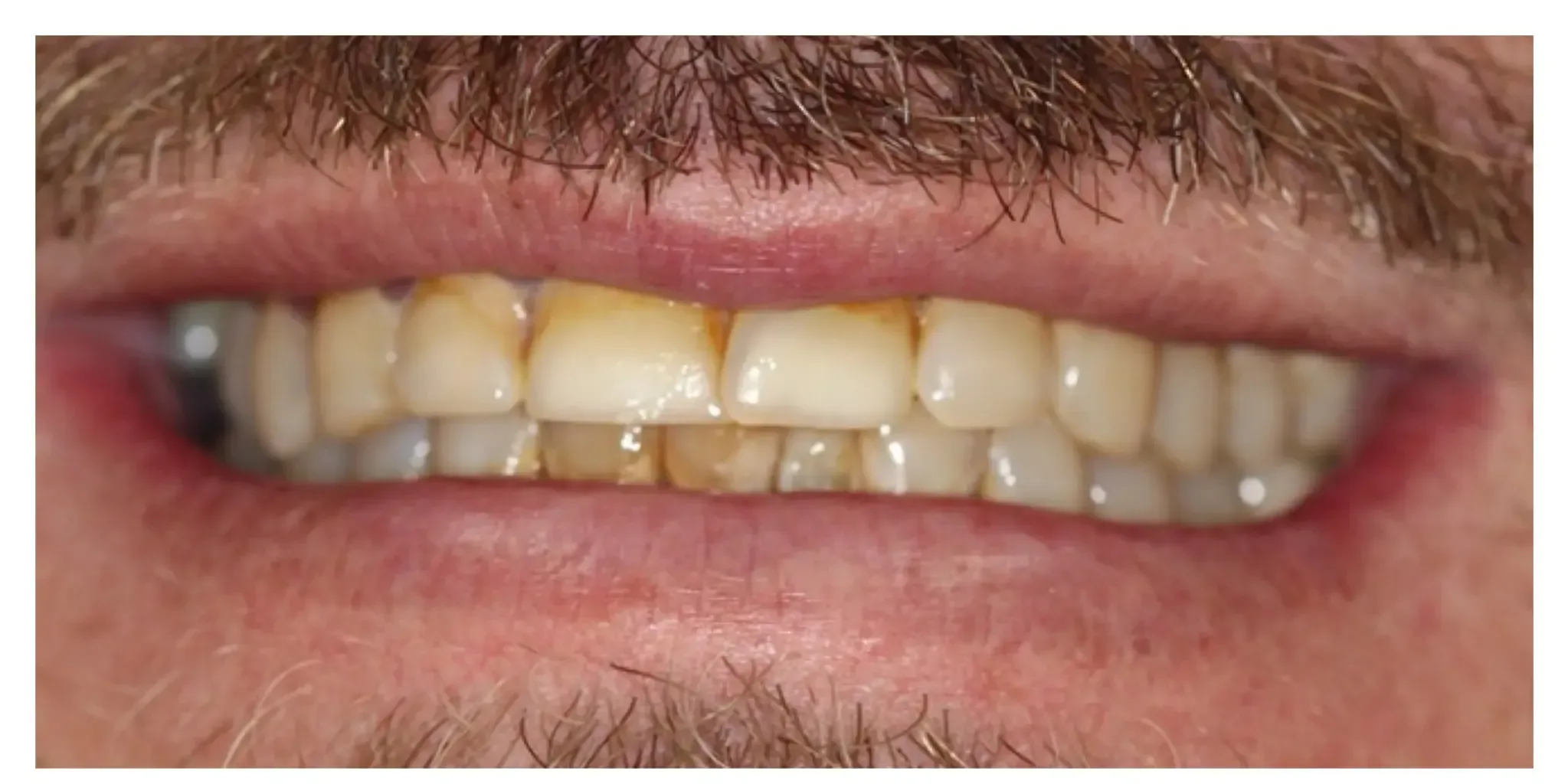 Before
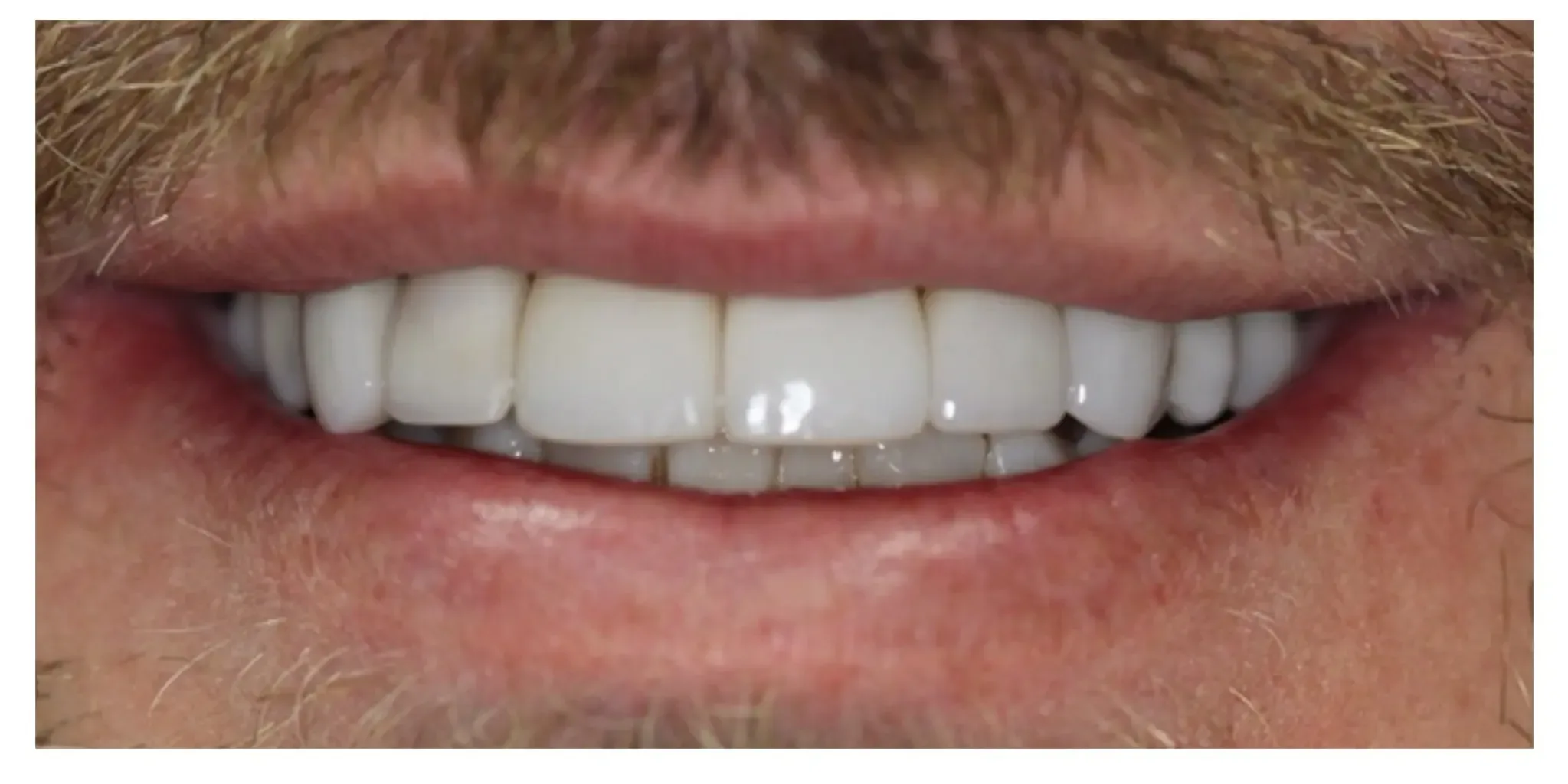 After
After
| Patient | Ryan, late 30s |
| Chief Complaint | Discoloration and old composite veneers; active gum disease requiring treatment first |
| Treatment | Periodontal treatment followed by 8 porcelain veneers |
| Material | E.max (lithium disilicate) |
| Teeth Treated | 8 upper anterior teeth |
| Investment Range | $14,000 – $20,000 (including periodontal treatment) |
| Appointments | 8 visits over approximately 4 months (including perio phase) |
| Location | Lakewood, Colorado |
| Clinical Reviewer | Dr. Brennan Bonati, DDS |
Ryan's Story
Ryan came in wanting veneers. He had old composite veneers that had discolored significantly, and he wanted to replace them with porcelain. The consultation went well — his teeth were in reasonable shape, his bite was stable, and he was a good candidate for veneers from a structural standpoint.
But the periodontal exam told a different story. Ryan had active gum disease — not severe, but significant enough that placing veneers would be inappropriate. Inflamed, bleeding gums change the gum line, which means the margins of any restorations placed now would not be in the right position once the inflammation resolved. Placing veneers on a patient with active periodontal disease is a clinical mistake that leads to poor aesthetics and potential restoration failure.
Ryan was disappointed but understood. He completed a full course of periodontal treatment — scaling and root planing, improved home care, and a re-evaluation appointment — before the veneer case began.
The Treatment Plan
The treatment was sequenced in two distinct phases:
Phase 1 — Periodontal Treatment (approximately 3 months):
- Full mouth scaling and root planing
- Oral hygiene instruction and home care protocol
- Re-evaluation at 6–8 weeks to assess healing
- Final periodontal clearance before veneer phase
Phase 2 — Veneer Treatment (approximately 4 weeks):
- Consultation and smile design
- Preparation and temporaries
- Temporary wear period (3 weeks)
- Delivery of final E.max veneers
Clinical Insight
Ryan's case illustrates a principle that is fundamental to cosmetic dentistry: the foundation must be healthy before cosmetic work begins. Placing veneers on a patient with active gum disease is not just clinically inappropriate — it produces a worse aesthetic result. Inflamed gums are swollen, which means the gum line is higher than it will be once the inflammation resolves. Veneers placed to that gum line will end up with exposed margins once the gums return to their healthy position.
The three-month delay was frustrating for Ryan, but the result justified the wait. His gums were healthy, his gum line was stable, and the veneers were placed to margins that will remain in the correct position long-term.
The Result
The final result was a significant improvement over Ryan's original composite veneers — uniform color, natural translucency, and healthy pink gums framing each tooth correctly. The combination of the periodontal treatment and the new veneers produced a result that would not have been possible if the veneers had been placed before the gum disease was resolved.
Ryan noted that the process had also changed his approach to dental hygiene. The periodontal phase required him to develop better home care habits, and those habits have continued — protecting both his gums and his new veneers.
Free Resource
Am I a Candidate? Download Your Free Guide to Find Out
The complete self-assessment checklist — good candidate indicators, pre-treatment conditions to resolve, and what to expect at your first consultation. Clinically reviewed by Brennan Bonati, DDS.
No spam. No sales call. One email with your download link.
At a Glance
Active gum disease made Ryan ineligible for veneers. Placing restorations on inflamed gums produces poor margins and unstable aesthetics.
Periodontal health is the foundation for any cosmetic work. Treating the gum disease first ensured stable gum lines and reliable veneer margins.
Full periodontal treatment (scaling and root planing) followed by 8 E.max porcelain veneers after periodontal clearance.
Healthy gums, stable gum lines, and natural-looking porcelain veneers. A result that would not have been possible without proper sequencing.
Related Reading
- How Much Do Veneers Cost? The Complete Guide — understand all the factors that affect pricing
- Types of Veneers: Porcelain, Composite, and E.max Compared — learn which material is right for your case
- What to Expect During the Veneer Procedure — a step-by-step guide to the process
- Am I a Candidate for Veneers? — find out if veneers are right for your situation
- Veneer Results and Long-Term Care — what to expect after your restorations are placed
- Financing Options for Veneers — payment plans and ways to make treatment more affordable
This case highlights the importance of addressing underlying gum disease before proceeding with cosmetic treatments like veneers, as seen in Ryan's comprehensive periodontal treatment prior to receiving porcelain veneers. Patients curious about whether they qualify for veneers can explore the detailed criteria on our veneer candidacy page, which explains how oral health impacts eligibility. Understanding the overall investment is crucial, and Ryan's treatment falls within the range outlined in our general veneers cost guide. For those unfamiliar with the basics, our introduction to veneers provides foundational knowledge about this cosmetic solution. This case is part of our broader chipped teeth veneer cases collection, showcasing effective strategies for restoring damaged teeth.
Inspired by Ryan's Story?
I Want to Smile Like Ryan — Book My Free Consultation
Schedule a no-obligation consultation with a trusted Colorado cosmetic dentist. Most patients are seen within 1–2 weeks.
Frequently Asked Questions
Can you get veneers if you have gum disease?
No — active gum disease must be treated and resolved before veneers can be placed. Inflamed gums change the gum line, which means veneer margins placed now will be in the wrong position once the inflammation resolves. Placing veneers on a patient with active periodontal disease is a clinical error that leads to poor aesthetics and potential restoration failure.
How long does periodontal treatment take before veneers can be placed?
The timeline depends on the severity of the gum disease. For mild to moderate periodontitis, a full course of scaling and root planing followed by a 6 to 8 week re-evaluation is typical. If the gums have responded well, veneers can usually begin 3 to 4 months after the start of periodontal treatment.
Will gum disease come back after veneers are placed?
Gum disease can recur if home care habits are not maintained. Veneers do not cause gum disease, but they do add margin lines that require careful cleaning. Patients with a history of periodontal disease should maintain regular professional cleanings (typically every 3 to 4 months) and meticulous home care to protect both their gums and their restorations.
Find Veneers Near You
All documented cases were treated in the Denver metro area. If veneers are being considered, explore cost and provider information for your city:
Not in Colorado? Browse all locations →
Explore More Cases
Each case below includes a full clinical breakdown with before-and-after documentation.