Joan's Full-Mouth Rehabilitation: 24 Crowns, Bite Restored,...
Clinically Reviewed by Brennan Bonati, DDS — Cosmetic & Restorative Dentistry
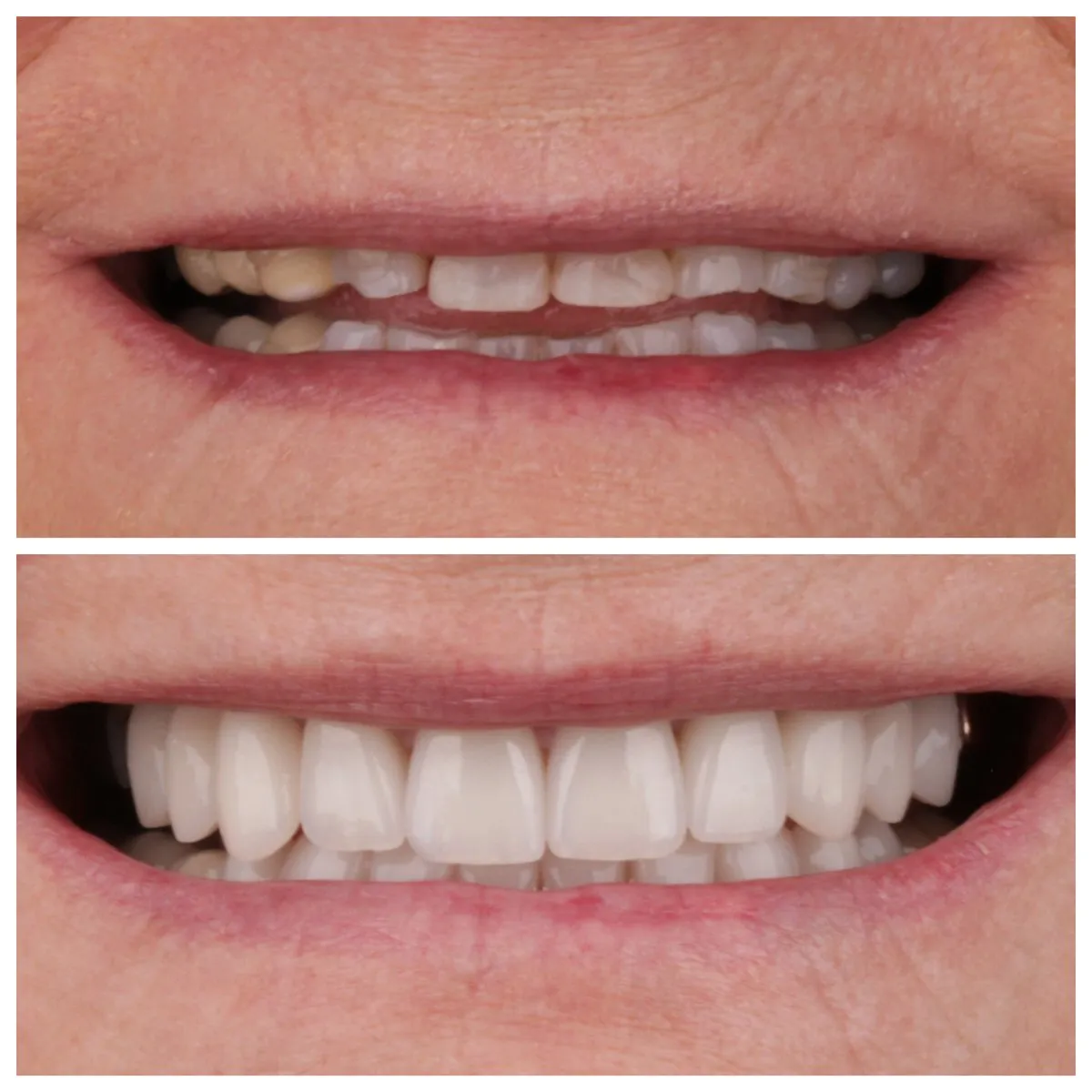 Before
 After
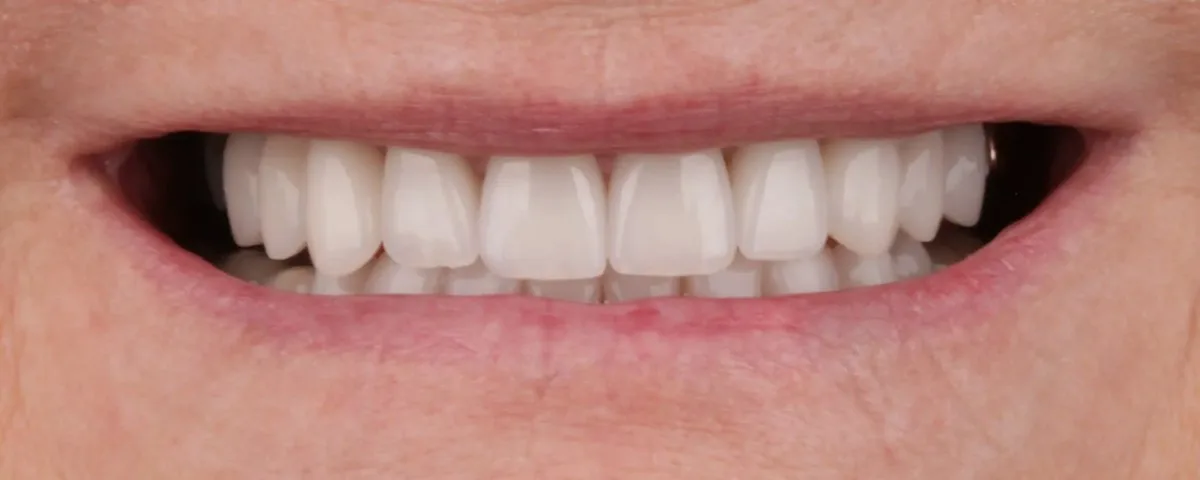
After
| Patient | Joan, 45–55 |
| Chief Complaint | Severely worn, broken, and discolored teeth from years of grinding — collapsed bite, concerned about losing the ability to fix them |
| Treatment | 24 E.max crowns, full mouth (both arches) — bite opened to restore correct vertical dimension |
| Material | E.max (lithium disilicate) |
| Shade | A1 |
| Pre-Treatment | None — treatment began directly with full-mouth preparation |
| Investment Range | $45,000 – $55,000 |
| Appointments | 6 visits |
| Location | Lakewood, Colorado |
| Clinical Reviewer | Dr. Brennan Bonati, DDS |
Joan's Story
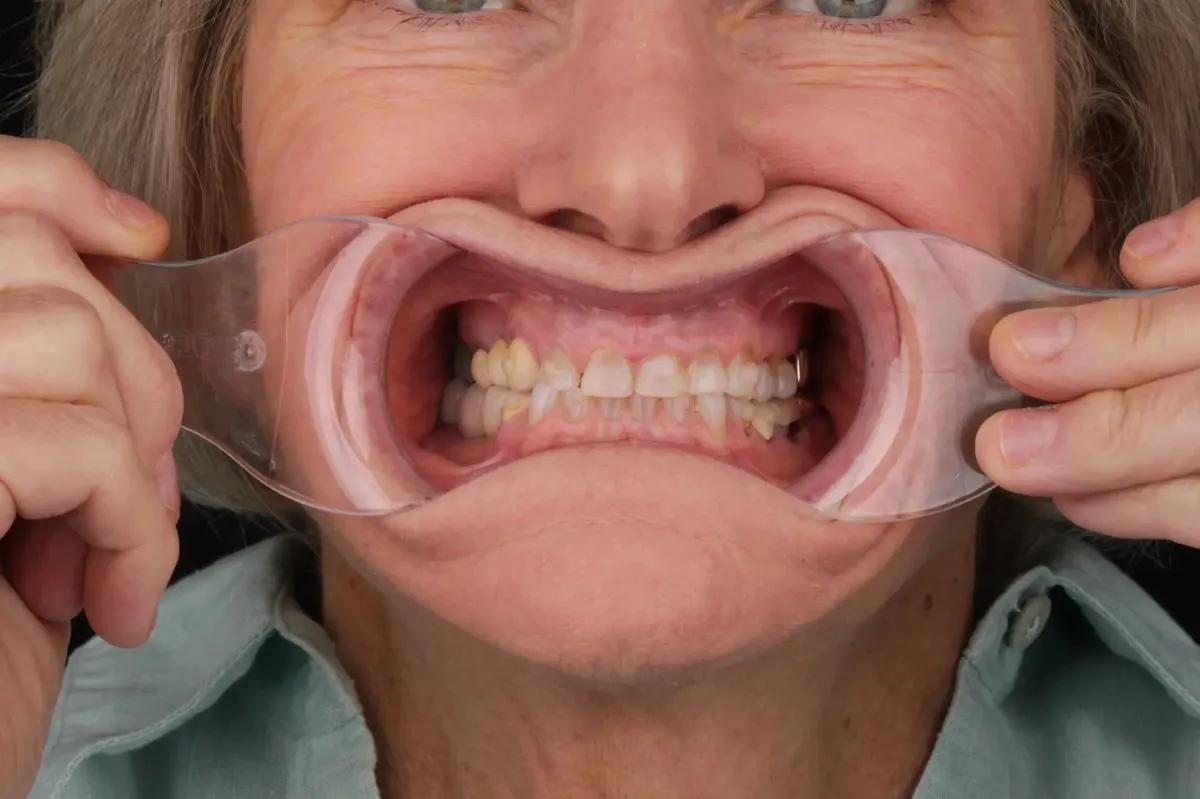
Joan had been grinding her teeth for years. She knew it. She had watched her teeth get shorter, more chipped, and more discolored over time, and she had a growing fear that if she waited much longer, there would not be enough tooth structure left to fix them properly. She was right to be concerned. By the time she came in for her consultation, her bite had collapsed — the vertical dimension of her jaw had decreased significantly as her teeth wore down — and several teeth had broken to the point where they could no longer support a veneer.
Her primary concern was not cosmetic. It was functional: she wanted to stop the damage before it became irreversible. The cosmetic transformation was a welcome outcome, but what drove her to act was the fear of losing her teeth entirely.
 Click to enlarge
Why Crowns, Not Veneers
Veneers require healthy, intact enamel to bond to. They are thin restorations — typically 0.5 to 1.0mm — that rely on the underlying tooth structure for support. When teeth have been worn to the degree Joan's had, there is not enough remaining enamel to support a veneer, and the tooth height is insufficient to create a veneer with adequate thickness and strength. Full-coverage crowns were the only appropriate restoration for every tooth in Joan's case. Crowns cap the entire tooth, providing structural support regardless of how much natural tooth remains, and can rebuild the tooth to the correct height and shape.
The Treatment Plan
Twenty-four E.max crowns across both arches, with a significant opening of the vertical dimension of occlusion. Opening the bite — restoring the jaw to its correct closed position — was the critical functional component of the treatment. Joan's bite had collapsed by several millimeters, and restoring it to the correct vertical dimension required building height into every crown across both arches simultaneously.
Shade A1 was selected: a natural, warm white that is noticeably brighter than Joan's worn and stained natural teeth but reads as a healthy, natural smile rather than an extreme cosmetic result. The case was completed in 6 appointments over approximately 5 to 6 weeks, including a period in temporaries while the laboratory fabricated the 24 final E.max crowns.
Clinical Insight
Joan's case is one of the most clinically significant types of full-mouth rehabilitation: a patient who has been in a destructive cycle for years and has finally reached the point where intervention is urgent. The challenge in these cases is not the technical execution — it is the bite design. When the vertical dimension has collapsed, the dentist must determine the correct new bite position before any restorations are fabricated. This is done through a combination of clinical examination, mounted study models, and often a period in diagnostic temporaries to verify that the new bite position is comfortable and functional before committing to the final restorations.
The outcome in Joan's case demonstrates what proper bite restoration achieves: after her vertical dimension was corrected and her bite was rebuilt with 24 crowns, she stopped breaking teeth. The destructive cycle ended not because she stopped grinding — bruxism is a habit that is very difficult to eliminate — but because the new bite design distributed the forces of grinding evenly across all teeth, eliminating the concentrated stress points that had been causing the fractures. A custom night guard was provided to protect the restorations during sleep.
The Result
Joan's transformation was both functional and cosmetic. The before-and-after photographs show a dramatic visual change — from severely worn, short, discolored teeth to a full, bright, well-proportioned smile in shade A1. But the more important outcome is the one that does not show in photographs: Joan stopped breaking her teeth. The bite was restored to its correct position, the destructive forces were eliminated, and the restorations have remained intact.
 Click to enlarge
Free Resource
Am I a Candidate? Download Your Free Guide to Find Out
The complete self-assessment checklist — good candidate indicators, pre-treatment conditions to resolve, and what to expect at your first consultation. Clinically reviewed by Brennan Bonati, DDS.
No spam. No sales call. One email with your download link.
At a Glance
Years of grinding had worn teeth down, collapsed the bite, and broken multiple teeth. Joan feared losing the ability to fix them.
Teeth were too worn for veneers. Full-coverage crowns were the only restoration that could rebuild the tooth height and protect remaining structure.
24 E.max crowns, both arches, bite opened to correct vertical dimension. Shade A1. 6 appointments. $45K–$55K.
Bite restored. Grinding cycle ended. Joan stopped breaking teeth. Full, bright smile in shade A1.
Joan's full-mouth rehabilitation demonstrates how veneers and crowns can restore severely worn and chipped teeth caused by bruxism, a condition thoroughly discussed in our chipped teeth case studies hub. Patients with similar concerns should review the veneer candidacy guidelines to understand if full-mouth treatment is appropriate for them. The complexity and scale of Joan's treatment are reflected in the investment details found on our full mouth veneers cost page. To better grasp the step-by-step process involved, our veneer procedure overview explains what patients can expect during treatment. Additionally, exploring the differences between porcelain veneers and other materials can help patients make informed decisions about their options.
Concerned About Worn Teeth?
Don't Wait Until It's Too Late — Get a Free Consultation
The longer worn teeth go untreated, the fewer options remain. Schedule a no-obligation consultation to understand your options before the window closes.
Frequently Asked Questions
What happens if you don't treat a collapsed bite?
A collapsed bite will continue to worsen without treatment. As the teeth wear down further, the bite collapses more, which creates more destructive forces on the remaining tooth structure. Patients often find themselves in a cycle where they break or chip teeth repeatedly. The jaw muscles and TMJ are also affected, often leading to chronic muscle fatigue, headaches, and jaw pain. Restoring the proper vertical dimension through full-mouth rehabilitation breaks this cycle permanently.
Why were crowns used instead of veneers for Joan?
Veneers require a minimum amount of healthy tooth structure to bond to. When teeth have been worn down to the point where the enamel is severely compromised, there is simply not enough remaining structure to support a veneer. Crowns cover the entire tooth, providing full-coverage protection and support regardless of how much structure remains.
Does opening the bite fix grinding?
Opening the bite does not eliminate bruxism, but it does eliminate the destructive consequences of grinding on the new restorations when combined with proper occlusal design. When the bite is correctly restored, the forces generated during grinding are distributed evenly across all teeth. A custom night guard worn after rehabilitation further protects the restorations. Joan's case demonstrated this outcome: after her bite was restored, she stopped breaking teeth.
How long does a full-mouth rehabilitation take?
A full-mouth rehabilitation involving both arches typically requires 5 to 8 appointments over 4 to 8 weeks. Joan's case was completed in 6 appointments. The timeline includes a comprehensive records visit, preparation appointments for each arch, temporaries delivery, a period in temporaries while the laboratory fabricates the final restorations, and a final delivery and refinement appointment.
Related Reading
- Porcelain Veneers: What They Are and How They Work
- How Much Do Veneers Cost? The Complete Guide
- Joanne — Collapsed Bite and Full Arch Restoration
- Am I a Candidate for Veneers?
Find Veneers Near You
Not in Colorado? Browse all locations →