Lexi's Case: Composite Veneers for a Young Patient with Microdontia
Clinically Reviewed by Brennan Bonati, DDS — Cosmetic & Restorative Dentistry
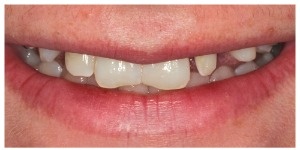 Before
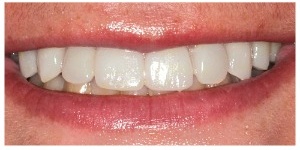 After
After
| Patient | Lexi, early 20s |
| Chief Complaint | Naturally small teeth (microdontia); smile looks childlike; wants more proportional teeth |
| Treatment | 6 composite veneers to add length and width |
| Material | Composite resin (direct bonding) |
| Teeth Treated | 6 upper anterior teeth |
| Investment Range | $2,500 – $5,000 |
| Appointments | 2 visits (single-day bonding) |
| Location | Lakewood, Colorado |
| Clinical Reviewer | Dr. Brennan Bonati, DDS |
Lexi's Story
Lexi had always been self-conscious about her teeth. Not because they were damaged or discolored — they were actually quite healthy — but because they were small. Noticeably small. Her upper anterior teeth were significantly shorter and narrower than average, giving her smile a childlike appearance that she felt did not match her age or personality.
She had been told by a previous dentist that she would need to wait until she was older for porcelain veneers, and that composite bonding was the appropriate treatment for someone her age. She came in for a second opinion, and the assessment was the same: at 22, with healthy teeth and no significant wear, composite veneers were the right choice — not because porcelain wasn't an option, but because composite is reversible, requires no tooth preparation, and can be replaced with porcelain later if she chooses.
The Treatment Plan
The treatment plan involved direct composite bonding on six upper anterior teeth to add length and width, creating a more proportional smile. Because composite veneers are applied directly to the tooth surface without any preparation, the entire treatment was completed in a single appointment.
- Consultation and smile design — photographs and mock-up to preview the result
- Bonding appointment — composite applied, shaped, and polished in a single session
No anesthesia was required. No tooth structure was removed. The entire treatment took approximately two hours.
Clinical Insight
Composite veneers are often the right choice for young patients with microdontia for several reasons. First, they require no tooth preparation — the composite is bonded directly to the existing enamel without removing any tooth structure. This preserves the tooth for future treatment options. Second, they are reversible: if Lexi decides she wants porcelain veneers in the future, the composite can be removed and the teeth will be in the same condition as before treatment. Third, they are significantly less expensive than porcelain — an important consideration for a patient in her early twenties.
The limitation of composite is longevity. Composite veneers typically last 5 to 10 years before needing repair or replacement, and they are more susceptible to staining than porcelain. For a young patient, this is an acceptable trade-off — the treatment can be repeated or upgraded as her circumstances change.
The Result
The final result was a more proportional, adult smile with teeth that matched Lexi's face and personality. The composite veneers added approximately 1.5mm of length and 0.5mm of width to each tooth — subtle changes that made a significant visual difference.
Lexi described the result as exactly what she had hoped for: teeth that looked like hers, just better. Not a dramatic transformation — a natural improvement.
Free Resource
Am I a Candidate? Download Your Free Guide to Find Out
The complete self-assessment checklist — good candidate indicators, pre-treatment conditions to resolve, and what to expect at your first consultation. Clinically reviewed by Brennan Bonati, DDS.
No spam. No sales call. One email with your download link.
At a Glance
Naturally small teeth (microdontia) gave Lexi a childlike smile that did not match her age. No damage or decay — purely a size issue.
Composite veneers were ideal for a young patient: no tooth preparation required, reversible, and significantly less expensive than porcelain — with the option to upgrade later.
Six direct composite veneers on upper anterior teeth, adding length and width. Completed in a single two-hour appointment.
A more proportional, adult smile. Lexi described it as teeth that looked like hers — just better.
Related Reading
- How Much Do Veneers Cost? The Complete Guide — understand all the factors that affect pricing
- Types of Veneers: Porcelain, Composite, and E.max Compared — learn which material is right for your case
- What to Expect During the Veneer Procedure — a step-by-step guide to the process
- Am I a Candidate for Veneers? — find out if veneers are right for your situation
- Veneer Results and Long-Term Care — what to expect after your restorations are placed
- Financing Options for Veneers — payment plans and ways to make treatment more affordable
Lexi's transformation highlights how veneers for gaps can address microdontia by adding length and width to naturally small teeth. Young patients like Lexi must carefully evaluate their candidacy for veneers, especially when opting for less invasive options such as composite veneers that offer a more conservative approach. The affordability and quick application of composite veneers are important factors reflected in the composite veneer cost guide. Understanding the veneer procedure ensures patients know what to expect during treatment.
Inspired by Lexi's Story?
I Want to Smile Like Lexi — Book My Free Consultation
Schedule a no-obligation consultation with a trusted Colorado cosmetic dentist. Most patients are seen within 1–2 weeks.
Frequently Asked Questions
What is microdontia?
Microdontia is a condition where teeth are smaller than normal. It can affect individual teeth (localized microdontia) or all teeth (generalized microdontia). The upper lateral incisors are the most commonly affected teeth. Microdontia is usually genetic and is not caused by any dental disease or damage.
Why composite instead of porcelain for a young patient?
For young patients with healthy teeth and no significant wear, composite veneers are often the preferred starting point because they require no tooth preparation (no enamel is removed), they are reversible, and they are significantly less expensive. Porcelain veneers are a permanent commitment — once the tooth is prepared, it will always need a veneer. Starting with composite preserves future options.
How long do composite veneers last?
Composite veneers typically last 5 to 10 years with proper care. They are more susceptible to staining and chipping than porcelain, and they may need to be polished or repaired over time. However, they can be repaired easily in a single appointment, which is an advantage over porcelain.
Find Veneers Near You
All documented cases were treated in the Denver metro area. If veneers are being considered, explore cost and provider information for your city:
Not in Colorado? Browse all locations →
Explore More Cases
Each case below includes a full clinical breakdown with before-and-after documentation.