Catherine's 10-Over-10 Smile Makeover: A Fuller, Whiter Smile...
Clinically Reviewed by Brennan Bonati, DDS — Cosmetic & Restorative Dentistry
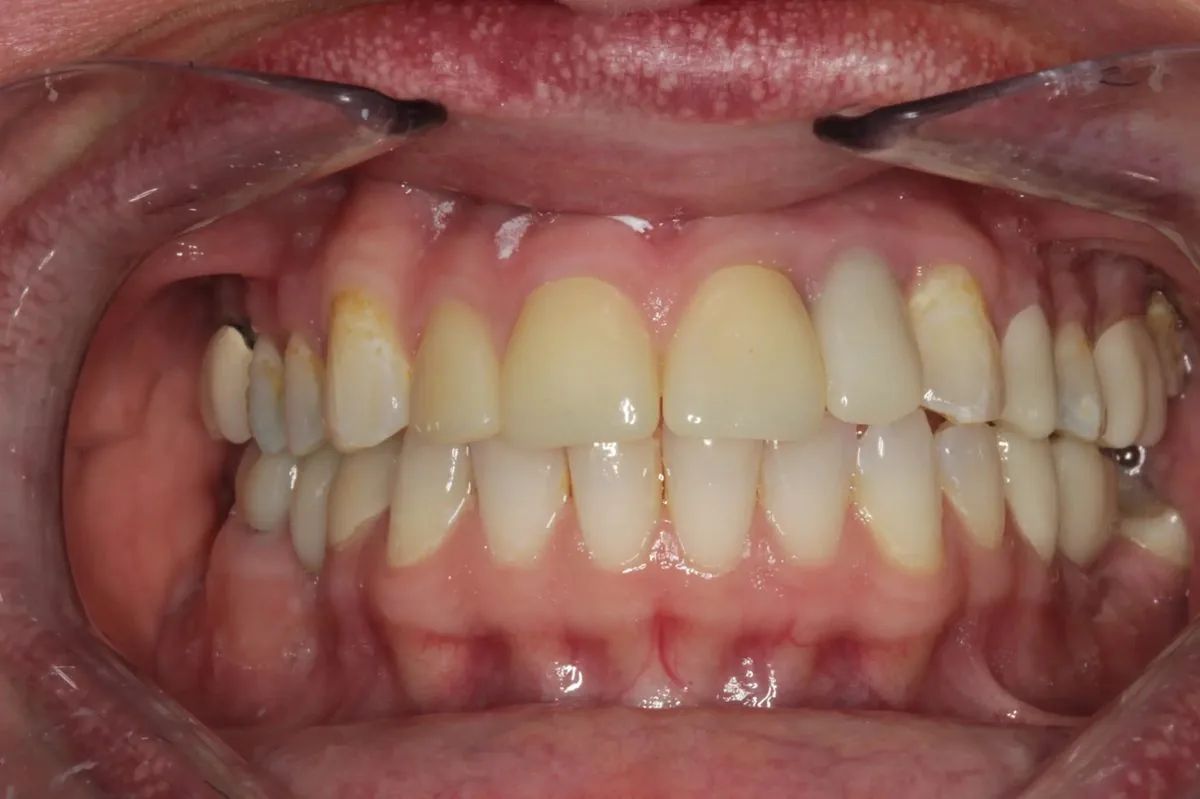
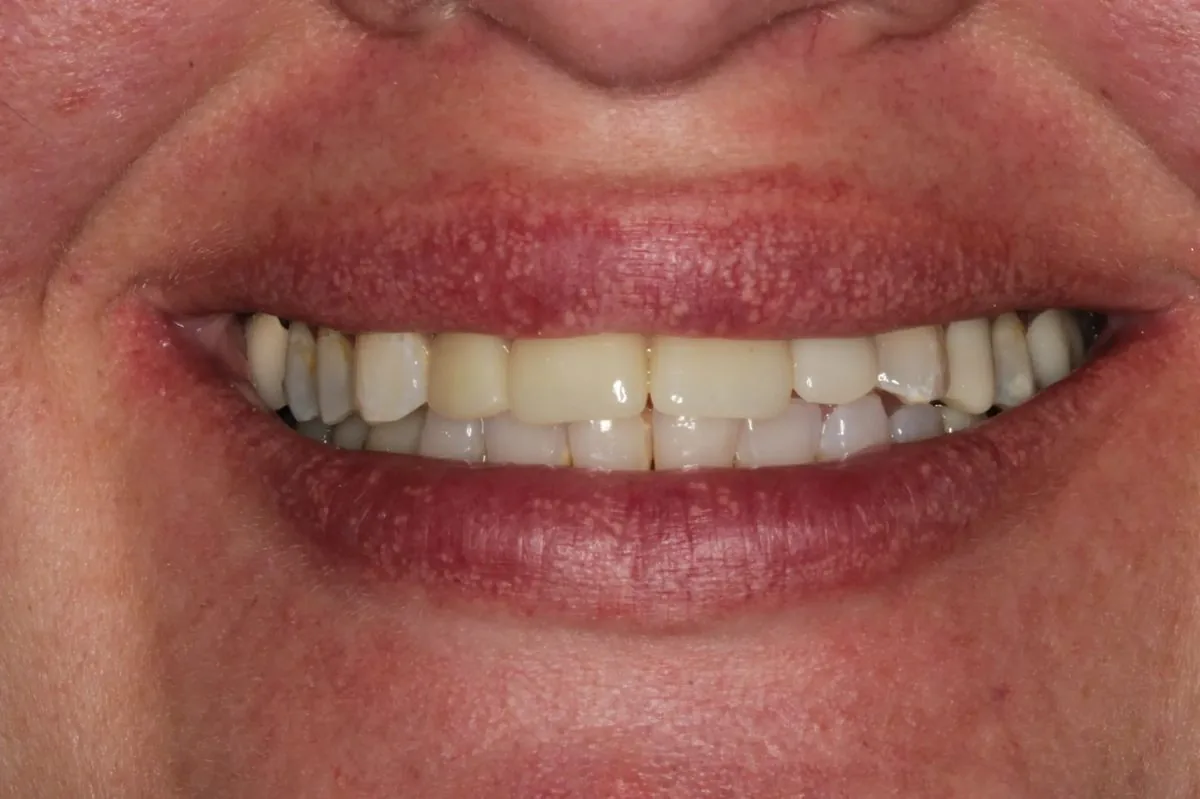
 Before
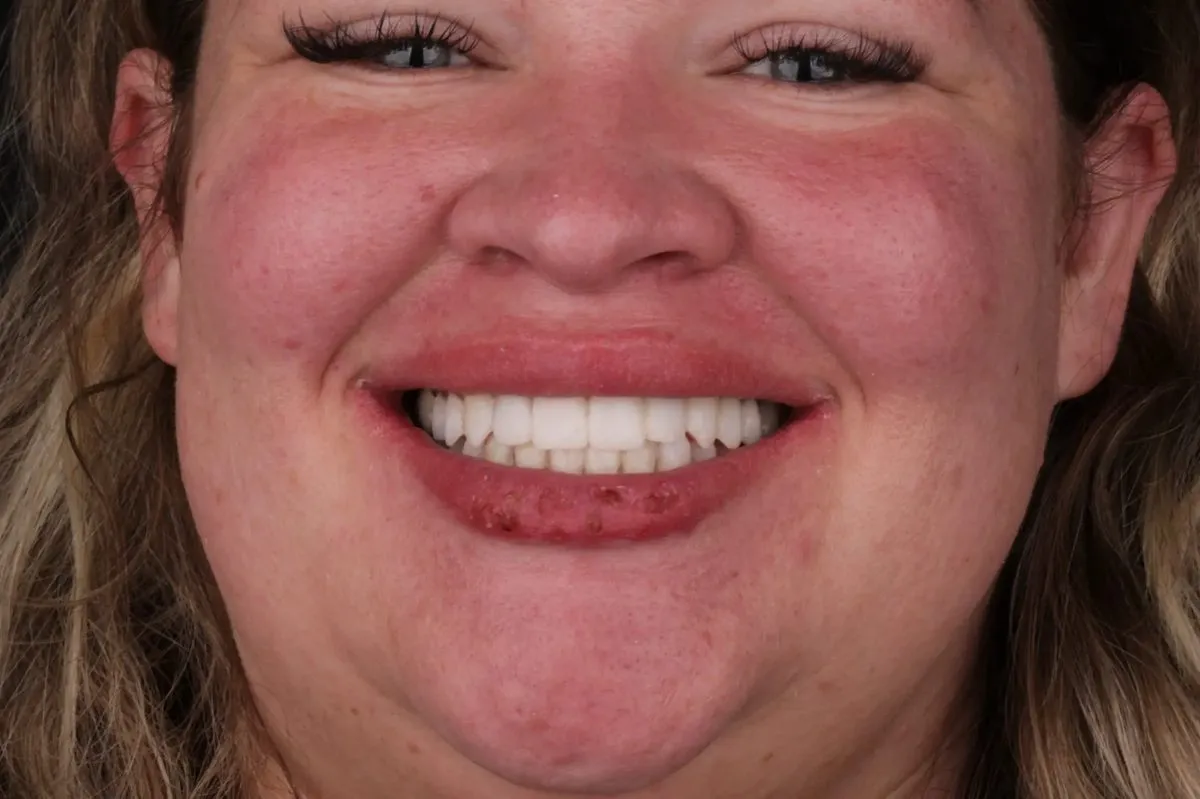
 After
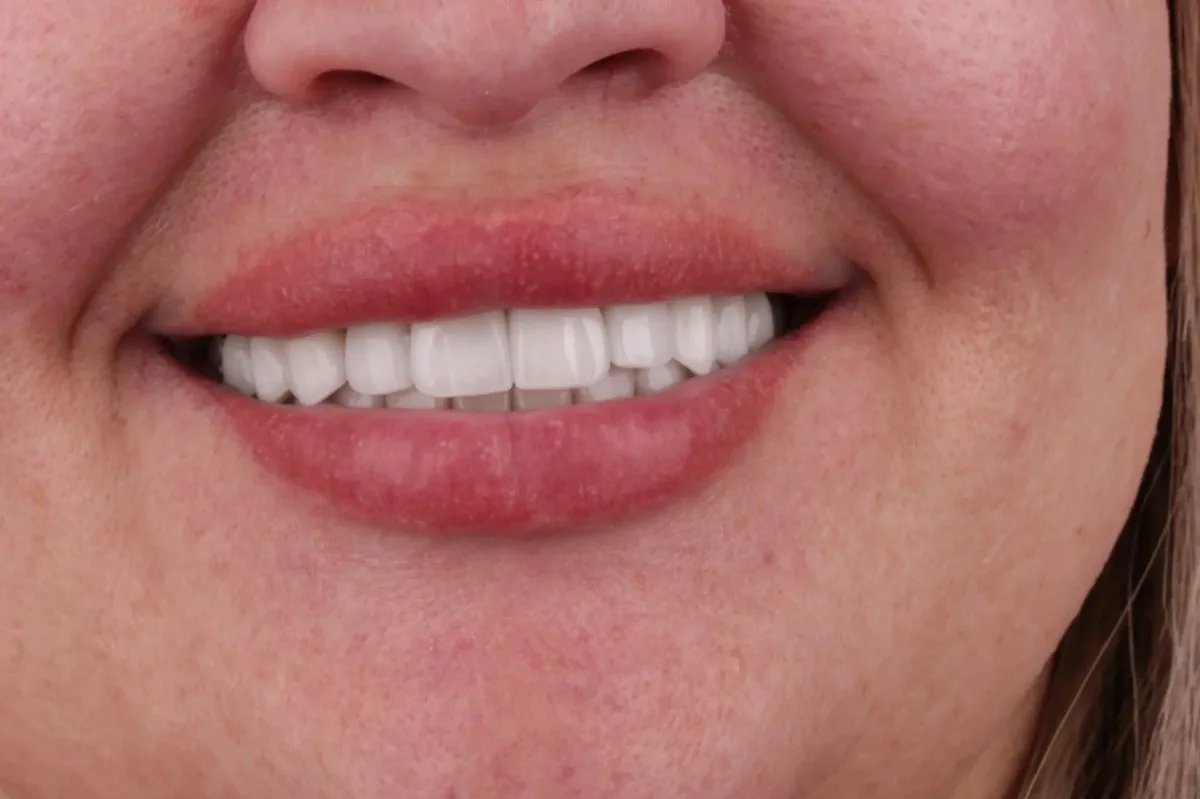
After
| Patient | Catherine, 40s |
| Chief Complaint | Discolored, mismatched old dental work — composite build-ups, discolored implant crown, and crowns that no longer matched |
| Treatment | Upper: Implant crown (#10), E.max crowns (#7, #8, #9), 6 E.max veneers (remaining upper); Lower: 10 composite veneers — 20 total restorations |
| Material | E.max (lithium disilicate) upper arch; composite lower arch |
| Shade | OM (bleach shade, half-shade above B1) |
| Pre-Treatment | None — treatment began directly with E.max prep |
| Investment Range | $35,000 – $45,000 |
| Appointments | 4 visits |
| Location | Lakewood, Colorado |
| Clinical Reviewer | Dr. Brennan Bonati, DDS |
Catherine's Story
Catherine came in with a specific deadline in mind. Her daughter had a large birthday party coming up — a major event with family, photos, and people she had not seen in years — and she wanted to walk in with a smile she was proud of. She had been living with old composite build-ups that had discolored and chipped, a crown on tooth #10 that sat on an implant and had never quite matched the surrounding teeth, and crowns on #7, #8, and #9 that were aging and no longer cohesive with the rest of her smile. The overall effect was a smile that looked patchy, dull, and older than she felt.
Her goals were clear: she wanted a fuller smile, a whiter result, and everything to match. She was not looking for an extreme transformation — she wanted to look like herself, just with teeth that finally worked together as a unified whole.
 Click to enlarge
The Treatment Plan
The treatment plan was a true 10-over-10: 10 restorations on the upper arch and 10 on the lower, for a total of 20 restorations across the full smile. The upper arch required the most complex work. The existing implant crown on tooth #10 was removed and replaced with a new E.max crown fabricated to the selected shade. Teeth #7, #8, and #9 — which had existing crowns — were re-prepped and restored with new E.max crowns. The remaining six upper anterior teeth received E.max veneers, completing a cohesive upper arch of 10 restorations all matched to shade OM.
The lower arch received 10 composite veneers. As with many full-mouth cases, composite was the right material for the lower arch: the lower teeth are less visible, the cosmetic demands are lower, and composite allowed for an additive approach that preserved all natural tooth structure. The composite was shade-matched to the upper E.max restorations to create a seamless transition between arches.
Shade OM — a bleach shade approximately half a step above B1 — was selected to give Catherine the bright, white result she wanted while maintaining a natural warmth that reads as healthy rather than artificial. No prep work was required before the E.max phase; treatment began directly with the preparation appointments.
 Click to enlarge
Clinical Insight
Catherine's case highlights one of the most nuanced challenges in full-mouth cosmetic work: replacing an implant crown within a larger restoration plan. Unlike natural teeth, an implant cannot be prepped — the crown simply unscrews or is cemented onto the abutment. This means the implant crown must be fabricated to match the surrounding restorations precisely, with no ability to adjust the underlying structure. Getting the emergence profile, contour, and shade right on the implant crown is critical to the overall result, because any mismatch will be immediately visible against the new E.max veneers and crowns on the adjacent teeth.
The decision to use composite on the lower arch in a case of this investment level is sometimes questioned by patients, but it is clinically sound. The lower anterior teeth are significantly less visible during normal smiling and conversation. Composite veneers placed additively — with no tooth reduction — preserve all natural tooth structure, can be repaired chairside if chipped, and when shade-matched carefully to the upper E.max work, are indistinguishable to the untrained eye. The cost savings on the lower arch also allow the investment to be concentrated where it matters most: the upper anterior teeth that define the smile.
The Result
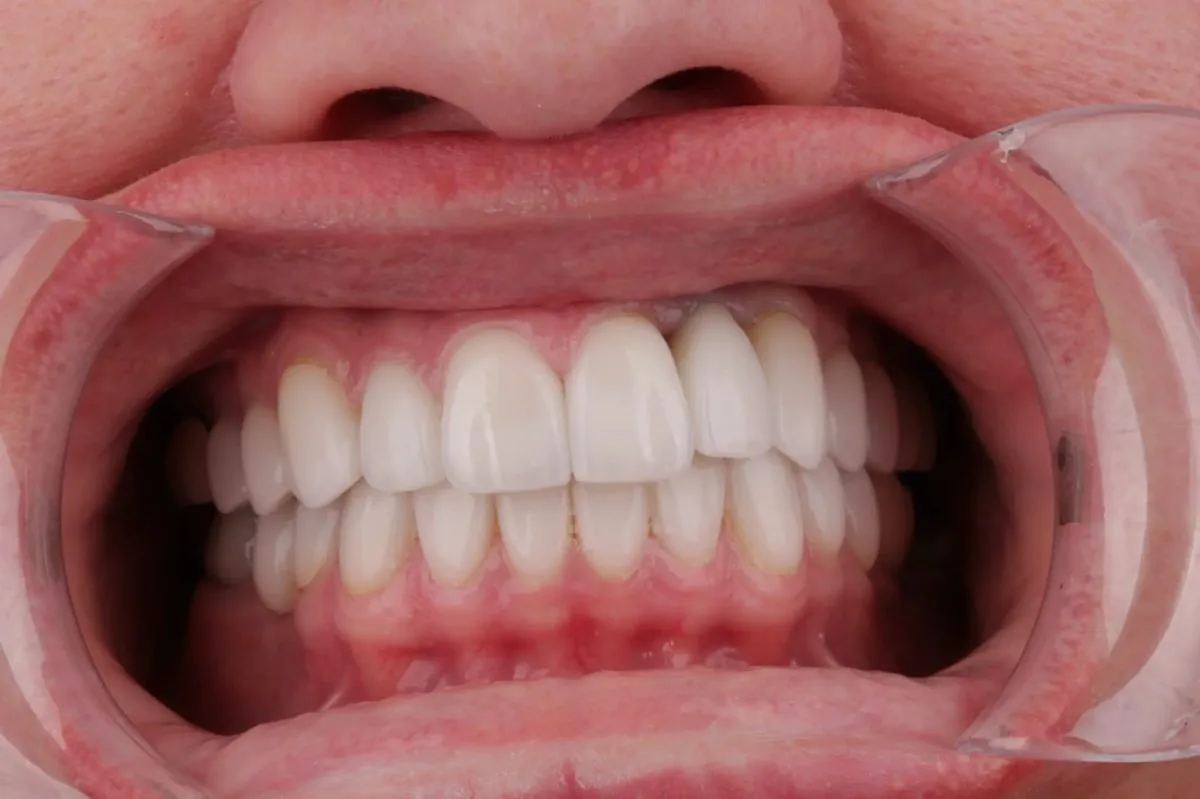
Catherine's result was delivered in 4 appointments — efficient for a 20-restoration case. The final smile was everything she had asked for: fuller, whiter, and completely unified. The new implant crown on #10 matched the adjacent E.max crowns and veneers seamlessly. The lower composite veneers complemented the upper arch without drawing attention to the material difference.
 Click to enlarge
 Click to enlarge
 Click to enlarge
Catherine was very happy with the result. She walked into her daughter's birthday party with a smile she was proud to show off — and the photos from that day looked exactly like what she had envisioned when she first came in for a consultation.
At a Glance
Discolored implant crown, aging mismatched crowns, and old composite build-ups. Daughter's birthday party was the deadline.
Replacing the implant crown and adjacent crowns required rebuilding the entire upper arch. Composite lower arch completed the full-mouth transformation efficiently.
New implant crown + 3 E.max crowns + 6 E.max veneers upper; 10 composite veneers lower. 20 restorations in 4 visits.
Fuller, whiter, unified smile in shade OM. Catherine walked into the party confident and happy.
Free Resource
Am I a Candidate? Download Your Free Guide
The complete self-assessment checklist — good candidate indicators, pre-treatment conditions to resolve, and what to expect at your first consultation.
No spam. No sales call. One email with your download link.
What This Case Helps Explain
Catherine's full smile makeover demonstrates how combining porcelain veneers with composite restorations can address complex discoloration and mismatched dental work. This case underscores the importance of a comprehensive veneer procedure when multiple restorations and implant crowns are involved. Prospective patients should evaluate their suitability by consulting the veneer candidacy guidelines to ensure the best outcomes. Understanding the financial commitment is crucial, so reviewing the full mouth veneer cost guide helps set realistic expectations. Catherine's case is featured in the discoloration category hub, which offers insights into treating severe staining and mismatched restorations.
Inspired by Catherine's Story?
See What's Possible — Book My Free Consultation
Schedule a no-obligation consultation with a trusted Colorado cosmetic dentist. Most patients are seen within 1–2 weeks.
Related Reading
- How Much Do Veneers Cost? The Complete Guide
- Porcelain Veneers: What They Are and How They Work
- Composite Veneers: When They're the Right Choice
- What to Expect During the Veneer Procedure
- Financing Options for Veneers
Frequently Asked Questions
What is a 10-over-10 smile makeover?
A 10-over-10 smile makeover refers to placing 10 restorations on the upper arch and 10 on the lower arch for a total of 20 restorations across the full smile. This approach addresses both arches simultaneously, ensuring that the color, length, and shape of every visible tooth is coordinated and cohesive. It is typically recommended when a patient has existing dental work on multiple teeth that no longer matches, or when the goal is a complete smile transformation rather than targeted corrections.
What is shade OM and how does it compare to other bleach shades?
Shade OM (also written as 0M) is a bleach shade that falls between the standard Vita Classic shades and the ultra-bright BL series. It is approximately a half-shade brighter than B1 — noticeably whiter than natural teeth but with a warmth that prevents the artificial, chalky appearance of the brightest bleach shades. For patients like Catherine who want a significant whitening effect that still reads as natural and healthy, OM is often the ideal choice.
Can an implant crown be replaced to match new veneers?
Yes. An implant crown is a separate restoration that sits on top of an implant abutment and can be replaced without disturbing the implant itself. When a patient is having surrounding teeth restored with new veneers or crowns, replacing the implant crown at the same time is the best way to ensure a cohesive shade match across the entire arch. In Catherine's case, the existing implant crown on tooth #10 was replaced with a new E.max crown fabricated to match the shade OM selected for all other restorations.
How long does a full-mouth makeover take from start to finish?
A full-mouth makeover involving both arches typically takes 4 to 6 appointments over 3 to 6 weeks. Catherine's case was completed in 4 appointments, which is on the efficient end for a 20-restoration case. The timeline depends on the complexity of the existing dental work, whether any teeth require extraction or implant placement, and the laboratory turnaround time for the final restorations. Temporary restorations are worn during the laboratory fabrication period, which typically takes 2 to 3 weeks.
Find Veneers Near You
Not in Colorado? Browse all locations →