
Am I a Good Candidate for Veneers?
A licensed dentist explains exactly who qualifies for veneers, who should wait, and what conditions veneers can and cannot fix.
A licensed dentist explains exactly who qualifies for veneers, who should wait, and what conditions veneers can and cannot fix.
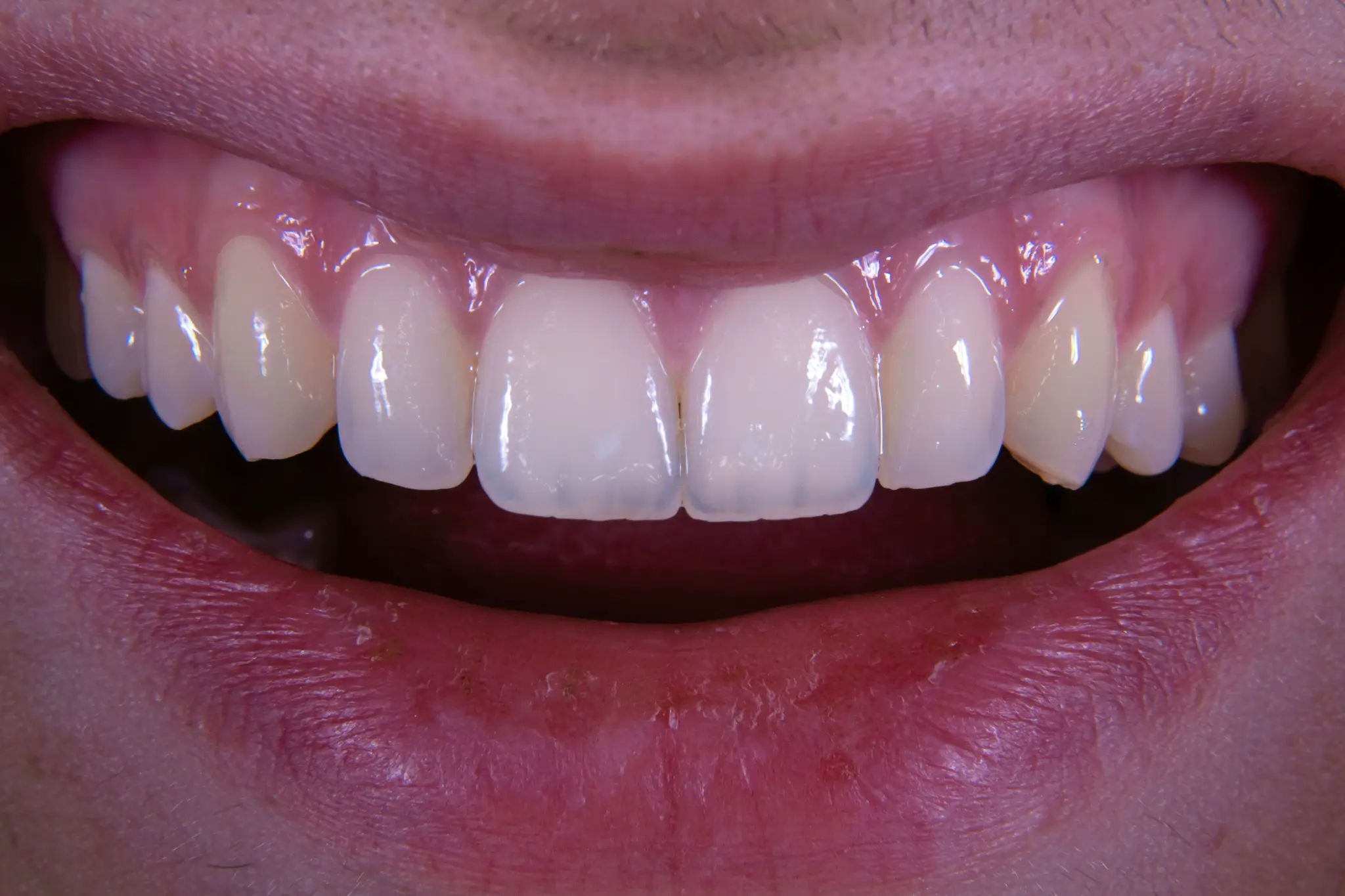
Veneers can dramatically improve the appearance of chipped, discolored, or uneven teeth.
Dental veneers are one of the most versatile cosmetic dentistry treatments available — but they are not right for everyone. The ideal veneer candidate shares several key characteristics that make the treatment both clinically appropriate and likely to produce excellent long-term results.
The ideal veneer candidate:
Healthy gums and teeth are the non-negotiable prerequisite. Any active gum disease, decay, or infection must be treated and resolved before veneers can be placed. Veneers placed over unhealthy teeth will fail — and the underlying dental problems will worsen.
Veneers are remarkably effective at correcting a wide range of cosmetic concerns. Here are the most common conditions that veneers address successfully:
Staining from tetracycline antibiotics, fluorosis, or intrinsic discoloration that whitening cannot fix. Veneers cover the tooth entirely, providing a permanently white result.
Minor chips and cracks in the front teeth that affect appearance. Veneers restore the natural shape and protect the tooth surface from further damage.
Teeth that have been worn down by grinding (bruxism) or acid erosion. Veneers restore length and shape, though a nightguard is typically required to protect them.
Small to moderate gaps (diastemas) between front teeth. Veneers can close gaps without orthodontic treatment, though very large gaps may require a different approach.
Slightly crooked or uneven teeth that the patient does not want to correct with braces or Invisalign. Veneers can create the appearance of straighter teeth.
Teeth that are unusually small, pointed, or irregularly shaped. Veneers allow the dentist to redesign the shape and size of each tooth for a harmonious smile.
A smile where the teeth are different lengths or the gum line is uneven. Veneers can create a more uniform, balanced smile line.
Patients who want to completely redesign their smile — changing color, shape, size, and alignment simultaneously — in a single comprehensive treatment.

Veneers are not appropriate for every patient. The following conditions either disqualify a patient from veneers entirely or require treatment first before veneers can be considered.
This is an absolute contraindication. Veneers cannot be placed on teeth with active decay, and the gum inflammation from periodontal disease will compromise the veneer margins and bonding. All gum disease and decay must be treated and stable before any cosmetic work begins.
Porcelain veneers require a layer of enamel for bonding. Patients who have very little enamel remaining — due to severe acid erosion, previous dental work, or other causes — may not have enough tooth structure to support a veneer. In these cases, a dental crown may be a more appropriate restoration.
Patients with severe, uncontrolled bruxism are at high risk of cracking or fracturing veneers. This does not necessarily disqualify someone from veneers, but the grinding must be managed with a nightguard before and after veneer placement. Patients who grind heavily and refuse to wear a nightguard are not good candidates.
Veneers can mask minor misalignment, but they cannot correct significant crowding or bite problems. Patients with moderate to severe misalignment are typically better served by orthodontic treatment (braces or Invisalign) first, followed by veneers if cosmetic refinement is still desired afterward.
Veneers are generally not recommended for patients under 18 because the teeth and jaw are still developing. Placing veneers on immature teeth can cause problems as the mouth continues to grow. Most dentists prefer to wait until the patient is at least 18–21 years old.
Patients who bite their nails, chew ice, open packages with their teeth, or have other habits that put excessive force on their front teeth are at higher risk of veneer damage. These habits should be addressed before and after veneer placement to protect the investment.
Even for ideal candidates, there are often steps that need to be completed before veneer placement can begin. Think of these as the foundation that makes the veneer result last.
A veneer consultation with a qualified cosmetic dentist typically takes 30–60 minutes and covers several key areas. Knowing what to expect helps you prepare the right questions and get the most out of the appointment.
Your dentist will examine your teeth, gums, and bite. They will take X-rays to check for decay or bone loss that is not visible to the naked eye. They will assess your enamel thickness and the overall health of your mouth.
Most cosmetic dentists will take clinical photographs and may use digital smile design software to show you a preview of what your result could look like. This is an important part of aligning expectations before any treatment begins.
Your dentist will discuss which teeth would benefit from veneers, whether any preparatory treatment is needed, and which material (porcelain or composite) they recommend for your specific situation.
You will receive a written treatment plan with costs. Most cosmetic dentists offer financing through CareCredit or Sunbit. Ask about payment plan options if the upfront cost is a concern.
How many veneer cases do you complete per year? Can I see before and after photos of your veneer work specifically? Do you use a dental laboratory for the porcelain, and which lab? What happens if a veneer chips or comes off? Is a nightguard included or recommended?
Get a free personalized cost estimate and connect with a vetted veneer specialist in your area. Takes 60 seconds.
Get My Free Estimate →